

Does your cat beg to go outside, but you worry about stray animals sneaking in? An RFID cat door solves that problem by allowing only your pet to enter. This guide reviews the top RFID cat doors of 2026, covering models from SureFlap, CUIBIRD, and Dubcei. We evaluated each product on security, ease of installation, and smart features to help you choose the best option for your home. For more on the latest smart cat door technology, check out our smart cat door reviews.


Buying Guide
Selective Entry Technology
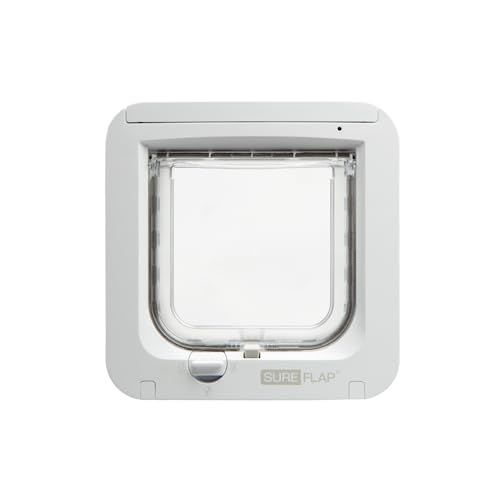
The core feature of any RFID cat door is how it identifies your pet. Some models read your cat’s implanted microchip, like the SureFlap – Sure Petcare Microchip Cat Flap, White, which works with 9, 10, and 15 digit microchip numbers. Others use RFID collar tags, such as the CUIBIRD Smart Cat Door with 4 Collar Sensor Key and the Dubcei Smart Cat Door for Interior & Exterior. Collar tags are easy to replace and ideal for cats without microchips. The SureFlap can also use collar tags sold separately. Consider your cat’s existing identification and whether you prefer a permanent or flexible solution. For a deeper look at microchip options, visit our microchip cat door reviews.
Programming is straightforward across all models. The SureFlap uses a simple one-button setup and can learn up to 32 identities. The CUIBIRD and Dubcei doors automatically pair with their included collar sensors. The Dubcei model even includes a remote control for manual override. This makes it easy to manage access for multiple pets without complicated configurations.
Battery Life and Power
All the RFID cat doors in this review run on four AA alkaline batteries. Battery life typically lasts up to 12 months, but actual performance depends on usage frequency. Look for models with low battery indicators, like the SureFlap and Dubcei doors, which flash red when power is low. This ensures your pet never gets locked out unexpectedly. If you have multiple cats passing through frequently, consider a door with efficient power management. For more on conserving battery life, see our smart pet activity tracker reviews.
Installation and Compatibility
Installation difficulty varies by model. The SureFlap is designed for doors, windows, or walls, but you may need additional accessories for certain materials. Its flap opening is 4.75 inches high by 5.625 inches wide, so check your cat’s size. The CUIBIRD and Dubcei models are easier to install on standard interior doors, with the Dubcei fitting cats and small dogs up to 20 pounds. Be aware that metal doors or walls can interfere with RFID tag reading, so avoid installing on metal surfaces. For more installation tips, read our best microchip pet door reviews.
Locking Modes and Security
Most smart cat doors offer multiple locking modes: locked, in-only, out-only, and fully open. This gives you control over when your cat can go in or out. The Dubcei Smart Cat Door includes a remote control for easy mode switching, while the CUIBIRD models rely on the collar sensor for automatic operation. The SureFlap screens on entry only, meaning it prevents unwanted animals from entering but allows your cat to exit freely. Consider your daily routine and whether you need to restrict access at certain times, such as at night or when you are away. For a comparison of security features, check out our microchip pet door reviews.
Final Thoughts
Choosing the right RFID cat door depends on your cat’s identification method and your home setup. If your cat already has a microchip, the SureFlap – Sure Petcare Microchip Cat Flap, White offers seamless integration and reliable selective entry. For households that prefer collar tags or need a solution for multiple pets, the Smart Cat Door with 4 Collar Sensor Key from CUIBIRD provides excellent value with its four included sensors and remote control. Both models ensure your cat enjoys freedom while keeping your home secure.
Related Guides
Frequently Asked Questions
How does an RFID cat door work?
An RFID cat door uses radio frequency identification to detect your cat’s microchip or a special collar tag. When the sensor reads the authorized ID, it unlocks the flap, allowing your cat to enter or exit. Unauthorized animals are blocked, providing secure selective entry. This technology ensures only your pets can come and go as they please.
Can I use an RFID cat door without a microchip?
Yes. If your cat does not have a microchip, you can use RFID collar tags. Most smart cat doors, like those from CUIBIRD and Dubcei, come with collar sensors that you attach to your cat’s collar. The SureFlap also supports collar tags sold separately. This makes RFID cat doors accessible for all cats, whether chipped or not.
Will an RFID cat door work with multiple cats?
Absolutely. The SureFlap can learn up to 32 microchip identities, and the CUIBIRD models include multiple collar sensors. You can program each cat’s ID, so only your pets have access. This is ideal for multi-pet households where you want to keep strays or other animals out. For more on multi-pet setups, read our smart cat door reviews.
How long do the batteries last?
Battery life varies by model and usage, but most RFID cat doors last up to 12 months on a set of four AA alkaline batteries. The SureFlap and Dubcei doors have low battery indicators that flash red when it is time to replace them. Always use non-rechargeable alkaline batteries for best performance. Check the product manual for specific recommendations.


