

Every pet owner knows the struggle: your four-legged friend wants outside, but a traditional door flap becomes an open invitation for every stray and critter in the neighborhood. RFID pet doors change that game by using smart recognition to let only your own pet through. In this guide, we review the best RFID pet doors on the market in 2026, from compact interior flaps to heavy-duty sliding glass solutions.
We’ve evaluated these doors based on security, ease of installation, and the intelligence of their sensing technology. We’ve also taken into account user feedback and the specific needs of different pet sizes and living spaces. For a broader selection of pet tech innovations, check out our best products category.
Whether you have a cat that needs to access a litter box in a separate room or a large dog that wants to roam the yard, an RFID pet door can offer both convenience and safety. Read on to find the model that fits your home.


Now that you’ve seen the options side by side, let’s break down what to look for when making your decision.
Buying Guide: What to Look for in an RFID Pet Door
Choosing the right RFID pet door involves more than just matching your pet’s size. Here are the critical factors to consider.
Microchip vs. Collar Sensor
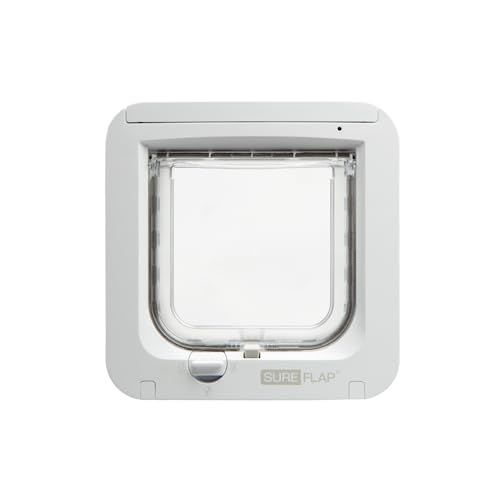
The first decision is how the door identifies your pet. Some models, like the SureFlap microchip cat flap, read the microchip already implanted in your cat, so no extra accessories are needed. Others, like the CUIBIRD smart cat doors, rely on a sensor collar that comes with the door, making them ideal for pets that aren’t chipped.
Think about your pet’s habits. If your cat is an indoor-outdoor cat and already has a microchip, the SureFlap is the most hassle-free option. If you’re managing multiple pets without chips, collar tags might be simpler because you can program multiple keys.
Also consider the size of the tag. Collar tags can be bulky on small cats, while microchip readers are completely unobtrusive.
Compatibility with Your Door Type
RFID pet doors come in different physical configurations to fit various entry points. The SureFlap is designed for standard doors or walls and can be adapted for windows with additional kits. The CUIBIRD models are crafted for interior doors, making them perfect for creating separate zones in your house.
If you have a sliding glass door, the Aiday automatic sliding glass dog door is engineered for that exact setup. It fits sliders with heights between 90 9/16” and 95 1/4” and can accommodate dogs up to 100 lbs.
Measure your door frame carefully before purchasing. A precise measurement ensures a snug installation and prevents drafts. For more installation tips, see our pet tech guides.
Security Features
Beyond selective entry, you’ll want a door that offers additional safety. The Aiday model includes an anti-pinch system that stops and reverses the flap if your pet lingers in the passage, protecting tails and paws.
All CUIBIRD models come with a four-way locking mechanism, letting you set the flap to open, closed, in-only, or out-only. This is handy when you want to keep your pet inside for the night or restrict access to certain rooms.
Also, check that the door has a weather-tight seal to prevent drafts and keep out rain and heat.
Smart Scheduling and Control
Some RFID pet doors take convenience a step further with programmable schedules. The Aiday door lets you set specific hours when your pet can come and go, which is perfect for keeping your dog safe while you’re at work.
It also includes a manual override, so you can control the door remotely or instantly from the built-in display. The SureFlap, on the other hand, keeps things simple with one-button programming and no scheduling options, which might be all you need for a cat.
Determine if you need time-based access. If you have a dog that tends to sneak out at night, scheduling is a valuable feature.
Final Thoughts
Choosing the right RFID pet door comes down to your pet’s size and your home’s layout. For cat owners, we recommend the SureFlap – Sure Petcare Microchip Cat Flap, White for its reliable microchip recognition and simple setup. If you have a large dog and a sliding glass door, the Automatic Sliding Glass Dog Door with Collar from Aiday offers top-tier security and scheduling. Both provide peace of mind and convenience for you and your pet.
Related Guides
- Best Connected Pet Technology
- High Tech Pet Door vs Microchip Pet Door
- Smart Pet Door vs Electronic Pet Door
Frequently Asked Questions
How does an RFID pet door work?
RFID pet doors use radio-frequency identification to detect a tag on your pet, either a microchip implanted under the skin or a collar key. When your pet approaches, the sensor reads the ID and unlocks the flap automatically. This ensures only authorized pets can enter, leaving stray animals and even raccoons outside.
Can I use one RFID pet door for both cats and dogs?
Some models, like the SureFlap, are designed specifically for cats and scan microchips. The CUIBIRD smart cat doors also work with collar sensors and can accommodate small dogs. For larger dogs, you’ll need a heavy-duty option like the Aiday sliding glass door, which is built for pets up to 100 lbs. You can also explore more pet tech options in our best products section.
Do I need to buy a separate collar tag for my pet?
It depends on the model. The SureFlap uses your cat’s microchip, so no additional tag is needed. The CUIBIRD and Aiday models include sensor collars or keys in the box, so you have everything required right out of the package. If you have multiple pets, check how many tags each door supports; the SureFlap can store up to 32 microchip IDs.
Are RFID pet doors secure against intruders?
Yes, RFID pet doors are highly secure because they only respond to registered IDs. However, it’s important to choose a model with a sturdy build and reliable locking mechanism. Many doors also feature manual lock modes for extra security when you’re away from home. Always look for anti-pinch and tamper-resistant designs to keep both your pet and your home safe.


