

You come home to find that the neighborhood stray has made itself comfortable on your couch, or your indoor cat has snuck out through an old flap. This is a common frustration for pet owners who want freedom for their pets without compromising security. Microchip pet doors solve this by granting access only to your own furry friends, using their implanted ID microchips. In this guide, we review the top microchip pet doors from leading brands SureFlap and PetSafe, helping you choose the perfect solution for your home. For a broader look at smart access options, check out our top smart cat door reviews.
We have evaluated four products based on microchip compatibility, door size, battery life, and ease of programming. Whether you have a petite cat or a small dog, we break down the key differences so you can make an informed decision. Let’s dive into the details.


Key Considerations When Choosing a Microchip Pet Door
Microchip Compatibility
Not all microchip pet doors read every type of microchip. Most modern doors work with 9, 10, and 15 digit microchips commonly used in North America and Europe. SureFlap models support these standards, while the PetSafe Microchip Cat Door specifically reads 15 digit FDXB chips. Before buying, verify your pet’s chip number with your veterinarian to ensure compatibility.
If your pet does not have a microchip, almost all these doors offer programmable collar tags as an alternative. This flexibility makes them suitable for pets without implants, though the tags are sold separately.
Door Size and Pet Access
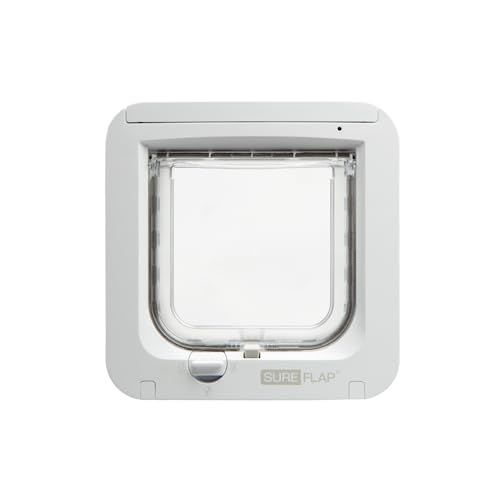
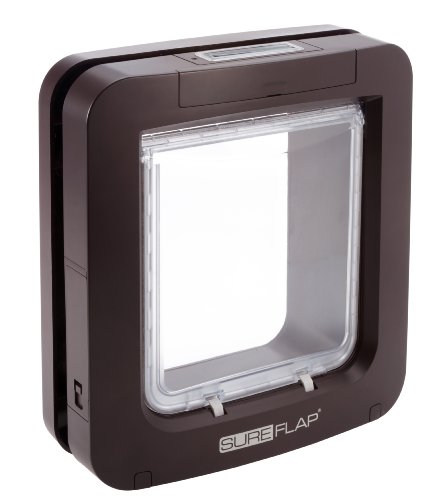
Pet doors come in different flap dimensions. The SureFlap Microchip Cat Flap has an opening of 4 3/4 inches high by 5 5/8 inches wide, ideal for cats and small breeds. For a slightly larger opening, the SureFlap Microchip Pet Door (Brown) offers 6 11/16 inches by 7 inches, accommodating small dogs and larger cats. Measure your pet’s shoulder height and width before selecting a model.
Installation is possible in doors, walls, or windows, but each product may require additional accessories. The PetSafe model fits wood, PVC, and uPVC doors out of the box, while metal or glass installations need separate kits. For more on installation options, see our automatic cat door reviews.
Power Source and Battery Life
All these microchip doors run on batteries, ensuring they work even during power outages. SureFlap models use AA or C batteries (depending on the model) with an estimated life of up to 12 months. The PetSafe door also uses AA batteries with similar longevity. A low battery indicator alerts you when replacements are needed, so you are never caught off guard.
Battery power also means no wiring is required, making installation straightforward. However, remember to use high quality alkaline batteries for reliable performance. If you frequently travel or forget to check batteries, consider a model with a more visible indicator. Our smart dog door reviews cover additional power management features.
Locking Modes and Security
Beyond microchip recognition, many doors offer manual locking options. The PetSafe Microchip Cat Door has a 4 way lock that allows you to set the door to Locked, Unlocked, Enter Only, or Exit Only. This is useful for keeping your cat inside at night or restricting entry during specific hours. SureFlap models are primarily selective on entry, but the DualScan version also lets you set exit permissions for each pet.
Weather stripping and magnetic latches further enhance security by preventing drafts and discouraging prying paws. For a wider selection of security focused pet doors, explore our best smart pet sleep tracker reviews for related home monitoring solutions.
Final Thoughts
Choosing the right microchip pet door depends on your pet’s size and your need for advanced access control. For cat owners seeking a reliable, no frills solution, the SureFlap – Sure Petcare Microchip Cat Flap, White offers proven performance and easy programming. If you have multiple pets and want the ability to restrict exit for certain animals, the SureFlap DualScan Microchip Cat Door provides that extra layer of control. Meanwhile, the PetSafe model shines with its 4 way lock and affordable price point, making it a strong contender for budget conscious pet owners who still demand security. All three products deliver peace of mind by keeping strays out and letting your beloved pets roam freely.
Related Guides
Frequently Asked Questions
Do microchip pet doors work with all microchips?
Most microchip doors read 9, 10, and 15 digit microchip numbers across common standards. However, always check the manufacturer’s compatibility list. SureFlap doors work with Avid Secure, FDXA, and FDXB chips, while the PetSafe model focuses on 15 digit FDXB chips. If unsure, consult your vet or the product reviews category for more details.
Can I install a microchip pet door in a window?
Yes, most microchip pet doors can be installed in windows with appropriate accessories. SureFlap offers window installation kits separately. The PetSafe door may require additional accessories for glass or metal installations. Always measure your window’s thickness and follow the provided guidelines.
How long do batteries last in these doors?
Battery life typically ranges from 6 to 12 months depending on usage. SureFlap models average up to 12 months on a set of 4 AA or C alkaline batteries. The PetSafe door offers similar longevity. A low battery indicator flashes red when replacement is needed, so you can stay ahead of power loss.
Are microchip pet doors safe for small dogs?
Absolutely. Many small dog breeds can use microchip pet doors designed for cats, but check the flap size. The SureFlap Microchip Pet Door (Brown) has a larger opening suitable for dogs up to a certain size. The PetSafe model is also appropriate for small dogs. Ensure your dog’s microchip is registered and the door is programmed correctly for safe access.
For more in depth comparisons, browse our Pet Tech Guides and discover the latest innovations in pet access technology.


