

Let’s face it: you love your cat, but you don’t love the constant scratching at doors or the dread of strays wandering in. Automatic RFID pet doors solve this tension by granting access only to your tagged pet. In this guide for 2026, we evaluate five top models from Olideauto, CUIBIRD, and BROTEX. Whether you need a heavy-duty exterior door or a discreet interior flap, these smart doors keep your home secure and your pet content. For more on tech that reads your pet’s unique ID, check out our automatic microchip pet door reviews.
RFID (Radio Frequency Identification) turns a simple flap into a selective gateway. Each door comes with collar tags or sensors that communicate with the lock, letting only authorized animals pass. Below we compare five leading options, then share a buyer’s guide to help you pick.


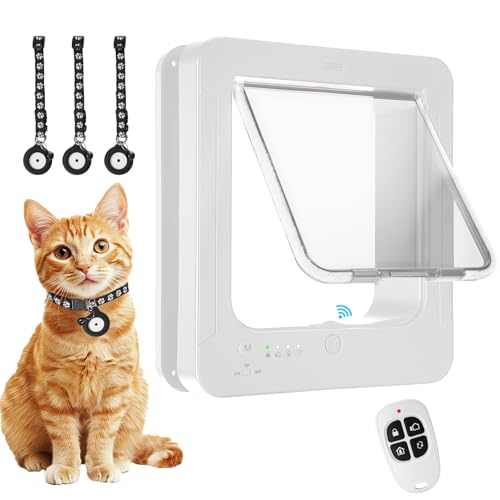

Buying Guide: What to Look for in an Automatic RFID Pet Door
Sensor Reliability and Range
The sensor is the brain of the door. Look for models that maintain a continuous detection signal while your pet passes through. The Olideauto door, for example, keeps the latch open until the animal is fully inside, preventing any pinch. Also check that the read range covers at least a few inches from the door. For a deeper look at sensor tech, see our electronic cat door reviews.
Installation and Compatibility
Most automatic feline doors fit standard interior doors and walls up to a certain thickness. CUIBIRD models come with clear instructions and a cutout template. One important caveat: metal doors or walls can interfere with RFID signals. If you have a metal door, consider a plastic or wood panel or choose a door with a longer-range sensor. The BROTEX smart door also installs quickly with basic tools.
Multi-Pet Management
If you have multiple cats or dogs, you need a door that can distinguish each pet. Most products here include four collar sensors, so you can tag up to four animals. The CUIBIRD options feature a simple pairing process. For homes with more pets, some doors support additional tags. This feature prevents food theft and keeps each animal in its designated space.
Smart Features and Convenience
The Olideauto door raises the bar with WiFi capability and app control via TUYA. You can lock or unlock the door remotely, set schedules, and even integrate with Alexa. Other models offer a four-way lock (in, out, in/out, locked) and a remote control. Think about whether you want basic selective entry or full smart home integration. For more connected options, explore our smart pet home device reviews and Best Smart Pet Home Device Reviews.
Final Thoughts
Choosing the right automatic RFID pet door comes down to your home setup and your pet’s habits. If you need a rugged, WiFi-enabled unit that works for both cats and dogs and offers voice control, the Olideauto Automatic Pet Door Opener with Smart RFID Tag Sensor is a premium choice for exteriors. For a budget-friendly, reliable solution that works inside doors and comes with four sensors, the Smart Cat Door with 4 Collar Sensor Key from CUIBIRD delivers excellent value. Both models use proven RFID technology to give your pet freedom while keeping your home secure.
Related Guides
Frequently Asked Questions
How do automatic RFID pet doors work?
An RFID tag on your pet’s collar emits a unique code. When the tag approaches the door sensor, the lock disengages automatically, allowing the door to swing open. The sensor maintains the signal while the animal passes through, then locks again. This technology is similar to what many offices use for key cards.
Can RFID pet doors be used with multiple cats?
Yes, most models include four collar sensors, each paired to the same door. You can register up to four tags per unit. Some doors, like the BROTEX model, allow extra tags to be purchased separately, so larger households can accommodate more pets.
Do RFID pet doors work on metal doors?
Metal can block or weaken the RFID signal, making the door unreliable. Manufacturers advise against installing an RFID door in a metal surface. If you have a metal door, consider mounting the door in an adjacent wood panel, or choose a model with a very strong sensor. For more details, see our electronic cat door reviews.
What is the difference between RFID and microchip pet doors?
RFID doors use a separate collar tag that communicates with the door. Microchip doors read your pet’s implanted microchip directly. Both provide selective entry, but RFID doors often have faster reaction times and are simpler to reprogram if you add a new pet. Microchip doors eliminate the need for a collar tag, which some cats dislike.


