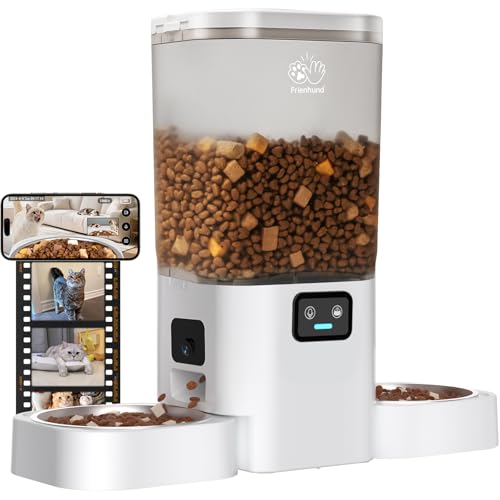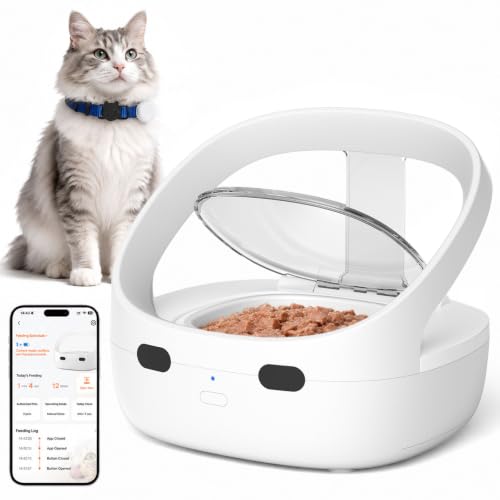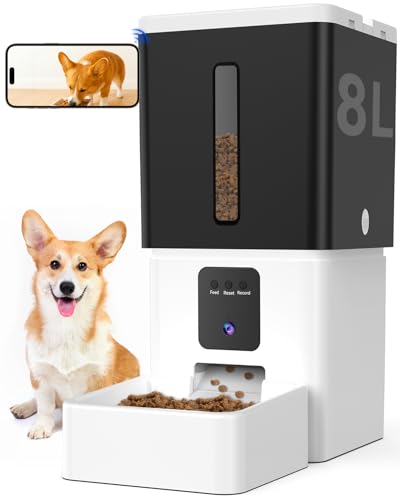

You rush out the door every morning, but your dog’s mealtime is about to arrive. You want a reliable solution that keeps your pup fed on schedule without you having to race home. Enter the world of automatic dog feeders. These devices free up your day while ensuring your furry friend gets consistent, portion-controlled meals. In this guide, we review the best dog feeders for automated homes in 2026, covering options from budget-friendly gravity models to WiFi-enabled cameras and large-capacity dispensers for big breeds. Whether you’re a first-time buyer or upgrading your smart home, we’ve got you covered. For more on choosing the right feeder, check out our Automatic Feeders category for a broader overview.


Buying Guide: What to Look for in an Automatic Dog Feeder
Not all feeders are created equal. Here are the key factors we considered while evaluating these models.
Capacity and Portion Control
The size of the hopper determines how often you need to refill. For small dogs or short trips, a 4L capacity may suffice. But for large breeds or extended weekends, look for at least 7L. Many models offer adjustable portions from 1 to 50 servings per meal, allowing precise diet management. If you have a large dog, consider our Best Dog Feeders for Large Breeds guide for more tailored options.
Power Source and Backup Reliability
A feeder that relies solely on AC power can leave your pet hungry during outages. Look for dual power options: an adapter plus battery backup. Models with Type-C or AA battery backup ensure the feeding schedule continues even when the electricity goes out. This is essential for automated homes where you might be away for days.
Smart Features and Connectivity
Modern feeders go beyond timers. WiFi connectivity lets you adjust portions or view feeding history from your phone. Cameras with night vision and two-way audio allow you to check on your pet and even talk to them. Some models support 5GHz WiFi for smoother video streaming. If you want a camera feeder, explore our Feeders with Camera subcategory for top picks.
Ease of Cleaning and Material Safety
Hygiene matters. Removable hoppers, stainless steel bowls, and dishwasher-safe parts simplify cleaning. BPA-free materials are a must for pet safety. Gravity feeders with siphon designs reduce spills, while anti-jamming mechanisms keep kibble flowing smoothly. Always check if parts are easy to disassemble without tools.
Final Thoughts
After reviewing the top contenders, we believe the Frienhund Automatic Cat Feeder with 2K Camera offers the best blend of smart features and capacity for tech-savvy households, while the Wefeedy Automatic Cat Feeder and Water Dispenser wins on simplicity and value with its gravity-fed design. Both represent different ends of the automated feeding spectrum, so choose what fits your lifestyle and your pet’s needs. No matter which you pick, you’ll enjoy more freedom and a happier, well-fed companion.
Related Guides
- Best Smart Dog Feeders with WiFi for 2026
- How to Prevent Automatic Feeder Jams
- How Does an Automatic Pet Feeder Work
Frequently Asked Questions
How do automatic dog feeders work? They use a timer or app to dispense a preset amount of dry food at scheduled times. Gravity models rely on a hopper and bowl with a siphon, while electronic models have a rotor that rotates to drop kibble. Most allow multiple meals per day.
Can automatic feeders handle large breed dogs? Yes, but you need a feeder with a large capacity hopper (8L or more) and portion sizes that match your dog’s needs. Look for models with a wide food outlet (28mm) to handle large kibble, like the 15L model from our list. For breed-specific advice, see our guide for first-time buyers.
Are automatic feeders safe for pets? When used correctly, yes. Choose BPA-free materials, anti-jamming mechanisms, and a stable base to prevent tipping. Some feeders have a locking lid to prevent food theft. Always monitor your pet during the first few uses to ensure they adjust well.
What is the best way to maintain an automated feeder in 2026? Clean the hopper, bowl, and all food-contact parts weekly with warm soapy water. Replace desiccant packs every few months to keep kibble fresh. Check the rotor and outlet for any stuck food debris. Regular upkeep prolongs the life of the feeder and keeps your pet healthy.