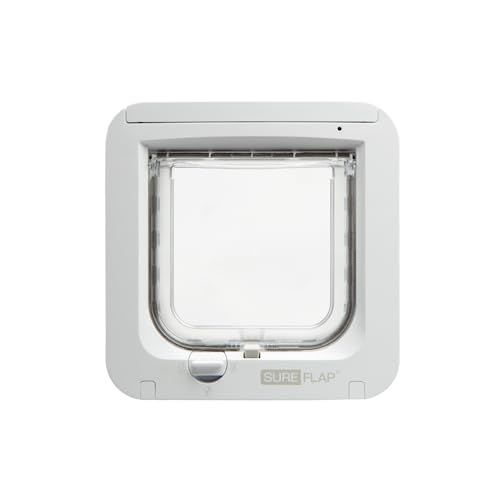

Imagine your cat scratching at an interior door at 3 AM, wanting access to their litter box or a quiet room. You stumble out of bed to let them through, disrupting your sleep and your pet’s routine. This scenario is all too common for cat owners, but modern technology offers a solution. This guide compares smart pet doors and RFID pet doors, helping you decide which technology best fits your home and your cat’s needs. Whether you are looking to manage multi-pet households or simply want to give your cat more independence, understanding the differences is key. For more insights on pet tech, explore our Pet Tech Guides.

Buying Guide
Selective Entry Technology
The core difference between smart and RFID pet doors lies in how they recognize your pet. RFID pet doors use a collar key that emits a radio signal to unlock the flap. Smart pet doors often incorporate additional features like remote control or app connectivity, offering more control over who enters and when. For example, the CUIBIRD Smart Cat Door uses RFID technology with four collar sensors, ensuring only your cat with the matching collar gains access. This selective entry is crucial for keeping out stray animals or other pets in a multi-pet home. Check out our Comparisons category for more product comparisons.
Installation and Compatibility
Ease of installation varies by model. Many smart pet doors are designed for standard interior doors and can be installed with basic tools. However, some models may have limitations. For instance, the CUIBIRD Smart Cat Door includes a warning that installing it in a metal door or wall can affect RFID tag reading. Always check the compatibility with your door material before purchasing. RFID pet doors generally offer straightforward installation, but smart models with more features might require additional setup.
Multi-Pet Household Management
If you have multiple cats, a smart pet door with selective entry can be a game-changer. It allows you to designate specific areas for feeding, litter boxes, or sleeping, preventing food stealing or territorial disputes. RFID pet doors with multiple collar sensors, like the CUIBIRD model, can accommodate up to four cats, each with their own sensor. This feature promotes harmony and organization in homes with several pets.
Security and Energy Efficiency
Both smart and RFID pet doors enhance security by preventing unwanted animals from entering. They also help maintain energy efficiency by reducing drafts between rooms. The automatic locking mechanism ensures that the door remains closed when not in use, preserving your home’s temperature and privacy. Smart models may offer additional locking options, such as a remote control for manual override.
Final Thoughts
When choosing between a smart pet door and an RFID pet door, consider your specific needs. For most cat owners, the Smart Cat Door with 4 Collar Sensor Key from CUIBIRD offers an excellent balance of selective entry, ease of use, and multi-pet compatibility. Its RFID technology provides reliable, hands-free access for your cat while keeping other animals out. If you prefer a simpler, more straightforward solution, an RFID pet door without smart features might suffice, but the added convenience of remote control and four locking positions makes the CUIBIRD model a versatile choice for modern pet care.
Related Guides
- Best RFID Dog Doors in 2026
- Weatherproof Pet Doors for Cozy Homes in 2026
- 5 Smart Dog Doors for Effortless Pet Access in 2026
Frequently Asked Questions
How does an RFID pet door work?
An RFID pet door uses a small tag or sensor attached to your pet’s collar. When your pet approaches the door, the sensor emits a radio signal that is detected by the door’s reader. If the tag is recognized, the door unlocks automatically, allowing your pet to pass through.
Can a smart pet door be used for both cats and dogs?
Yes, many smart pet doors, including the CUIBIRD model, are designed for use with cats and small dogs. The collar sensors can be attached to any pet’s collar, making it a versatile solution for multi-species households. However, always check the size specifications to ensure your pet can fit through the door.
What happens if my cat loses its collar sensor?
If your cat loses its sensor, the door will remain locked until you replace the sensor. Most RFID pet doors come with multiple sensors, so you can use a backup. Some models also offer a manual override or remote control to unlock the door temporarily. To avoid this issue, consider securing the sensor firmly to the collar.
Is an RFID pet door safe for my cat in 2026?
Yes, RFID pet doors are generally safe for cats. The technology uses low-power radio waves that are not harmful to pets. Additionally, the automatic locking mechanism prevents your cat from getting stuck or injured. As with any pet product, ensure proper installation and supervision during initial use. For more safety tips, visit our Pet Tech Guides.