
Imagine coming home to find your living room floor scratched and the dog whining at a closed door. Or waking up at 3 a.m. to let the cat out. Pet doors solve these hassles, but the choice between a WiFi-enabled model and a classic sensor-only door can be confusing. In this guide, we compare app-controlled pet doors with traditional models that rely on collar keys or microchips. You will learn how each type works, what to look for, and which option best fits your lifestyle and your pet’s habits.
Whether you want to monitor your pet’s comings and goings from your phone or prefer a simple, reliable door that never needs a battery recharge, we have you covered. We evaluated three popular products from High Tech Pet and PetSafe to highlight the differences. If you are new to pet tech, our Pet Tech Guides offer helpful background on how these devices integrate with your home.

Buying Guide
App Control and Remote Access
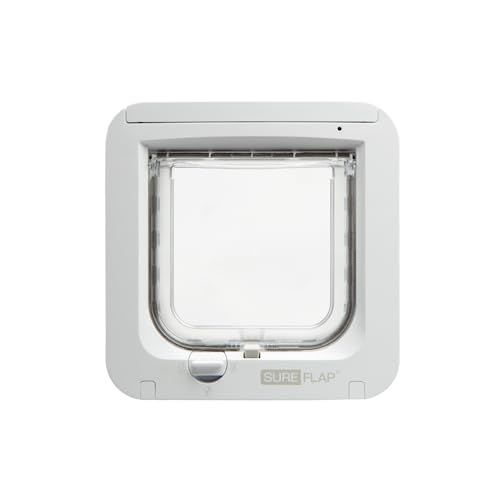
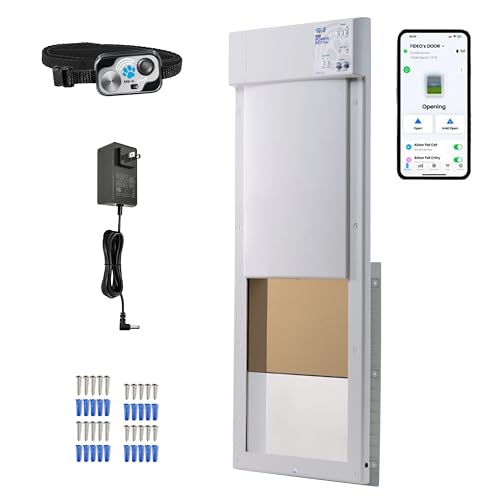
An app-controlled pet door lets you lock, unlock, or monitor the door from anywhere. You can receive notifications when your pet goes in or out, set individual timers for each pet, and even adjust schedules on the fly. This is ideal for busy pet owners who travel or work long hours. The Power Pet Automatic WiFi Pet Door and the PetSafe SmartDoor Connected Pet Door both offer app control, though the SmartDoor integrates with the My PetSafe app for scheduling and alerts.
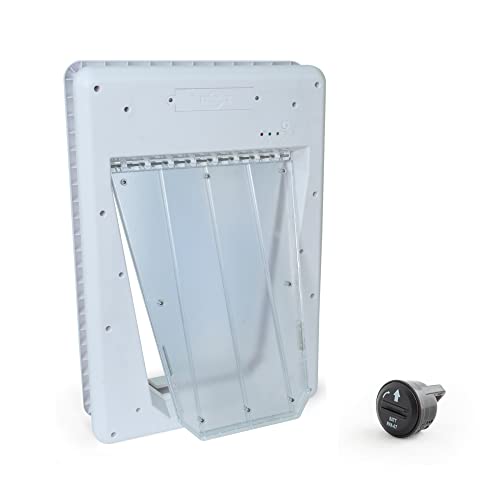
Without an app, you rely on physical keys or sensors. The PetSafe Electronic Pet Door uses a collar key that only opens for pets wearing it. There is no smartphone feedback, but the door never depends on WiFi or battery life on your phone. If you prefer a straightforward, offline solution, a non-app door may be your best bet.
Selective Entry and Security
Both app and non-app doors can restrict access to only your pets. App models often allow you to set multiple schedules per pet and lock the door remotely. The SmartDoor Connected Pet Door also works with your cat’s microchip, adding an extra layer of security. Non-app doors like the PetSafe Electronic Pet Door support up to five collar keys, keeping neighborhood animals out without any digital setup.
Security also means weather sealing and locking mechanisms. The Power Pet WiFi door has an auto dead-bolt lock and air-tight seal, while the SmartDoor features multi-point locking and dynamic weather sealing. For those who prioritize home energy efficiency, these features matter regardless of app capability.
Installation and Power Source
App-controlled doors typically require a power source (batteries or AC adapter) and a stable WiFi connection. The Power Pet door is wired for consistent power; the SmartDoor uses batteries. Non-app doors like the PetSafe Electronic Pet Door are battery operated (4 D-cell batteries, not included) and need no WiFi. Installation is similar for all: they fit in standard doors or walls with optional kits. Consider your home’s layout and whether you have a reliable WiFi signal near the door.
If you rent or cannot drill large holes, a simple battery-operated door might be easier to install and remove. For homeowners who want full integration, an app door with wired power offers the most control. For more on installation tips, check our Comparisons category for related guides.
Durability and Pet Size
All three doors accommodate medium to large pets. The Power Pet door is built with a bulletproof resin panel and a quick, quiet mechanism rated for years of use. The PetSafe Electronic Pet Door handles dogs up to 100 lb. The SmartDoor is medium-sized and works for cats and small to medium dogs. Consider your pet’s weight and how often they use the door. A heavier pet may benefit from a sturdier panel and stronger motor.
Durability also includes warranty and support. The Power Pet is factory refurbished with a full one-year warranty and US-based service. PetSafe offers a quality promise and US customer care. If long-term reliability matters, look for brands with proven track records.
Final Thoughts
Choosing between a pet door with an app and one without ultimately depends on how much control and convenience you want. If you love the idea of checking your phone to see when your dog came in or locking the door from the office, the Power Pet Automatic WiFi Pet Door offers robust app features, unlimited timers, and a durable build. For a simpler, reliable solution that never needs WiFi, the PetSafe Electronic Pet Door, Collar Key Sensor provides selective access with no app fuss. Both are excellent options, so think about your daily routine and your pet’s habits before deciding.
Related Guides
Frequently Asked Questions
Can I use a pet door with an app if my WiFi goes out?
Most app-controlled pet doors still function as a basic door when WiFi is down, but remote features like locking and notifications will be unavailable until the connection returns. The Power Pet door has a local control panel for manual operation.
Are pet doors without apps less secure?
Not necessarily. Non-app doors like the PetSafe Electronic Pet Door use a collar key that only opens for your pet’s specific key. This prevents other animals from entering. However, they lack remote locking capabilities, so you cannot lock the door from a distance.
How do I set up a pet door with an app?
Setup usually involves installing the door, connecting it to your home WiFi via the manufacturer’s app, and pairing your pet’s collar key or microchip. The process is straightforward and guided by in-app instructions. For detailed steps, refer to the Pet Tech Guides on this site.
Which pet door is best for multiple pets in 2026?
Both app and non-app doors can handle multiple pets. The Power Pet WiFi door supports unlimited timers for individual pets, while the PetSafe SmartDoor allows separate schedules. The PetSafe Electronic Pet Door works with up to five collar keys. Choose based on whether you want app-based scheduling or a simpler key system.