
Picture this: you return from work to find a stray cat lounging in your living room, having entered through your standard manual pet flap. It’s not just annoying; it can stress your own pets and compromise your home’s security. Electronic pet doors solve this by granting access only to animals wearing a specific sensor. In this guide, we compare three leading electronic models to help you decide whether an upgrade from a manual door is worth it. We also explore key buying factors so you can choose the perfect door for your furry friend. For more pet tech comparisons, visit our Comparisons page.

Buying Guide
Security and Pet-Only Access
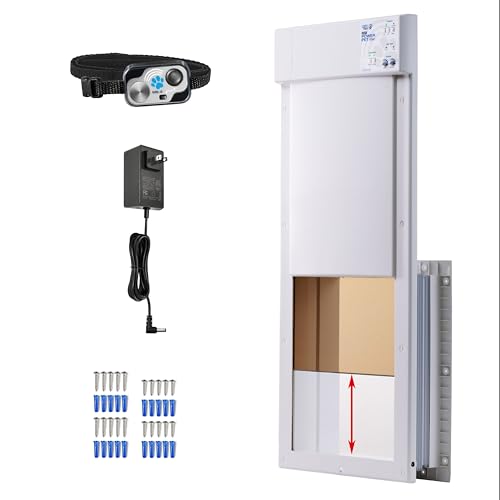
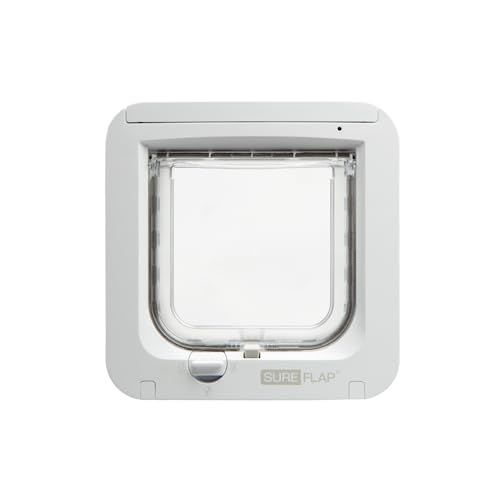
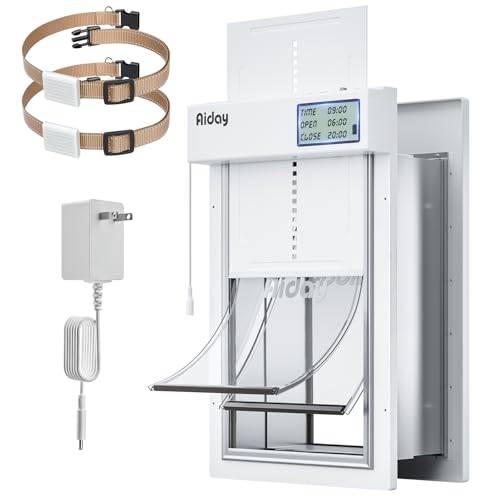
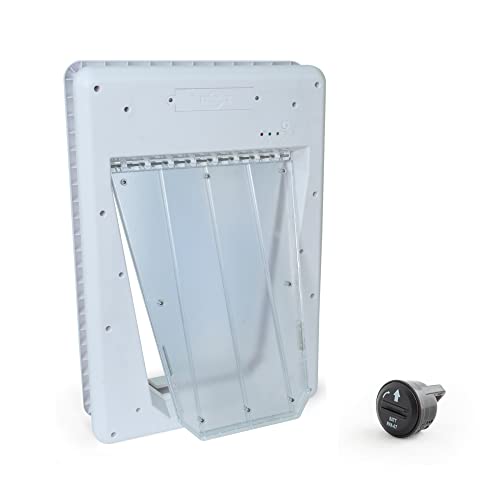
An electronic pet door’s main advantage is selective entry. The iGuardPaw model relies on a collar sensor that unlocks only for your pet. The Aiday door includes two sensor collars with adjustable range, so shy or energetic pets can approach comfortably. PetSafe’s electronic door uses a waterproof key worn on the collar and supports up to five keys for multi-pet households. If you worry about strays or wildlife entering, these sensor-based locks are far superior to a manual flap that any animal can push through.
Manual doors offer no such selectivity. They rely solely on a flap that opens with light pressure, leaving your home vulnerable. For homeowners seeking a secure solution, electronic models are the clear choice.
Installation and Fit
Not all electronic pet doors fit the same openings. The iGuardPaw Automatic Dog Door is designed for doors with thickness from 1 1/4″ to 2 3/16″, while the Aiday model is built for wall installation with an expandable tunnel adapting to 4.1″ to 7.1″ wall thickness. PetSafe’s electronic door installs in interior or exterior doors and offers a separate wall install kit. Before buying, measure your door or wall cutout carefully. The iGuardPaw requires a 12 7/8″ x 20 7/16″ opening; the Aiday needs 11.2″ x 18.1″.
Manual pet doors generally come in standard sizes and are easier to install, but they lack the smart features of electronic models. If you’re comfortable with a basic cutout and want the simplest setup, a manual door may suffice. However, the added security and convenience of an electronic door often justifies the extra installation effort.
Ease of Use and Scheduling
Electronic pet doors allow you to set access times. The iGuardPaw offers Auto, Timer, and Manual modes, so you can restrict nighttime escapes while letting your pet roam during the day. The Aiday door lets you program specific hours directly on the unit, with manual override for flexibility. PetSafe’s door uses battery operation (4 D-cells) and programmable selective entry. None require constant Wi-Fi, making them reliable.
With a manual door, scheduling is impossible, your pet can come and go at any hour. For owners who want control over their pet’s movements, especially at night or during vacations, electronic doors provide unmatched convenience.
Durability and Weather Sealing
Both the iGuardPaw and Aiday models feature aluminum frames and tunnels for long-lasting build quality. The iGuardPaw includes flexible seals, three-sided magnets, and a honeycomb flap to reduce drafts and noise. Aiday’s dual clear flaps with magnetic seals and steel reinforcement create a storm-proof barrier that blocks rain and drafts. PetSafe’s electronic door has a sturdy flap but relies on batteries, which may need replacement over time.
Manual flaps often lack such insulation, leading to higher energy bills and more noise. If your pet door is exposed to harsh weather, an electronic model with advanced sealing can keep your home comfortable. For more pet tech insights, explore our Pet Tech Guides.
Final Thoughts
Choosing between an electronic and manual pet door comes down to how much control and security you want. If you prioritize selective access with minimal hassle, the iGuardPaw Automatic Dog Door for Door offers excellent sensor reliability and a soft-close flap that reduces noise. For those on a budget who still want programmable scheduling and wall installation, the PetSafe Electronic Pet Door, Collar Key Sensor provides a solid, battery-powered solution that works with multiple pets. Either way, upgrading from a manual flap gives you peace of mind and a warmer, safer home.
Related Guides
Frequently Asked Questions
How does an electronic pet door know it’s my pet?
Most electronic pet doors, like the iGuardPaw and PetSafe models, use a collar-mounted sensor or key. When your pet approaches, the sensor communicates with the door to unlock or open. Without the correct signal, the door remains locked, keeping other animals out.
Can I install an electronic pet door in a wall or a door?
Yes, but check the product specifications. The Aiday Automatic Dog Door for Wall is designed specifically for wall installation with an expandable tunnel. The iGuardPaw model is built for doors, while PetSafe’s electronic door can be installed in a door or wall with an optional kit. Always measure your opening thickness before buying.
Are electronic pet doors safe for small dogs or cats?
Yes, when sized correctly. Both the iGuardPaw and Aiday doors have large flaps suitable for dogs up to 100 lbs, but they also work for smaller pets. The sensor range can be adjusted on some models so a shy cat triggers the door from a comfortable distance. For more advice on pet tech for small animals, visit our Comparisons page.
Do electronic pet doors need to be plugged in or do they use batteries?
It depends on the model. The iGuardPaw and Aiday doors plug into a standard outlet (Aiday includes an extension cord). PetSafe’s electronic door runs on four D-cell batteries (not included), giving you flexibility if an outlet is not nearby. Battery-operated models are easier to install but require periodic battery changes.