

Picture this: you’re away on a weekend trip, and a sudden power outage hits your home. Without a backup schedule, your pet’s feeding routine could be disrupted. That’s why a smart feeder with a reliable backup feeding schedule is essential. In this guide, we’ve reviewed the best smart feeders with backup feeding schedule for 2026, focusing on models that keep your pet fed even when the power goes out. Whether you have a large dog or a finicky cat, these feeders offer peace of mind. For more on the importance of backup power, check out our roundup of battery backup smart pet feeders.




Buying Guide: What to Look for in a Smart Feeder with Backup Feeding Schedule
Battery Backup Reliability
The core of a backup feeding schedule is how the feeder handles power loss. Look for models that automatically switch to battery power without missing a meal. Most use D-cell batteries that can keep the schedule running for days. Some feeders disable WiFi and app functions during battery operation to conserve power, but the preset feeding times remain intact. For a deeper look at models built for outages, see our guide on smart feeders for power outages.
Capacity and Kibble Size
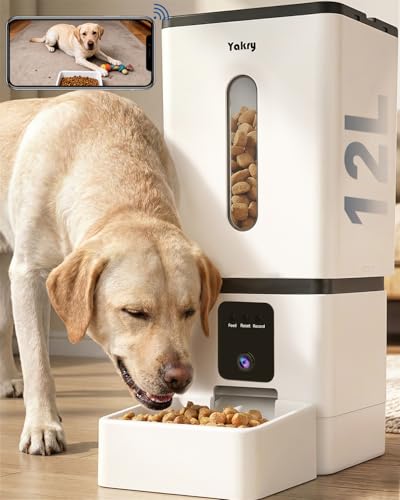
For large dogs or multi-pet homes, a large capacity tank reduces refill frequency. Options range from 8L to 15L, supporting up to 63 cups. Equally important is the feeder’s ability to handle large kibble without jamming. Models like the Gwozn feeder accept kibble up to 23mm, while others cap at 18 to 20mm. If you have a big breed, prioritize both capacity and anti-clog design. Browse our picks for smart feeders with large capacity for more options.
Camera and Two-Way Audio
Many smart feeders now include a built-in HD camera with night vision and two-way audio. This lets you check on your pet, see if food was dispensed, and even talk to them while you’re away. It’s especially reassuring during power outages when you can’t physically check the bowl. For feeders that excel in remote monitoring, visit our feeders with camera category.
App Control and Dual-Band WiFi
A user-friendly app makes scheduling and portion control effortless. Dual-band WiFi (2.4GHz and 5GHz) ensures a stable connection even in crowded networks. Look for apps that allow you to set up to 15 meals per day with precise portion sizes. Some also let you share control with family members. For more details on reliable app-controlled feeders, see our roundup of smart feeders with battery backup.
Final Thoughts
For pet owners who need a robust backup feeding schedule, the Gwozn Automatic Dog Feeder Large Breed stands out with its massive 15L capacity, anti-clog system, and reliable battery backup, making it ideal for large dogs. For cat owners or those with smaller pets, the oneisall 2.4 GHz Wi-Fi Automatic Cat Feeder offers precise portion control and easy app management at an affordable price. Both models ensure your pet’s meals continue seamlessly, even during unexpected outages.
Related Guides
- Best Smart Dog Feeders with WiFi for 2026
- How to Prevent Automatic Feeder Jams
- How Does an Automatic Pet Feeder Work
Frequently Asked Questions
How does backup battery work in smart feeders?Most smart feeders automatically switch to battery power when AC power is lost. They typically use D-cell batteries (not included) to maintain the preset feeding schedule. However, WiFi and app functions are usually disabled during battery operation to conserve power. For a list of feeders that handle power outages well, check our dedicated guide.
Can I use a smart feeder without WiFi?Yes, many smart feeders can be programmed manually via buttons on the device, allowing you to set a schedule without WiFi. However, remote control and camera features require an internet connection. If you travel frequently, choose a model with a reliable offline schedule.
What size kibble can these feeders handle?Feeders like the Gwozn model handle kibble up to 23mm, while others support up to 20mm or 18mm. Always check the maximum kibble size to avoid jams. For large breeds that eat bigger kibble, a feeder with a wide dispensing outlet is essential.
How long does a full tank last for large dogs?Depending on portion settings and dog size, a 15L tank can last up to 18 to 25 days for large breeds. Smaller capacities like 12L may last 1 to 2 weeks. If you plan extended trips, consider a high-capacity model to reduce refills.


