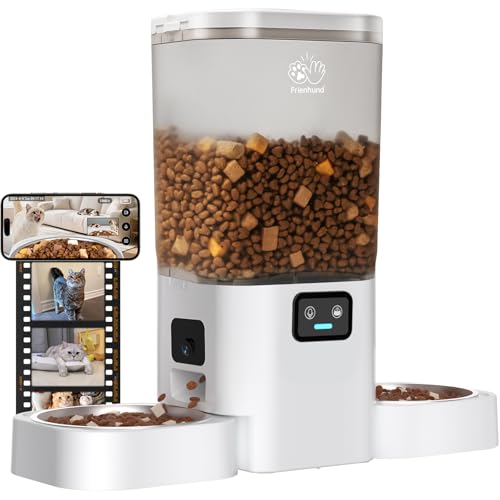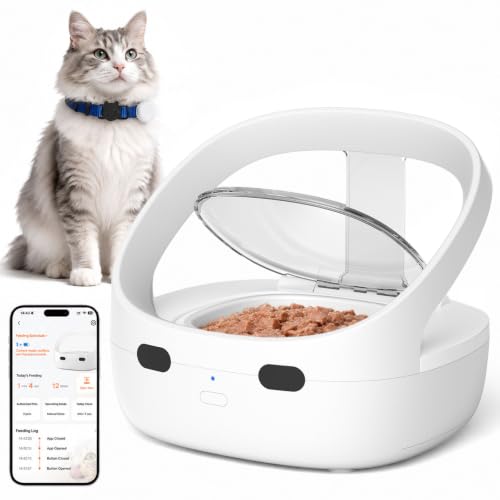

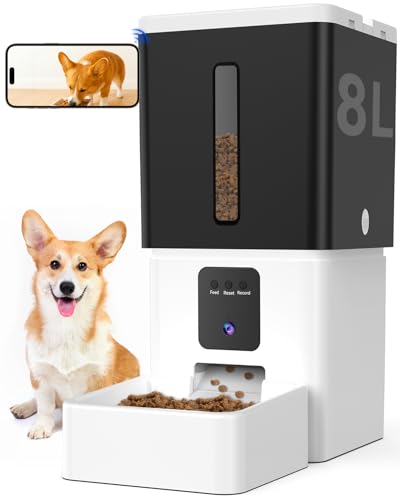
If your dog requires a strict diet for weight management, medical conditions, or simply to maintain healthy eating habits, an automatic feeder can be a game-changer. Manually measuring every meal and sticking to a schedule is challenging, especially with a busy lifestyle. That’s where programmable dog feeders come in: they dispense precise portions at set times, ensuring your pet never overeats or misses a meal. In this guide, we’ve evaluated five top-rated feeders designed specifically for diet-controlled dogs, focusing on portion accuracy, remote monitoring, and large capacity. Whether you need a feeder with a camera to check on your pup or a simple timer for portion control, our picks will help you make an informed decision. For more on portion control strategies, check out our roundup of best dog feeders for measured meals.



Buying Guide: What to Look for in a Diet-Controlled Dog Feeder
Portion Control and Meal Scheduling
The core of any diet-controlled feeder is its ability to dispense exact portions at scheduled times. Look for models that allow you to set multiple meals per day (up to 15) and adjust portion sizes in small increments—typically around 10g per portion. This precision helps you follow your vet’s recommendations without guesswork. For a deeper look at portion control features, see our guide on best dog feeders for controlled portions.
Camera and Remote Monitoring
Many diet-controlled dogs are on strict regimens, and being able to visually confirm that your pet has eaten each meal provides peace of mind. Feeders with built-in HD cameras, night vision, and two-way audio let you check in from anywhere via smartphone app. This is especially useful for dogs that need to be monitored for vomiting or slow eating. Explore our feeders with camera subcategory for more options.
Large Capacity and Anti-Jam Design
For large breeds or multiple days of feeding, a hopper capacity of 15 liters (about 63 cups) reduces refill frequency. Equally important is an anti-jam system that handles large kibble sizes (up to 23mm) and freeze-dried food. Models with wide dispensing outlets and high-torque rotors prevent clogs, ensuring meals are delivered reliably even when you’re away.
Ease of Cleaning and Backup Power
A diet feeder must remain hygienic, so look for removable, dishwasher-safe parts (bowl, hopper, rotor). Sealed lids with desiccant compartments keep kibble fresh. Additionally, a battery backup ensures the feeder continues operating during power outages, preserving the feeding schedule. This is critical for dogs on timed medication or insulin regimens.
Final Thoughts
Choosing the right feeder for your diet-controlled dog comes down to your specific needs: if you require a large capacity with a high-quality camera and two-way audio for a big breed, the Gwozn Automatic Dog Feeder Large Breed offers an impressive 15L hopper, 1080P night vision, and app control that lets you monitor every meal. For a more budget-friendly option that still delivers reliable portion control and a camera, the UTCG Automatic Dog Feeder with Camera provides 8L capacity, 5G WiFi, and easy scheduling, making it a solid choice for medium dogs. Both models support backup power and easy cleaning, giving you confidence that your dog’s diet stays on track even when life gets hectic.
Related Guides
- Best Smart Dog Feeders with WiFi for 2026
- How to Prevent Automatic Feeder Jams
- How Does an Automatic Pet Feeder Work
Frequently Asked Questions
How do automatic feeders help with diet control?
Automatic feeders dispense pre-measured portions at scheduled times, eliminating overfeeding and ensuring consistent meal sizes. Many models allow you to program up to 15 meals per day with precise portion increments, which is essential for weight management or medical diets. For more tips, see our automatic feeders category.
Can I use these feeders for wet food?
Most automatic feeders are designed for dry kibble only. Wet food can spoil in the hopper and may clog the dispensing mechanism. If your dog requires a wet food diet, consider a refrigerated automatic feeder or manual portioning with a timed reminder.
What happens if the power goes out?
High-quality feeders include battery backup (typically 3 D-cell batteries) that automatically takes over during an outage. This keeps the feeding schedule running, though app connectivity may be lost. Always install batteries as a precaution, especially if you rely on remote monitoring.
Do I need WiFi for the feeder to work?
Not necessarily. Many feeders offer manual button controls and LCD screens for programming without WiFi. However, WiFi-enabled models provide app-based scheduling, live camera viewing, and remote dispensing, which are valuable for diet monitoring. Dual-band WiFi (2.4GHz and 5GHz) ensures stable connectivity in most homes.