

If you share your home with multiple cats, you know the struggle: one cat sneaks the other’s special diet food, or the picky eater never gets a chance because the food hoarder finishes everything. Smart feeders with pet identification solve this by ensuring the right pet gets the right meal. Whether you need RFID collar tags, camera-based recognition, or app-controlled scheduling, this guide reviews five top models that take the guesswork out of multi-pet feeding. For more on managing multiple cats, check out our best smart feeders with camera for multiple cats guide.



Buying Guide
Pet Identification Technology: RFID vs Camera vs App Control
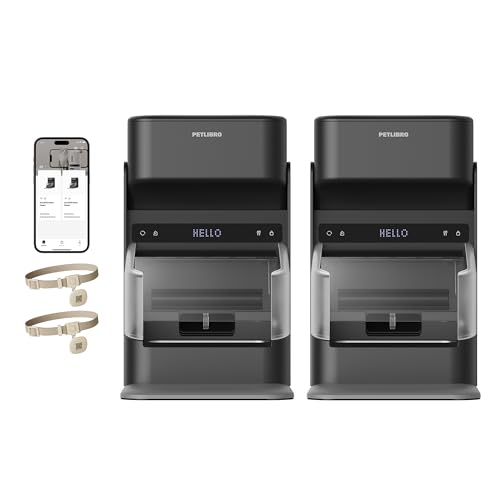
The core feature of any pet identification feeder is how it recognizes your pet. RFID feeders use a collar tag that triggers the lid to open only for the assigned cat, preventing food stealing. Camera-based feeders rely on AI and motion detection to monitor eating habits but may not distinguish between pets. App-controlled feeders let you schedule meals manually, ideal for single-pet homes or when you want remote feeding without identification. For multi-pet households, RFID is the most reliable method. Learn more in our multi-pet feeders category.
Multi-Pet Feeding & Anti-Stealing Design
If two cats have different diets, a feeder that locks when the wrong cat approaches is essential. Look for models with a bowl shield or locking lid that only opens for the correct RFID tag. Some feeders also include a slow-lid speed option to help skittish cats feel comfortable. The PETLIBRO RFID feeder excels here, while camera models like the Minikey offer AI alerts when unusual activity is detected. See our best smart feeders with camera for multiple pets for more options.
Food Freshness & Storage Capacity
Dry kibble stays fresh longer when the feeder has a sealed lid, desiccant bags, and airtight rotors. A large capacity tank (5L to 6.5L) reduces refill frequency, while stainless steel bowls are easier to clean and resist bacteria. All models in this roundup include freshness features, but the PETLIBRO and Minikey stand out with multiple layers of protection. For working owners who need reliable storage, read our best smart feeders with camera for working owners guide.
Reliability & Backup Power
A smart feeder is only useful if it works consistently. Look for dual power options (AC adapter plus battery backup) so meals continue during outages. Anti-jam sensors and low-food alerts give you peace of mind. The IMIPAW and Minikey both offer battery backup, while the PETLIBRO models include infrared sensors to detect clogs. For more on WiFi reliability, see our best smart feeders with camera and WiFi roundup.
Final Thoughts
Choosing the right smart feeder with pet identification comes down to your household size and needs. For multi-cat homes with different dietary requirements, the PETLIBRO RFID Cat Feeders for 2 Cats offers unmatched precision with its collar tag system and bowl shield. If you want high-quality monitoring and AI features for a single pet, the Automatic Cat Feeder with 2K Camera from Minikey delivers sharp video and activity tracking. Both models ensure your pet never misses a meal, no matter where you are.
Related Guides
- Best Smart Dog Feeders with WiFi for 2026
- How to Prevent Automatic Feeder Jams
- How Does an Automatic Pet Feeder Work
Frequently Asked Questions
How does RFID pet identification work in smart feeders?
RFID feeders come with a collar tag that emits a unique signal. When the tagged cat approaches, the feeder unlocks the lid or bowl shield, allowing only that pet to eat. This prevents food stealing and ensures each cat gets its prescribed portion. The PETLIBRO RFID feeder uses this technology with a matched pair of units for two cats.
Can I use a smart feeder with pet identification for dogs?
Yes, many smart feeders work for both cats and small to medium dogs. The PETLIBRO Automatic Cat Feeder and IMIPAW model are suitable for dogs that eat dry kibble. However, RFID feeders are typically designed for cats due to collar size, but you can attach the tag to a dog collar if it fits securely. For dog-specific options, see our dog feeders category.
Do smart feeders with cameras also identify pets?
Camera-based feeders like the Minikey and PETLIBRO Camera model use AI to detect motion and activity, but they do not identify individual pets by tag. They can alert you when a pet is eating and record video, but for multi-pet identification, you need an RFID system. Camera feeders are best for single-pet homes where you want to monitor eating habits remotely.
What happens if the power goes out?
Most smart feeders include battery backup to keep feeding on schedule during outages. Models like the Minikey and IMIPAW support both AC power and batteries (not included). The PETLIBRO feeders also have low-battery alerts. Always check the product specs for backup power options, especially if you travel frequently in 2026.

