

Picture this: it’s 7 a.m., your cat is weaving between your legs, and your dog is staring at the food container like he owes him rent. You need a reliable way to keep both pets fed without overfeeding or constant refills. That’s where the debate of cat feeder vs dog feeder comes in. This guide breaks down the main differences, helps you match a dispenser to your pet’s habits, and reviews five practical models we assessed for this comparison.
The feeding style of a cat and dog rarely match. Cats often graze, while dogs may inhale everything in sight. A dispenser that works for one might not suit the other, so it helps to know what each type offers. We designed this comparison around portion control, power reliability, and cleaning convenience.
We evaluated five products from brands like Wefeedy, PETLIBRO, ANDOLL HOME, VOLUAS, and Amazon Basics. Each feeder was reviewed for ease of setup, portion accuracy, and whether it can handle busy pet parents’ real routines. To see how we rate other pet gadgets, check out our pet tech guides.



Buying Guide
Before you compare models, decide what matters most: portion accuracy, backup power, capacity, or smart features. We used those four filters to break down each feeder below. Keep them in mind as you scan the shortcode comparison at the top of this page.
Gravity vs Automated Dispensing
Gravity feeders like the Amazon Basics Gravity Pet Food Feeder for Dogs let kibble fall into the bowl automatically. They need no power, no programming, and no app. The Wefeedy Automatic Cat Feeder and Water Dispenser uses a similar gravity approach but adds a 3.3L water dispenser, making it a convenient all-in-one for owners who just want to fill, refill, and go.
Automated dispensers, on the other hand, use a timer or smart app to release set portions. If you need strict portion control for a food-obsessed dog, automation is the way to go. If your pet free-feeds naturally, a simple gravity hopper works fine.
One warning: gravity feeders don’t stop pets from overeating. If your dog tends to gulp, choose a timed dispenser that delivers one meal at a time. Cats who nibble throughout the day, however, usually do well with a slow-draining hopper. Some gravity models also come with a water dispenser, like the Wefeedy set, which is a good match if your pets tend to tip over their water bowl.
Power Source and Backup
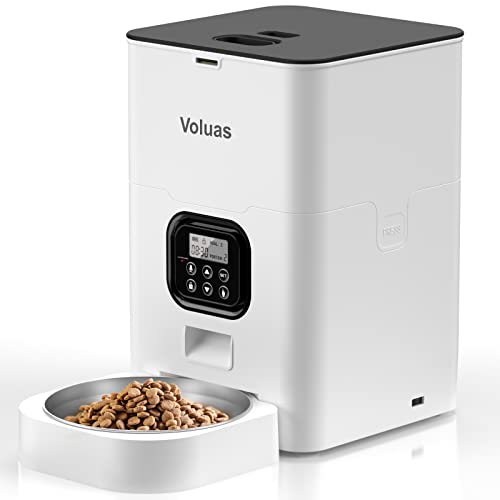
WiFi feeders like the PETLIBRO Automatic Cat Feeder rely on an adapter for constant power. But a power outage shouldn’t mean a missed meal. Look for models that accept batteries as backup. The VOLUAS Automatic Cat Feeder runs on either USB power or D batteries, which adds resilience for travel and emergencies.
Battery requirements differ between models. Some use three AA cells, others need three D cells, and a few only work with a wired connection. Always check the manual before you buy, because battery type affects your spare-battery stash.
If you leave for a weekend, a dual-power feeder is the safer bet. Also check whether the app remains functional after the WiFi drops; many models still keep their scheduled meal times in local memory. Most automated feeders include a USB cable and power adapter, so you won’t need extra accessories.
Capacity and Cleaning
Bigger tanks mean fewer refills but increase the chance of stale food. The ANDOLL HOME Automatic Cat Feeder,4L Timed Cat&Dog stores 4 liters, enough for several days, and includes a desiccant box to keep kibble crisp. The Amazon Basics Gravity Pet Food Feeder for Dogs offers a transparent hopper with a 152fl.oz capacity, so you can see when food runs low.
Cleaning is just as important. Removable bowls, rotors, and hoppers make the job quick. Gravity models are the simplest to dismantle, while smart feeders need a bit more care around sensors and motors.
For multi-pet households, a 4L tank may handle two cats for almost a week. If you travel frequently, look for a feeder with both a large reservoir and a sealed lid to keep food fresh. If you have a larger dog, look for a hopper that can handle more than 5 cups of kibble at a time.
Smart Features and Meal Customization
Voice recording, app scheduling, low-food sensors, and portion setting are useful for busy owners. The PETLIBRO Automatic Cat Feeder connects to your phone over WiFi and lets you set up to 10 meals per day with adjustable portion counts. It also sends low-food notifications directly to your phone.
For anti-jam performance, the ANDOLL HOME Automatic Cat Feeder,4L Timed Cat&Dog uses a swinging food distributor to keep kibble moving. Its wide bowl tilts slightly for comfortable eating, and you can record a 10-second voice call to announce each meal.
Keep an eye out for low-food sensors and jamming alerts. These features save you from coming home to a hungry pet. The PETLIBRO app, for example, tracks feeding history and notifies you when the tank is empty.
If you have a dog that gulps, choose a model with anti-jam delivery and adjustable portion sizes. For multi-pet homes, consider separate feeders to avoid cross-eating. Explore our detailed side-by-side reviews in the comparisons hub for more context.
Final Thoughts
Choosing between a cat feeder and a dog feeder is really about your pet’s eating speed, your schedule, and how much maintenance you want. For a low-stress, no-wiring solution that keeps both food and water available, the Wefeedy Automatic Cat Feeder and Water Dispenser is a thoughtful all-in-one pick. If you need precise portion control with app access and voice meal calls, the PETLIBRO Automatic Cat Feeder is the more capable companion. Both solve the same core problem, just with different levels of complexity.
Related Guides
Frequently Asked Questions
Can I use a cat feeder for my dog?
Yes, most cat feeders also handle dry dog food, as long as the kibble size fits the dispenser’s opening. Check the portion setting and hopper width for large breed dogs that need bigger meals. If your dog eats extremely large kibble, look for a feeder labeled for dogs.
What is the difference between a cat feeder and a dog feeder?
Main differences are portion sizes and food shape. Dog feeders often have larger openings for bigger kibble, while cat feeders prioritize smaller, quieter dispensing. Many modern feeders work for both, but you need to match the opening to your pet’s food.
How often should I clean an automatic pet feeder?
Ideally every two weeks, but more often if you use wet food or have messy eaters. Removable parts make this easier. As of September 2026, most recommended models include washable bowls and hoppers.
Do smart feeders work without WiFi?
Many WiFi feeders still have a manual button and can dispense on schedule once programmed, but app control needs a connection. Battery backup keeps them running during outages, and the unit will resume normal feeding once power returns. If you need full remote control, keep the WiFi enabled.