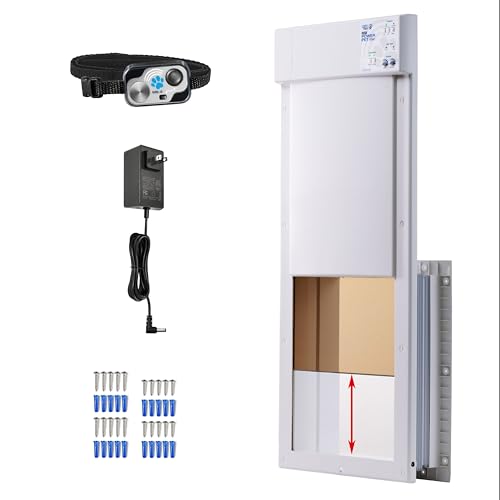

Picture this: your pet scratches at the back door, but you’re in a meeting or out running errands. You want to give them freedom to come and go, but not every stray animal in the neighborhood. That’s where modern pet doors shine. Today we explore two popular types: motorized pet doors that roll up when your pet approaches, and microchip pet doors that read your pet’s implanted ID or collar tag. Each has its own strengths, and the right choice depends on your pet’s size, your home’s layout, and your need for control. If you’re new to the world of automated pet access, check out our Pet Tech Guides for more background. But first, let’s compare these two categories head-to-head.

Buying Guide: Motorized vs Microchip Pet Doors
To make an informed decision, focus on these four factors: access control, installation flexibility, power source, and smart features. Each factor shifts the balance between the two types.
Access Control: Selective Entry vs Approach Sensing
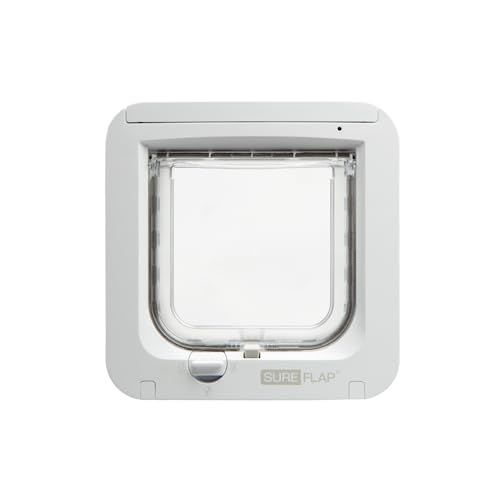
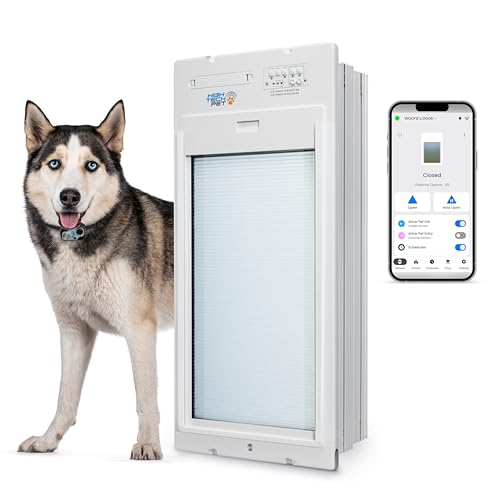
Microchip doors like the SureFlap – Sure Petcare Microchip Cat Flap, White use RFID to read your pet’s microchip or a collar tag. Only pets whose IDs are registered can enter, keeping strays out. Some models also let you set exit permissions using dual-scan technology, so you can keep specific pets indoors. In contrast, motorized doors such as the Power Pet Smart Roll Up Automatic Dog Door rely on an ultrasonic collar transmitter. They activate when the pet wearing that transmitter approaches and can also be set to allow entry only, exit only, full access, or locked. If you have multiple pets with different microchips, a microchip door gives you fine-grained control at entry. If you want a seamless, no-wait experience for your dog, a motorized door with approach sensing may be more convenient. For more comparisons, see our Comparisons page.
Installation and Size
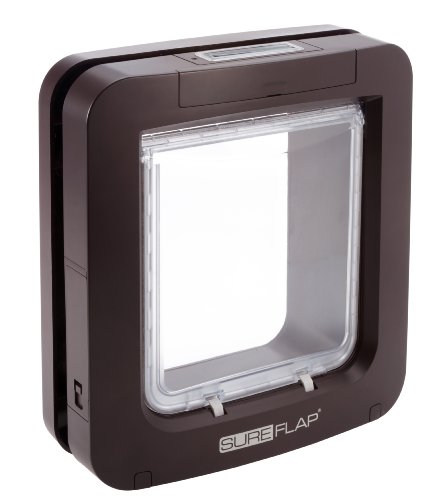
Microchip doors are generally smaller and fit cats and small dogs. For example, the SureFlap Microchip Cat Flap has an opening of 4 3/4 inches high by 5 5/8 inches wide. The SureFlap Microchip Pet Door (Brown) offers a slightly larger 6 11/16 by 7 inch opening, suitable for small to medium breeds. All can be installed in doors, windows, or walls. Motorized doors like the Power Pet Smart Roll Up are built for larger dogs and require a cutout of around 12 by 16 inches. They are wall-mountable and come with an added security panel. If you have a large breed or need a door that accommodates both cat and dog sizes, the motorized option is more versatile. Measure your pet’s height and width before purchasing.
Power and Battery Life
Both types are battery powered, but the demands differ. Microchip doors typically use 4 AA or 4 C batteries, lasting up to 12 months depending on usage. They have a low battery indicator light. Motorized doors require more power to operate the rolling mechanism and sensor. The Power Pet Smart Roll Up uses a rechargeable battery pack and also supports a plug-in adapter for continuous power. Battery life varies with usage frequency, but you can expect to recharge every few months. If you prefer minimal battery maintenance, a microchip door is simpler. If you want the door to work reliably with a heavy-traffic pet, consider the motorized model’s backup power options.
Smart Features and Connectivity
Motorized pet doors lead in smart home integration. The Power Pet Smart Roll Up offers WiFi control, a dedicated app, and compatibility with Alexa, Google Home, and Siri. You can set schedules for entry and exit, remotely lock or unlock, and enable a safe return feature to prevent lockouts. Microchip doors are simpler: no app, no schedules, just RFID recognition. Some models like the SureFlap DualScan let you set exit permissions per pet, but they lack remote control. If you want to monitor and manage your pet’s comings and goings from anywhere, a motorized smart door is the way to go. If you prefer a set-and-forget solution, a microchip door is reliable and straightforward.
Final Thoughts
After evaluating both categories, your decision narrows to your pet’s size and your need for connectivity. For a large dog that needs effortless access and you want app-based control, the Power Pet Smart Roll Up Automatic Dog Door combines security with smart home convenience. For a cat or small dog where selective entry is the priority and you prefer a lower maintenance solution, the SureFlap DualScan Microchip Cat Door offers reliable microchip recognition with the ability to manage entry and exit permissions. Both are solid investments in your pet’s freedom and your peace of mind.
Related Guides
Frequently Asked Questions
Can a motorized pet door work with multiple pets?
Yes, but it requires each pet to wear the compatible ultrasonic collar transmitter. The Power Pet Smart Roll Up can learn up to 32 transmitters. However, non-transmitting pets won’t trigger the door. Microchip doors like the SureFlap DualScan can also store up to 32 microchips, making them ideal for multi-pet households without collars.
Do microchip pet doors work with all microchips?
Most microchip doors are compatible with common frequencies: 9-digit (Avid Secure), 10-digit (FDXA), and 15-digit (FDXB) microchips. Always check your pet’s microchip number with your vet or rescue. The SureFlap models we reviewed support these standards. For pets without microchips, you can use optional collar tags.
How secure are motorized pet doors compared to microchip doors?
Both offer strong security. Microchip doors rely on the pet’s unique ID, so only registered pets can enter. Motorized doors use encrypted ultrasonic signals and provide an added security panel for when the door is not in use. The Power Pet Smart Roll Up also features electronic locking to prevent forced entry. In 2026, both types are significantly more secure than traditional flap doors.
Which is better for a large dog: motorized or microchip?
For a large dog (over 50 lbs), a motorized door like the Power Pet Smart Roll Up is generally the better choice because the opening is much larger and the roll-up mechanism avoids a heavy flap that could be difficult for a big dog to push through. Microchip doors can work for smaller large breeds (up to 30 lbs), but check the opening size. The SureFlap Microchip Pet Door is rated for small dog breeds and cats.