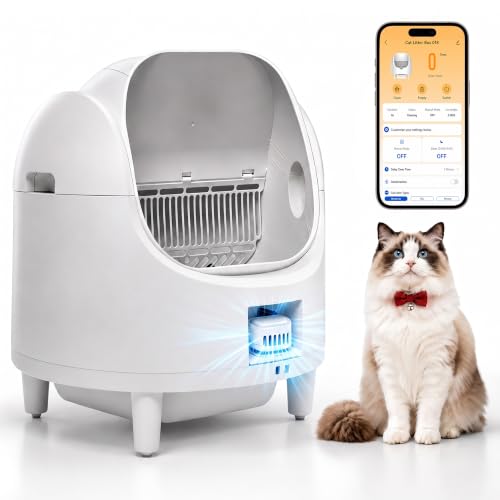

If you worry about your cat’s health but struggle to spot early signs, a smart litter box with health tracking can be a game changer. These devices not only automate scooping but also track weight, waste frequency, and even litter box visits, alerting you to changes that may require a vet visit. In this guide, we review five leading models that combine self-cleaning convenience with advanced health monitoring, so you can keep your cat healthy with less effort.
Whether you have a single cat or a multi-cat household, these smart boxes use sensors, AI, and app integration to give you peace of mind. For deeper insights into per-cat tracking, check out our roundup of best smart litter boxes with Per-Cat weight tracking.



Buying Guide
Health Tracking Accuracy
The core feature of any health-tracking litter box is how precisely it measures weight, waste, and usage patterns. Look for models that use AI or advanced sensors to distinguish between cats in multi-cat homes. The Purina Petivity Smart Litter Box Monitor, for example, uses AI to build a unique profile for each cat, while the PETLIBRO model adds AI-camera waste analysis that identifies stool consistency.
Ease of Cleaning and Maintenance
No one wants a litter box that’s harder to clean than a traditional one. Open-top designs like the HHOLOVE and Ellenpent models make it simple to wipe down surfaces and replace litter. The Lohhuby model features a removable inner drum for quick rinsing. For multi-cat homes, consider models with larger waste bins to reduce emptying frequency.
Safety Features
Automatic cleaning cycles can be dangerous if a cat enters mid-cycle. Every model in this guide includes anti-pinch sensors that stop operation immediately. The PETLIBRO Luma adds visual, weight, and infrared motion sensors for triple-layer protection. If you have kittens or senior cats, look for low-entry designs like the HHOLOVE, which is easy on joints.
App Integration and Alerts
A good app turns raw data into actionable insights. The Petivity app sends email reports and alerts when changes suggest a health issue. The PETLIBRO app lets you watch live video and receive instant alerts for prolonged inactivity. For multi-cat homes, the ability to track each cat individually is critical. See our guide on best smart litter boxes for Multi-Cat health tracking for more details.
Final Thoughts
After evaluating these five smart litter boxes, we recommend the Purina Petivity Smart Litter Box Monitor Cat for pet parents who want a dedicated health tracker that works with any existing litter box, and the PETLIBRO Automatic Litter Box with AI-Camera Waste for those seeking an all-in-one self-cleaning solution with advanced waste analysis. Both models offer reliable health insights and ease of use, helping you catch potential issues early.
Related Guides
Frequently Asked Questions
Do smart litter boxes with health tracking really help detect illness?
Yes. By tracking weight changes, litter box visit frequency, and waste consistency, these devices can alert you to early signs of conditions like urinary tract infections, diabetes, or kidney disease. The Purina Petivity system is clinically validated to identify changes that may require veterinary attention.
Can I use a health tracking litter box with multiple cats?
Many models support multi-cat households by using AI or weight sensors to distinguish between cats. The PETLIBRO Luma can identify up to 10 cats individually. For more details, see our article on Best Smart Litter Boxes for Tracking Each Cat in 2026.
How often do I need to empty the waste bin?
It depends on the bin size and number of cats. Most models with 9 to 11 liter bins last 5 to 14 days for a single cat. The Ellenpent model holds up to 10 days of waste, while the PETLIBRO Luma can go up to 14 days.
Are open-top smart litter boxes better for cats?
Open-top designs reduce anxiety for many cats because they offer an unobstructed view and easy entry. They are especially recommended for senior cats, kittens, or shy felines. The HHOLOVE and Ellenpent models feature open tops with low entry points.