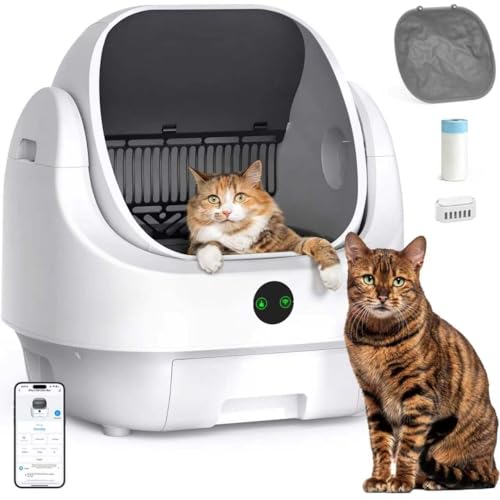

You come home after a long day, and instead of relaxing, you face a messy litter box. It is a familiar struggle for cat owners who want to maintain a clean home without constant scooping. Enter the world of AI-powered self-cleaning litter boxes, designed to automate waste removal and even monitor your cat’s health. This guide reviews four of the best models on the market, helping you find a solution that saves time and keeps your furry friend comfortable. Whether you have a single kitten or a multi-cat household, there is a perfect match here.


Buying Guide
Size and Cat Accessibility
The physical dimensions of the litter box directly affect how easily your cat uses it. For larger breeds or senior cats with joint issues, a low entry point and spacious interior are crucial. Models like the HHOLOVE Self Cleaning Litter Box offer a low entry and open-top design, which reduces stress for shy cats. Always measure your cat’s length and weight against the product’s recommended limits to ensure a comfortable fit.
Smart Features and App Integration
Modern self-cleaning boxes come with advanced technology. App control allows you to schedule cleanings, monitor usage patterns, and receive health alerts. The PETLIBRO Automatic Litter Box goes further with AI camera waste analysis that tracks waste consistency and multi-cat recognition for up to 10 cats. If you prefer simplicity, the otoging model requires no app or Wi-Fi, offering a plug-and-play experience. Assess how much data control you want before choosing.
Odor Control and Waste Capacity
Odor management is a top priority for any cat owner. Many units feature carbon filters or sealed waste bins to trap smells. The PETLIBRO model includes a built-in fan and carbon deodorizer that eliminates 97% of odors, per third-party validation. Waste bin size also matters: larger bins (like the 15L compartment in the Fumoi model) reduce how often you need to empty them, making them ideal for multi-cat homes or busy schedules.
Safety Sensors and Reliability
Safety is non-negotiable when a machine operates near your cat. Look for models with multiple sensors, visual, infrared, weight, that pause cleaning if a cat approaches. The HHOLOVE and PETLIBRO units both include anti-pinch designs and real-time alerts. For added peace of mind, choose a product with a solid warranty, like the one-year coverage offered by HHOlove. Reliable sensors prevent accidents and ensure your cat remains stress-free.
Final Thoughts
Choosing the best self-cleaning litter box comes down to your cat’s needs and your lifestyle. For cat owners who want cutting-edge health monitoring and multi-cat support, the PETLIBRO Automatic Litter Box with AI-Camera Waste is a standout with its advanced analytics and odor control. If you prefer a budget-friendly, no-fuss solution that works immediately, the Self Cleaning Litter Box from otoging offers a quiet, open design with easy setup. Both options bring automation to your home, freeing up your time while keeping your cat healthy and comfortable.
Related Guides
Frequently Asked Questions
How often do I need to empty the waste drawer in an automatic litter box?
Most models can hold several days to two weeks of waste for a single cat, depending on bin size. For instance, the PETLIBRO unit has an 11-liter sealed bin that lasts up to 14 days. Multi-cat households may need to empty it every 3 to 4 days.
Are self-cleaning litter boxes safe for kittens and senior cats?
Yes, many models include safety sensors that stop operation if a cat is near. The HHOLOVE box features a low entry and anti-pinch design, making it suitable for cats as small as 3.3 pounds. Always check the product’s weight and size recommendations before purchase.
Can I use any type of litter with an automatic litter box?
Most devices work with clumping litters, including clay, tofu, and mixed types. The PETLIBRO model explicitly states compatibility with all clumping litters. Avoid non-clumping or crystal litters, as they may jam the cleaning mechanism.
What does the AI camera waste analysis do?
The AI camera in the PETLIBRO model monitors waste consistency, frequency, and habits, distinguishing between solid and loose stools. It tracks changes over time and sends alerts for potential health issues, giving you early insights into your cat’s well-being.