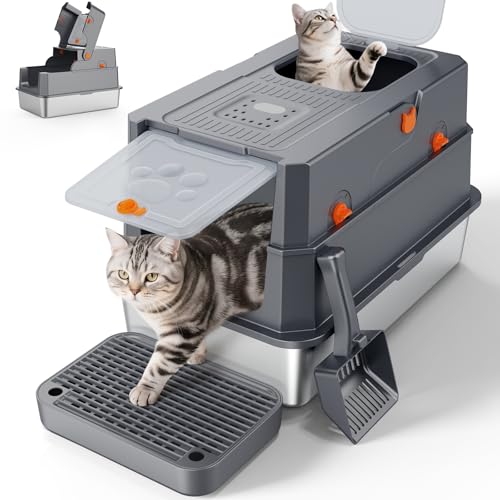

You have just scooped the litter box for the third time today, and the plastic pan still smells faintly of ammonia. You wonder if there is a better way. The material your cat uses every day directly impacts odor control, cleaning ease, and long-term hygiene. This guide covers the best materials for a litter box, comparing stainless steel, plastic, and clever accessories that make life easier. Whether you own a single cat or a multi-cat household, we have you covered.
If you are dealing with scattered litter or urine spills, check out our guide on the best high sided litter box for solutions that keep mess contained.


Buying Guide
Material Durability and Odor Resistance
The core of any litter box is what it is made from. Stainless steel is non-porous, meaning it does not trap odors like plastic can. It resists scratches and rust, lasting for years. Plastic boxes can absorb smells over time, especially if scratched. For a deeper dive into automatic options, see our best electric litter box for multiple cats roundup.
Ease of Cleaning
A smooth, non-stick surface means less scrubbing. Stainless steel pans rinse clean quickly, while plastic can require more effort. Look for rounded corners and open tops for quick scooping. Accessories like liners and mats can further simplify maintenance.
Size and Containment
High sides prevent litter scatter and urine spills, especially for enthusiastic diggers. Extra-large boxes suit big breeds like Maine Coons. A well-sized box reduces mess and keeps floors clean. For multi-cat homes, consider a self-cleaning litter box for multiple cats to save time.
Accessories That Enhance Performance
Litter mats trap tracked litter, while entrance guards prevent kicked-up debris. Liners make waste disposal quick and hygienic. These add-ons complement any material choice, improving overall cleanliness. Visit our Litter Box Accessories category for more ideas.
Final Thoughts
After reviewing the options, the best material for a litter box depends on your priorities: stainless steel offers unmatched odor control and durability, while plastic remains budget-friendly. For a premium, long-lasting choice, the Stainless Steel Cat Litter Box by KISENG is a standout with its easy-clean surface and high sides. If you need a larger option for big cats, the Tevila XL Open Top Stainless Steel Litter Box provides ample space and rustproof construction. Both keep your home fresher with minimal effort.
Related Guides
Frequently Asked Questions
Is stainless steel better than plastic for a litter box?
Yes, stainless steel is non-porous, so it does not absorb odors or stains like plastic. It is also more durable and easier to clean. For the best results in 2026, many cat owners are switching to stainless steel pans.
What size litter box should I get for my cat?
Measure your cat from nose to tail and add a few inches on each side. Most cats prefer a box that is at least 1.5 times their length. Extra-large boxes, like the Tevila XL, are ideal for big breeds.
How often should I replace a plastic litter box?
Plastic boxes should be replaced every 6 to 12 months, or sooner if they show scratches or odors. Stainless steel boxes can last many years with proper care. For more tips, explore our Robot Litter Boxes guide.
Do litter box liners help with cleaning?
Yes, liners make waste disposal quick and reduce contact with the box. They are especially useful for automatic litter boxes. Choose leak-proof bags with drawstrings for easy handling.