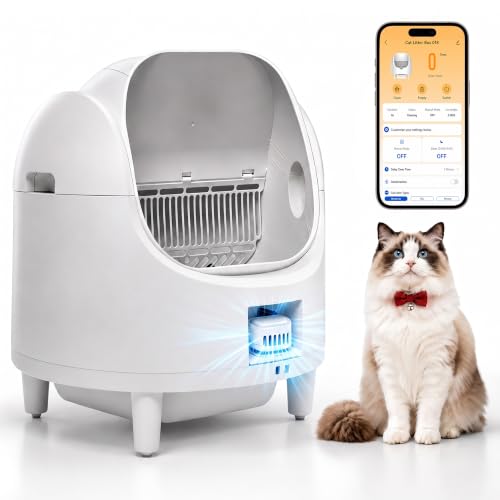

As a cat owner, you know the daily scooping routine can feel endless. Between busy workdays, social plans, or travel, keeping the litter box fresh often slips down the priority list. Connected smart litter boxes promise to change that by automating the messy work and giving you real-time updates on your feline friend. Whether you are looking for app control, advanced safety sensors, or a design that suits nervous cats, the market now offers a range of options to fit different homes. In this guide, we review five of the best connected smart litter boxes for 2026, highlighting their key features and helping you choose the right one for your household. For a deeper look at how these devices integrate into modern life, check out our article on 2026’s Best Smart Litter Boxes for Connected Homes.

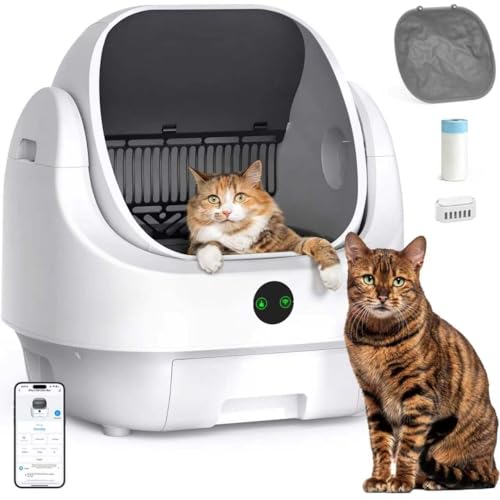


Buying Guide: What to Look for in a Connected Smart Litter Box
App Control and Health Monitoring
One of the primary benefits of a connected litter box is the ability to manage cleaning schedules and monitor your cat’s bathroom habits from your phone. Look for models that offer a dedicated app with notifications for waste bin fullness, cleaning cycles, and usage frequency. Some apps even track individual cat visits, which can help you spot early signs of urinary or digestive issues. If voice control matters to you, explore our picks for Top Smart Litter Boxes with Alexa for Effortless Cat Care in 2026.
Wi-Fi connectivity is common, but ensure the litter box supports your home network (most use 2.4GHz). Physical buttons are a nice backup for households where app reliance is less convenient.
Safety Sensors and Anti-Pinch Design
Since automatic cleaning cycles involve moving parts, safety is non-negotiable. The best connected smart litter boxes use infrared or weight sensors to detect a cat’s presence and immediately pause the mechanism. An anti-pinch design prevents injury if a curious paw wanders inside during operation. Always check that the sensors are placed for full coverage, especially around the entrance and waste drawer. This feature is especially critical for multi-cat homes where one cat might interrupt another’s cleaning.
Odor Control and Waste Capacity
No matter how automated the cleaning process is, odor control relies on effective sealing. Look for models with a sealed waste compartment and deodorizing gel or carbon filters. Some units feature leak-proof ABS construction to trap urine odors at the source. Waste bin capacity is also key: larger bins (10 to 15 liters) mean fewer emptyings, especially for multi-cat households. Daily scooping is eliminated, but you still need to change the liner or bag periodically. For budget-conscious buyers, see our best smart litter boxes for budget buyers guide.
Cat Comfort and Design Preferences
Cats can be picky about their bathroom. Open-top designs provide a more natural, less confined feel and are often better for nervous or shy cats. Low entry points help kittens, seniors, and cats with joint issues. Closed drum models may appeal to those who prefer privacy, but can cause anxiety for some felines. Measure your cat’s weight and size against the box’s recommended range, some models accommodate cats up to 18 or 33 pounds. Consider the unit’s footprint as well; a compact design may be easier to place in hallways or laundry rooms.
Final Thoughts
After assessing these five connected smart litter boxes, one thing is clear: the right choice depends on your cat’s personality and your daily routine. For households with a shy feline that needs an open, reassuring space, the HHOLOVE Self Cleaning Litter Box stands out with its low entry and app-based safety features. If you manage multiple cats and want the largest waste capacity with whisper-quiet operation, the Cumrige Automatic Litter Box delivers exceptional value and a 15-liter bin that reduces emptying frequency. Both models represent the forefront of 2026 connected litter technology, blending automation, control, and feline comfort.
Related Guides
Frequently Asked Questions
Are connected smart litter boxes worth the investment?
For most cat owners, yes. They save significant time by eliminating daily scooping, and the health tracking features can alert you to changes in your cat’s bathroom habits that may require veterinary attention. Over time, the convenience and peace of mind often outweigh the initial cost. As of 2026, the technology has matured with better sensors and more reliable apps.
How do safety sensors work in these litter boxes?
Safety sensors use infrared beams or weight pads to detect a cat’s presence near the mechanism. When motion is sensed during a cleaning cycle, the moving parts stop immediately and reverse or pause. This prevents injury to curious cats. Some models also include touch-stop protection, which halts operation if the unit is bumped.
Can I use a connected smart litter box without Wi-Fi?
Yes, many models offer manual buttons for basic functions like cleaning cycles or waste disposal. However, features like remote scheduling, usage tracking, and notifications require an internet connection. The RPZ Self Cleaning Litter Box specifically markets itself as a no-Wi-Fi option, using a simple control panel. For those who prefer app connectivity, most brands support 2.4GHz Wi-Fi only.
Do smart litter boxes work well for multiple cats?
Absolutely, but you need to consider waste capacity and cleaning frequency. Many models in this list offer large bins (10 to 15 liters) that hold up to 10 to 15 days of waste for one cat, and about half that for two or three cats. Some units like the Cumrige and Fumoi are explicitly designed for multi-cat homes. For more insights, read our guide on Best Smart Litter Boxes for Tech-Savvy Cat Owners in 2026.