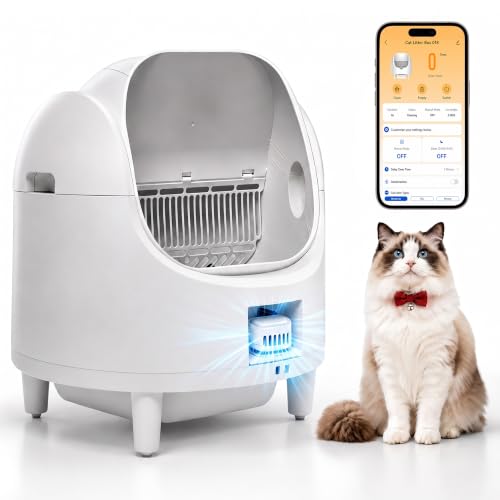

If you worry about your cat’s health but cannot watch every litter box visit, a smart litter box that records weight and frequency can offer peace of mind. These devices track trends over time, alerting you to changes that may signal illness. We evaluated five leading models with weight history features so you can choose the right one for your home. For a deeper look at per-cat tracking, explore our guide on per-cat weight tracking.


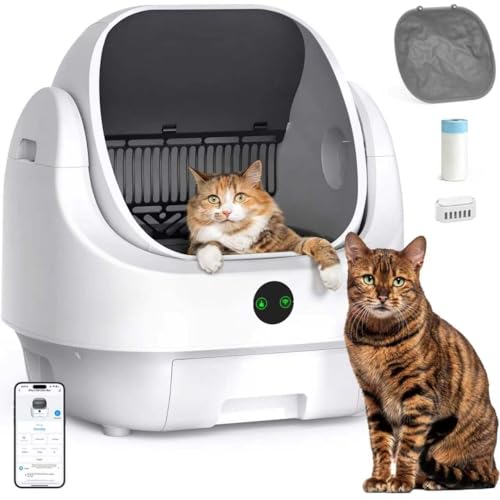

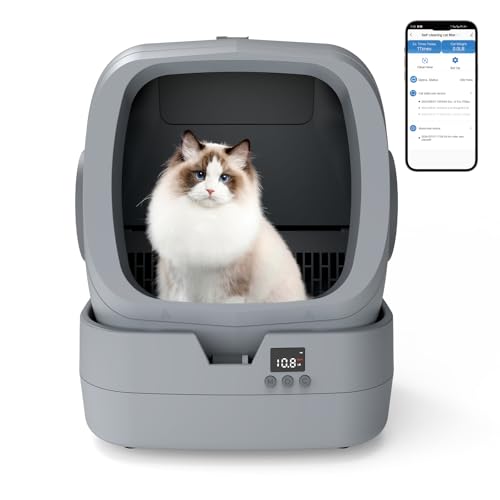
Buying Guide
Weight Monitoring Accuracy
The core feature is how precisely the litter box measures your cat’s weight. Models like the Purina Petivity use AI to distinguish between cats and generate unique profiles. Others rely on built-in sensors that log weight with each visit. Look for boxes that record weight in small increments and store historical data in an app.
App Features and Health Insights
A good app makes weight history useful. You want to see daily weight graphs, visit frequency, and duration. Some apps send alerts when patterns change, which can help you catch issues early. The Purina Petivity uses AI to flag potential health problems like UTI or kidney disease. For multi-cat homes, apps that track each cat individually are essential. Check our individual cat health tracking guide for more details.
Safety and Noise Level
Self-cleaning mechanisms must be safe for curious cats. Look for infrared and weight sensors that stop the cycle if a cat enters. Noise matters too: some boxes operate below 35 dB, which is quieter than a refrigerator. Cats with sensitive hearing appreciate silent operation, especially in small apartments.
Capacity and Multi-Cat Support
A litter box must handle your household’s volume. Larger waste bins reduce how often you need to empty them. Models with 9L to 13L bins can last up to 15 days for one cat. For multiple cats, consider boxes that track each cat’s weight separately. The Garvee and UPFAS models support cats up to 28 lbs and offer app-based differentiation. For advice on similar-looking cats, read our multi-cat tracking recommendations.
Final Thoughts
After evaluating these smart litter boxes, we find two standouts for different needs. If you want a dedicated weight monitor that uses AI to track individual cats, the Purina Petivity Smart Litter Box Monitor Cat provides deep health insights and email reports. For an affordable all-in-one self-cleaning box with weight tracking, the Mintakawa Automatic Cat Litter Box Self Cleaning offers quiet operation and app connectivity at a lower investment. Whichever you choose, logging your cat’s weight history is a proactive step toward better feline health.
Related Guides
Frequently Asked Questions
How do smart litter boxes with weight history work?These litter boxes have built-in weight sensors that record your cat’s weight each time they use the box. The data is sent to a mobile app, where you can view daily charts and trends over weeks or months. Some models also track visit duration and frequency to give a fuller picture of your cat’s health.
Can these litter boxes track multiple cats?Yes, several models use AI or weight differentiation to identify each cat in a multi-cat home. The Purina Petivity and Garvee models can assign data to individual cats based on weight patterns. For complex households, check our multi-cat health tracking guide for tailored advice.
Are quiet litter boxes important for cats?Yes, many cats are startled by loud cleaning cycles. Models that operate below 35 dB, like the Mintakawa and UPFAS, create a calm environment. Quiet operation also means the self-cleaning cycle will not disturb your cat’s sleep or your own.
How often should I replace litter in a self-cleaning box?It depends on the waste bin capacity and number of cats. Most boxes need a full litter change every 2 to 4 weeks, even if the waste is automatically removed. Follow the manufacturer’s recommended schedule to maintain hygiene and sensor accuracy.