

If you juggle a busy schedule or care for multiple cats, scooping litter day after day can feel like a never ending chore. Self-cleaning litter boxes with remote monitoring take the hassle out of waste management by automating cleaning and letting you keep an eye on your cat’s habits from anywhere. In this guide, we evaluated four top rated models that combine automatic scooping with app based monitoring, including the Mimfam Automatic Self Cleaning Litter Box, the Mintakawa Automatic Cat Litter Box Self Cleaning, the Open-Top Automatic Litter Box from Ellenpent, and the otoging Self Cleaning Litter Box. For those with limited space, our guide to compact self-cleaning litter boxes offers additional options.


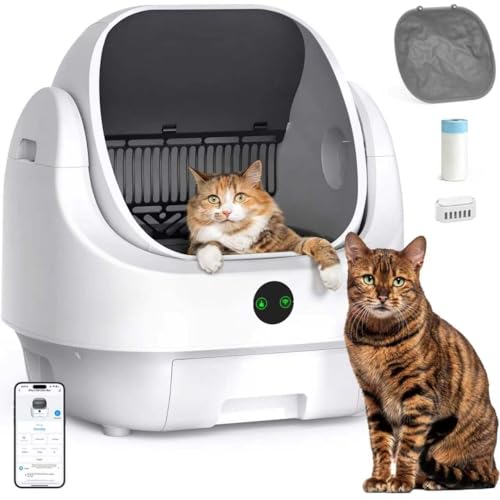

Buying Guide
App Connectivity and Remote Monitoring Features
Remote monitoring is the defining feature of these litter boxes. Look for models that connect via 2.4GHz WiFi or Bluetooth and provide real-time data on your cat’s weight, visit duration, and waste levels. The Mintakawa Automatic Cat Litter Box Self Cleaning excels here, offering detailed health tracking through its app. If you prefer a more straightforward approach without app reliance, the otoging Self Cleaning Litter Box operates with a simple plug and press system. For more insights on smart litter boxes, visit our smart litter boxes category.
Safety and Sensor Technology
Safety should never be compromised. The best self-cleaning litter boxes use multiple sensors to stop cleaning if your cat enters. The Mimfam Automatic Self Cleaning Litter Box features four pairs of infrared sensors and three hall sensors, ensuring the mechanism halts instantly when a cat is detected. The Ellenpent model also includes infrared and weight sensors that pause cleaning automatically. These safeguards provide peace of mind, especially in homes with curious kittens. For more on safety in automatic litter boxes, check our review of sealed waste container models.
Waste Capacity and Maintenance Simplicity
A larger waste bin means less frequent emptying. The Mimfam and otoging models offer a spacious 10L waste container, suitable for multi-cat households. The Ellenpent litter box holds a 9L bin, which can last up to ten days for a single cat. Look for features like disposable liners and removable drums that simplify cleaning. The Mintakawa model has a washable drum design for easy hygiene. If you have limited space, our compact litter box guide may help.
Final Thoughts
After evaluating these models, we recommend the Mimfam Automatic Self Cleaning Litter Box for its spacious top entry and multi-sensor safety system, ideal for multi-cat households. For those who value odor control and an open layout, the Open-Top Automatic Litter Box, Odor Control from Ellenpent provides a seamless, ready to use experience with smart app monitoring. Both deliver reliable self-cleaning and remote monitoring to simplify your daily routine.
Related Guides
Frequently Asked Questions
How do self-cleaning litter boxes with remote monitoring work?
After your cat exits, sensors trigger an automatic cleaning cycle that separates waste and deposits it into a sealed bin. The app connects via WiFi or Bluetooth, allowing you to view usage data, receive cleaning alerts, and monitor waste levels from your phone.
Are these litter boxes safe for kittens?
Most models include infrared and weight sensors that stop the cleaning mechanism if a cat enters. However, check the recommended weight range. The Mintakawa model, for example, is designed for cats weighing between 3.5 and 15 pounds, making it suitable for kittens. Always supervise initial use.
Do I need a WiFi connection to use the app monitoring?
Some models, like the Mintakawa, support both WiFi and Bluetooth for connectivity, while the Ellenpent model requires a 2.4GHz WiFi connection for full app functionality. The otoging litter box does not require an app at all, making it a simpler option. For more options, explore our smart litter boxes page.
How often should I empty the waste container?
With a 10L waste bin, single cat households can go up to ten days without emptying, while multi-cat homes may need to empty every four to seven days. Models like the Mimfam and otoging offer large capacity, reducing maintenance frequency.