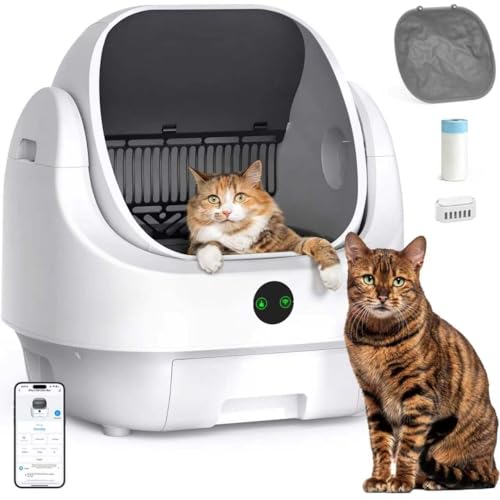

If you have a senior cat, a kitten, or a feline with mobility challenges, you know how frustrating a high-sided litter box can be. Watching your cat struggle to climb over a tall edge or hesitate before entering is a clear sign it is time for a change. Automatic litter boxes now offer designs that prioritize easy access without sacrificing automation. This guide focuses on the best automatic litter boxes for easy access in 2026, highlighting models with low steps, open tops, and thoughtful safety features. Whether your cat is aging, recovering from surgery, or simply prefers a ground-level entry, these picks make litter box duty simpler for both of you. For more on supporting cats with joint discomfort, see our guide to automatic litter boxes for arthritic cats.


Buying Guide: What to Look for in an Easy-Access Automatic Litter Box
Entry Height and Step Design
The most critical factor for easy access is how your cat gets in and out. Look for models with a low step or a wide opening that sits close to the ground. Some boxes include a dedicated access step that provides a stable platform for senior cats or those with arthritis. A step height of around 15 cm or a ramp can make a world of difference. Open-top designs also help because cats can enter without squeezing through a small door. If your cat has mobility issues, check out our recommendations for cats with mobility issues for more details.
Safety Sensors and Anti-Pinch Protection
When a litter box cleans automatically, safety sensors are non-negotiable. The best models use infrared sensors, torque sensing, or pressure-sensitive pedals to stop the cleaning cycle if your cat approaches. This is especially important for cats that are curious or slow-moving. Redundant sensor systems (multiple pairs) offer extra peace of mind. For elderly cats that may take longer to exit, these features prevent accidental trapping. Learn more in our guide to automatic litter boxes for elderly cats.
Noise Level and Waste Capacity
A quiet motor ensures the cleaning cycle does not startle your cat, which encourages consistent use. Look for models rated around 32 dB or lower. Waste capacity matters too: a larger bin means fewer emptyings, which is convenient for multi-cat homes or busy owners. Some units offer up to 10 liters of waste storage, reducing maintenance to once a week or less. If you have a kitten that is easily spooked, a quiet box can help them adjust. See our recommendations for kittens for additional tips.
Final Thoughts
Choosing the right automatic litter box for easy access comes down to your cat’s specific needs. For a model with a built-in step and anti-pinch detection that works well for cats of all ages, the Automatic Cat Litter Box from Puemin offers a 15 cm entry and a wide opening. If you prefer an open-top design with triple-layer safety sensors and an easy access step for senior cats, the PetPivot Open Top Self Cleaning Cat Litter Box is a strong choice. Both models are app-free, simple to set up, and designed to make litter box time less stressful for your cat and more convenient for you.
Related Guides
Frequently Asked Questions
Are automatic litter boxes safe for senior cats?
Yes, when chosen with safety sensors and a low entry. Look for models that stop the cleaning cycle if your cat is detected inside. Many units in 2026 include infrared sensors and anti-pinch protection. For more on this, read our guide to self-cleaning litter boxes for senior cats.
How often do I need to empty the waste bin?
It depends on the bin size and how many cats you have. Most models with a 10-liter waste bin need emptying every 5 to 10 days for a single cat. Larger bins can go up to 15 days. Always check the manufacturer’s recommendation.
Do I need an app or Wi-Fi to use these litter boxes?
Not necessarily. Many easy-access automatic litter boxes are app-free and operate with simple buttons. This is ideal for owners who prefer a straightforward setup without connectivity issues. All models in this guide work without an app.
What type of litter works best in these boxes?
Most automatic boxes work best with clumping clay or bentonite litter. Avoid lightweight or crystal litters as they can interfere with the sifting mechanism. Always refer to the manual for compatible litter types.