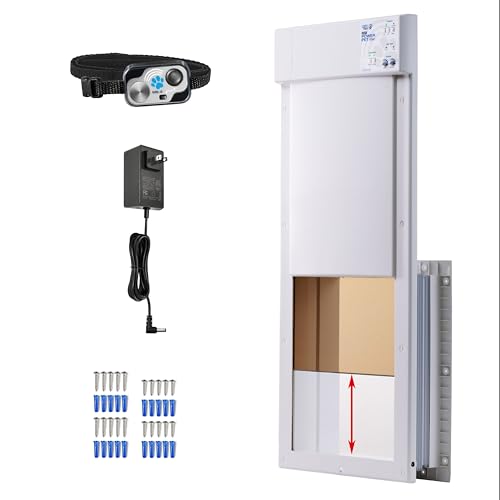

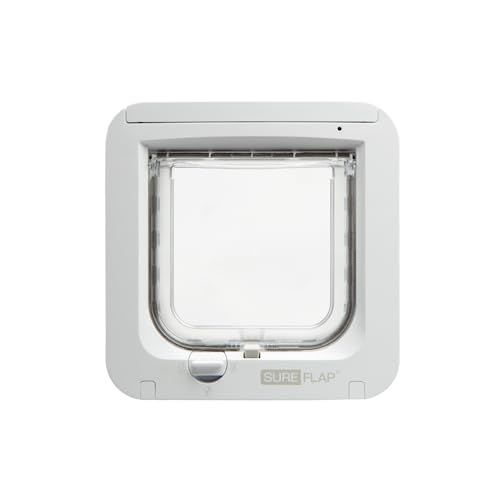
You come home from work to find muddy paw prints on the couch, and you realize your escape artist pup has been sneaking out again. Worse, you worry about stray animals wandering in through the pet door. If this sounds familiar, a microchip dog door can solve both problems. These smart doors read your dog’s implanted microchip or a collar key, letting only your pet in and out. In this guide, we review four of the best models available in 2026: the SureFlap – Sure Petcare Microchip Cat Flap, White, the Automatic Dog Door for Wall with Sensor Collars, the PetSafe Electronic Pet Door, Collar Key Sensor, and the SureFlap Microchip Pet Door (Brown). Whether you own a cat, a small dog, or a large pup up to 100 pounds, there is a secure option for you. For more pet tech recommendations, check out our collection of best products.
Buying Guide: What to Look for in a Microchip Dog Door
Identification Method: Microchip vs. Collar Key
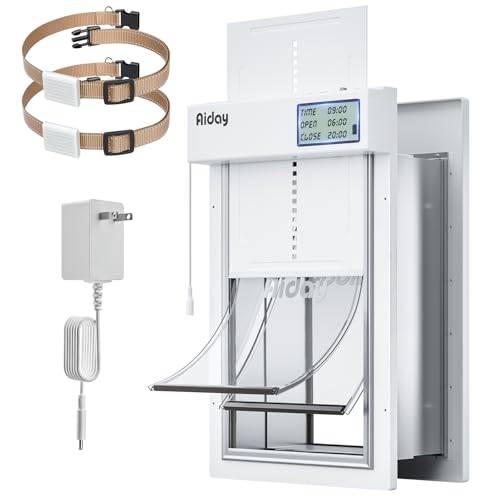
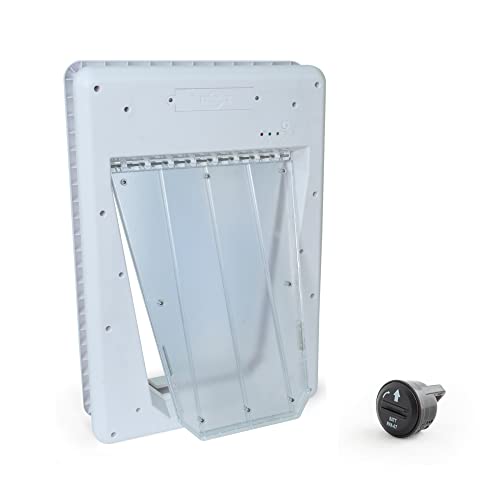
Most microchip pet doors use RFID technology to read either your pet’s implanted microchip or a separate collar key. The SureFlap models rely solely on the microchip, which is ideal if your dog already has one and you do not want extra accessories. The PetSafe Electronic Pet Door uses a collar key that you attach to your pet’s collar, and the Aiday Automatic Dog Door comes with two sensor collars. Consider whether you prefer a chip‑only door or one that works with a wearable tag. Both methods are reliable, but microchip doors eliminate the risk of lost collars.
Size and Weight Capacity
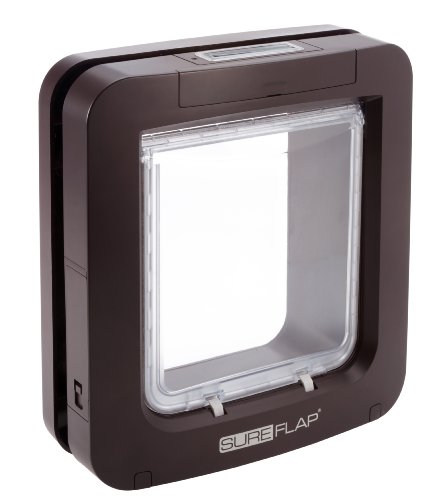
Dog doors come in various sizes to accommodate different pets. The SureFlap Microchip Cat Flap has a smaller opening (4 3/4″ by 5 5/8″) best for cats and small dogs. The SureFlap Microchip Pet Door (Brown) offers a larger flap (6 11/16″ by 7″) suited for small to medium breeds. For larger dogs up to 100 pounds, the PetSafe Electronic Pet Door and the Aiday Automatic Dog Door both provide spacious flaps. Measure your pet’s height and width before ordering, and double check the wall or door thickness if you install in a wall.
Power Source and Battery Life
Most microchip doors run on batteries so you can install them anywhere without wiring. The SureFlap models use 4 AA or C batteries and can last up to 12 months. The PetSafe door requires 4 D‑cell batteries. The Aiday Automatic Dog Door is plug‑in powered with an included extension cord, which means no battery changes but you need an outlet nearby. Consider your installation location: if you place the door far from an outlet, battery power may be more convenient.
Programming and Customization
Look for a door that lets you program access schedules and multiple pets. The SureFlap doors can learn up to 32 microchip identities and offer a simple one‑button programming. The Aiday door includes custom scheduling and a manual override, plus an anti‑pinch feature that stops and reverses if your pet lingers. The PetSafe door can store up to 5 keys and offers selective entry and exit options. If you have more than one pet, choose a model that can handle multiple animals without confusion. Our best products list includes options for every home.
Final Thoughts
After reviewing these four microchip dog doors, the best choice depends on your pet’s size and your installation needs. For cat owners or households with small dogs, the SureFlap Microchip Pet Door (Brown) offers reliable microchip recognition and a generous warranty, while the Automatic Dog Door for Wall with Sensor Collars from Aiday is a fantastic power‑operated option for large dogs up to 100 pounds, with scheduling and anti‑pinch safety. Whichever you choose, you will enjoy peace of mind knowing only your furry family members can come and go. For more guidance on pet tech, visit our Pet Tech Guides.
Related Guides
- Best RFID Dog Doors in 2026
- Weatherproof Pet Doors for Cozy Homes in 2026
- 5 Smart Dog Doors for Effortless Pet Access in 2026
Frequently Asked Questions
Do microchip dog doors work with all microchip brands?
Most microchip doors are compatible with the common 9, 10, and 15 digit microchip numbers used by major brands like Avid, FDXA, and FDXB. Always check the product specifications to confirm compatibility with your pet’s specific chip. If your pet does not have a microchip, you can buy programmable collar tags that mimic the microchip signal.
Can a microchip dog door keep out raccoons or other wildlife?
Yes, that is the main benefit. The door only opens when it reads the correct microchip or collar key, preventing stray animals from entering. However, if a raccoon or other clever animal manages to trigger the sensor by accident (unlikely), it will be blocked. For extra security, choose a model with a lock mode that you can activate at night.
Can I install a microchip dog door in a wall instead of a door?
Yes, many microchip dog doors can be installed in walls. The SureFlap models offer wall installation kits sold separately. The Aiday Automatic Dog Door is designed specifically for wall installation with an expandable tunnel. The PetSafe Electronic Pet Door can also be installed in a wall with the appropriate wall install kit. Always follow the manufacturer’s instructions for cutting an opening and providing proper weather sealing.
What is the battery life of a microchip dog door?
Battery life varies by model and usage. The SureFlap doors typically run up to 12 months on 4 AA or C alkaline batteries. The PetSafe door uses 4 D‑cell batteries with a similar lifespan. The Aiday door is plug‑in powered, so batteries are not needed. For the best experience, use high‑quality non‑rechargeable batteries and replace them when the low battery indicator flashes.