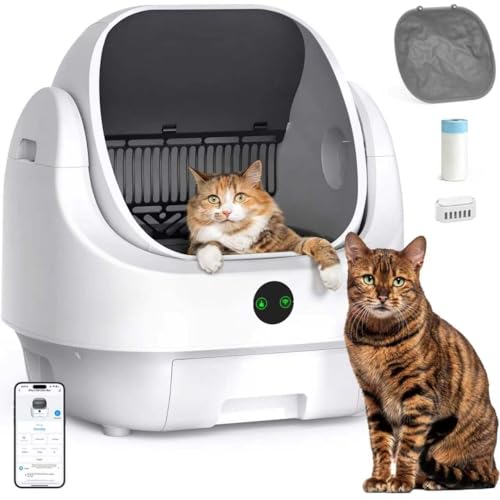

Every cat owner knows the chore of scooping litter. If you’re weighing the convenience of an automatic system against the familiarity of a manual box, you’re in the right place. In this guide, we evaluate three leading self-cleaning litter boxes against the traditional manual approach, helping you decide which fits your home and your cat’s habits best. We’ve assessed factors like safety, capacity, noise, and ease of use to give you a clear comparison. For a broader look at smart pet solutions, explore our pet tech guides.


Buying Guide
Safety Sensors and Protection
Safety is the top priority when choosing an automatic litter box. Unlike a manual box, where you have full control, automated systems must detect your cat and stop immediately to prevent injury. Look for models with infrared sensors, radar detection, and anti-pinch mechanisms. The Mimfam Automatic Self Cleaning Litter Box uses four pairs of infrared sensors and three hall sensors, while the DuckSky Automatic Litter Box adds bio-radar and gravity detection for layered protection. If you have a curious kitten or a senior cat, these features are non-negotiable.
Manual boxes have no moving parts, so safety concerns are minimal, but you sacrifice convenience. For a deeper dive into safety features across various pet gadgets, check our comparison guides.
Waste Capacity and Maintenance Frequency
The volume of waste your litter box can hold dictates how often you need to intervene. Traditional manual boxes require scooping at least once a day, sometimes more with multiple cats. Self-cleaning models offer generous waste bins: the DuckSky Automatic Litter Box boasts an 11L compartment, and the Mimfam Automatic Self Cleaning Litter Box holds 10L. This can mean emptying only every 8 to 12 days for a single cat, a significant time-saver.
Consider your cat count and your tolerance for routine maintenance. Larger capacity means less frequent handling, but you’ll also need to dispose of bigger clumps. The Self Cleaning Litter Box from otoging offers a 10L bin as well, balancing capacity with a straightforward design.
Noise Levels and Disruption
If your litter box sits near a bedroom or living area, noise matters. A loud motor can startle your cat and disturb your household. Both the Mimfam Automatic Self Cleaning Litter Box and the Self Cleaning Litter Box operate at a quiet 32dB, which is barely audible. The DuckSky Automatic Litter Box also runs quietly, ensuring your cat’s private moments remain stress-free. Manual boxes are silent, but you’re doing the scooping yourself, which may not be as quiet as you think.
Noise can also affect your cat’s willingness to use the box. Some cats are sensitive to machinery sounds. If your cat is easily spooked, prioritize lower decibel ratings. For more tips on selecting pet-friendly tech, revisit our pet tech guides.
Smart Features vs. Simplicity
Modern self-cleaning litter boxes offer app connectivity, scheduling, and real-time alerts. The DuckSky Automatic Litter Box works with a dedicated app (2.4GHz Wi-Fi) to customize cycles and monitor usage. However, the Self Cleaning Litter Box from otoging takes a no-app approach: plug in, press a button, and it’s ready. If you prefer minimal tech, that’s a huge plus. Manual boxes require nothing more than a scoop and your time.
Decide how much connectivity you want. App-based monitoring can alert you to potential health issues, but it adds complexity. For a straightforward setup, the otoging model is refreshing. Explore our comparison guides to see how other smart pet products stack up.
Final Thoughts
Choosing between a self-cleaning and manual litter box ultimately boils down to your lifestyle and your cat’s personality. If you want the ultimate in convenience with strong safety and large capacity, the Mimfam Automatic Self Cleaning Litter Box is an excellent all-rounder, while the DuckSky Automatic Litter Box shines for tech-savvy owners who value app control and layered detection. Both dramatically reduce daily scooping, giving you more time to enjoy your furry friend.
Frequently Asked Questions
How often do I need to empty a self-cleaning litter box?
Most self-cleaning models have large waste bins that need emptying every 8 to 12 days for a single cat, depending on usage and capacity. With multiple cats, you might need to do it more frequently. The exact interval also depends on the litter type and your cat’s output.
Are self-cleaning litter boxes safe for kittens?
Yes, but you need to choose a model with robust safety sensors. Look for infrared, radar, and anti-pinch mechanisms like those in the Mimfam Automatic Self Cleaning Litter Box or the DuckSky Automatic Litter Box. Always supervise the first few uses to ensure your kitten adapts comfortably.
Can I use any type of cat litter in a self-cleaning box?
Most automatic litter boxes require clumping litter to function properly. Non-clumping litters can clog the mechanism. The DuckSky Automatic Litter Box is compatible with clumping, mixed, and tofu litters, but always check the manufacturer’s recommendations. For reference, our pet tech guides cover litter types in more depth.
Will a self-cleaning litter box reduce odor better than a manual one?
Yes, automatic boxes often enclose waste in a sealed compartment, which helps control odors more effectively than an open manual box. Models like the Self Cleaning Litter Box also promote air circulation. However, regular emptying and proper litter maintenance are still essential for odor control.