

Imagine a pet that never needs feeding, never makes a mess, and can learn tricks you program yourself. That is the promise of a programmable pet robot. Whether you want an AI companion that understands your voice or a STEM toy that teaches coding basics, these robotic dogs and pets have come a long way. In this guide, we review five popular programmable pet robots, from the advanced Loona with ChatGPT integration to the budget-friendly Ruko and Dwi Dowellin models. We help you decide which robotic friend fits your child’s age, interests, and your budget.
If you are also exploring interactive toys for your furry real-life pet, check out our self-moving pet toy reviews for options that keep cats and dogs entertained.



Buying Guide: What to Look For in a Programmable Pet Robot
Interactivity and Intelligence
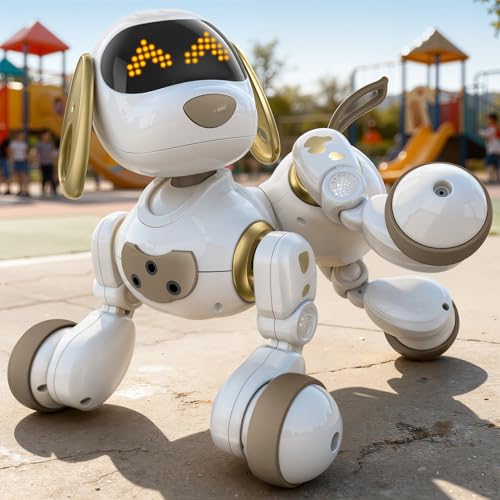
Not all robotic pets are created equal. Some simply respond to remote commands, while others use AI to recognize faces, understand gestures, and even hold conversations. The Loona Robot Pet Dog uses ChatGPT-4o and Amazon Lex for voice interaction, making it a true smart companion. For younger kids, a simpler robot like the Dwi Dowellin with touch sensors and preset actions can be just as engaging without overwhelming them.
If voice control matters to you, the Smart Robot Dog Toy with Voice & Remote Control also offers spoken commands, though it is less advanced than Loona. Consider your child’s age and how much independent play you want.
Programming and Customization Options
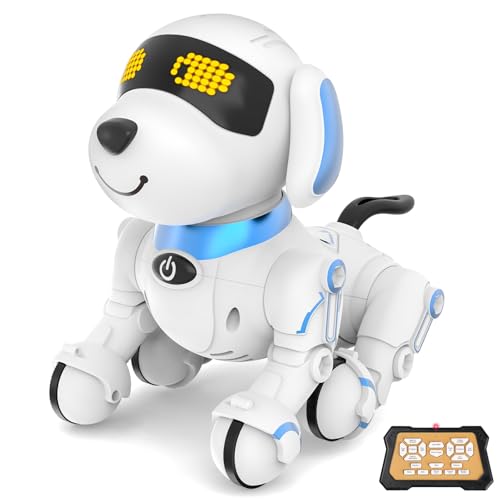
The core feature of a programmable pet robot is the ability to create custom action sequences. The Ruko 18011 models let kids program up to 50 moves using a remote control key, teaching logic and sequencing. The Dwi Dowellin also has a programming button for simple choreography. For older kids interested in coding concepts, Loona’s app-based controls offer more depth, though it lacks a dedicated programming mode.
These STEM skills are valuable. For more learning-focused toys, see our best self-moving pet toy reviews for additional options that promote problem-solving.
Safety, Durability, and Battery Life
All the robots on our list are made from child-safe ABS plastic with smooth edges. Battery life varies: Loona needs about 2.5 hours to charge and runs for a similar duration, while the Ruko and Dwi Dowellin models offer 45 to 60 minutes of playtime per charge. Consider how long your child typically plays and how easy it is to recharge. USB charging is standard across all models.
If you need a robotic pet that can also monitor your home, Loona doubles as a home camera with remote viewing. For more on pet cameras, read our pet camera with auto tracking reviews.
Age Appropriateness and Ease of Use
Most programmable pet robots target kids ages 4 to 14. The Ruko 18011 is suitable for ages 3 and up with adult help, while the Dwi Dowellin recommends ages 8 to 12. The Smart Robot Dog from Peaciar is designed for ages 6 to 14. Loona is more complex and best for older kids or tech-savvy adults who want a sophisticated companion. Always check the manufacturer’s age rating and consider your child’s patience level.
For more guidance on interactive toys for pets, the automatic pet ball reviews cover options that work with real animals.
Final Thoughts
Choosing the right programmable pet robot depends on your child’s age, interests, and your expectations. If you want the most advanced AI companion with voice and gesture control, the Loona Robot Pet Dog ChatGPT-4o Smart AI-Powered is a standout choice that grows with your child. For a more affordable, STEM-focused option that teaches programming through playful tricks, the Ruko 18011 Smart Robot Dog offers excellent value and hours of creative fun. Whichever you choose, these robots bring a new level of interaction and learning to playtime.
Frequently Asked Questions
Can programmable pet robots replace real pets? No, but they offer a low-maintenance alternative for families who cannot have live animals. They provide companionship, teach responsibility, and can be programmed for interactive play without the need for feeding or cleaning.
What age is best for a programmable robot dog? Most models recommend ages 4 to 14. Simple robots like the Ruko 18011 work for preschoolers with supervision, while advanced ones like Loona are better for kids aged 8 and up or even adults.
How long do the batteries last in these robots? Battery life ranges from 45 minutes to over an hour depending on the model. The Loona runs for about 2.5 hours on a full charge. Always charge fully before first use, and keep USB cables handy.
Do these robots require Wi-Fi or an app? Some do. Loona requires a mobile hotspot or Wi-Fi for ChatGPT features and home monitoring. The Ruko and Dwi Dowellin models work with a remote control and do not need internet. Check the product details to see if an app is needed for programming.


