

You love your dog and want to keep them healthy and happy. But when you search for tracking devices, you quickly run into two main categories: pet health trackers and activity trackers. The lines blur because many devices do both. To make an informed choice, you need to understand the differences. In this guide for 2026, we compare four popular models: FitBark 2 Dog Activity Monitor, Purina Petivity Dog GPS Tracker Collar, DBDD GPS Dog Tracker, and galawelly GPS Tracker for Dogs. Browse our other pet tech comparisons to see how they stack up against each other.



Buying Guide
Monitoring Focus: Health vs. Activity
Pure health trackers like the FitBark 2 Dog Activity Monitor excel at measuring sleep quality, calorie balance, and behavioral changes. They provide a Health Index and Sleep Score that can alert you to early signs of discomfort or disease. Activity trackers with GPS, such as the Purina Petivity and DBDD, focus more on movement and location, though they also log activity levels. If your priority is preventive health monitoring, a dedicated health tracker gives deeper insights. For general activity and safety, a GPS-enabled device may suffice. Learn more about pet health monitoring in our main guide.
GPS Tracking Capabilities
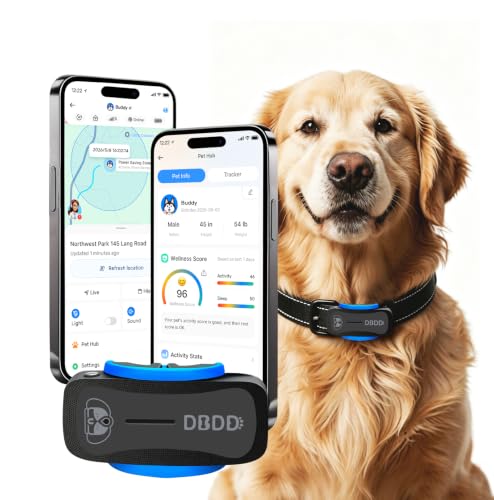
Not all trackers include GPS. The FitBark 2 is not a GPS tracker; it relies on accelerometer data for step counting and sleep analysis. In contrast, the Purina Petivity, DBDD, and galawelly trackers offer real-time location tracking. The DBDD even provides a virtual fence with instant escape alerts. If your dog is prone to wandering, a GPS tracker is essential. For indoor or yard use, a health tracker without GPS may be all you need. Check our main pet tech guide for more on tracking technologies.
Battery Life and Durability
Battery life varies significantly. The FitBark 2 boasts up to six months on a single charge, thanks to its low-power accelerometer. GPS trackers consume more energy; the Purina Petivity and DBDD require frequent recharging (typically days to weeks). All four devices are waterproof or water-resistant, with the galawelly rated IP68. For a low-maintenance option, the FitBark is hard to beat. If you need GPS, be prepared to charge more often. Compare battery life across models in our detailed comparisons.
Subscription Requirements
Some trackers require a monthly subscription to unlock GPS features and cloud storage. The Purina Petivity and DBDD both need a subscription for full functionality. The galawelly tracker, however, has no monthly fee or SIM card requirement for core tracking. The FitBark 2 operates without any recurring cost. Consider your long-term budget when choosing. A no-subscription device can save money over time. Explore our guide to pet tech subscriptions for more details.
Final Thoughts
Ultimately, your choice depends on whether you prioritize health monitoring or location tracking. For deep health insights, the FitBark 2 Dog Activity Monitor is unmatched thanks to its sleep and wellness tracking. If you need real-time location and activity logging, the Purina Petivity Dog GPS Tracker Collar offers a solid balance. Both keep you connected to your pup’s wellbeing.
Frequently Asked Questions
What is the difference between a pet health tracker and an activity tracker?
A pet health tracker focuses on biometric data such as sleep quality, calorie balance, and behavioral changes to catch early signs of illness. An activity tracker primarily measures movement, steps, and sometimes location via GPS. Some devices combine both, like the Purina Petivity and DBDD, but dedicated health trackers like the FitBark go deeper. See our full comparison of health and activity trackers.
Do I need a GPS tracker for my dog?
If your dog has a tendency to wander or you want real-time location, a GPS tracker is invaluable. For dogs that stay in a fenced yard or indoors, a health tracker without GPS may be sufficient. Consider your dog’s habits and your peace of mind in 2026.
How long do batteries last on these dog trackers?
Battery life varies widely. The FitBark 2 lasts up to six months, while GPS trackers typically need charging every few days to a week. The galawelly tracker offers a balance with moderate battery life and no subscription. Check each product’s specifications for exact figures.
Can I use a dog tracker without a smartphone?
Most trackers require a smartphone app for setup and data viewing. The FitBark uses iOS and Android apps, as do the Purina Petivity and DBDD. The galawelly also depends on the DEONETAG app. Without a smartphone, you would miss out on real-time tracking and health insights.


