

Your dog escapes the yard one too many times, and you need a solution that gives them freedom without constant worry. The Halo Collar vs Tractive debate is a common one: do you want a full containment system that sets virtual boundaries, or a GPS tracker that just shows you where your dog roams? This guide breaks down the key differences between the Halo Collar 5 and Tractive, helping you decide which technology best fits your dog’s personality and your property. We’ll cover accuracy, training tools, and real-world usability. For more comparison guides, check out our Comparisons category.


Buying Guide: What to Look For in a GPS Dog Fence or Tracker
GPS Accuracy & Drift Prevention
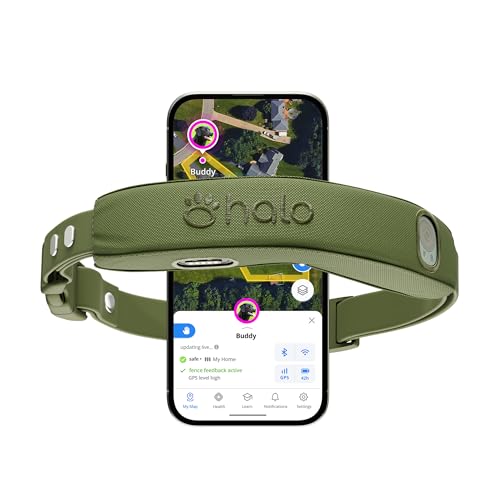
For any GPS-based system, location precision is everything. The Halo Collar 5 uses dual-frequency L1 and L5 satellites combined with real-time ground-station corrections to keep accuracy within 2 feet. This means your fence boundaries stay consistent, even near metal structures or under heavy tree cover. Tractive relies on standard GPS and cell tower triangulation, which can drift by 10-20 feet in challenging environments. If you need rock-solid containment for a determined escape artist, Halo’s validated Precision+ technology is a clear winner. For more on GPS collar science, visit our Pet Tech Guides.
Fencing vs. Tracking: What Kind of Control Do You Need?
Halo Collar 5 is built for two jobs: creating virtual fences and providing real-time location tracking. You set up boundaries via the app, and your dog receives sound, vibration, or optional static warnings as they approach the limit. Tractive is solely a tracker: it shows you where your dog is on a map but does not prevent them from leaving. If your goal is to keep your dog safely in the yard, Halo’s containment is essential. If you only need to know where your dog is during off-leash hikes, Tractive might be enough. The Comparisons category covers more use cases.
Training & Ease of Use
A GPS fence only works if your dog understands the boundaries. Halo Collar includes an exclusive training program by Cesar Millan, guiding you through structured sessions to teach your dog the warning sounds and corrections. The collar also stores multiple fences for different locations (backyard, cabin, trails), and the app updates location 20 times per second. Tractive’s setup is simpler: you attach the tracker to the collar and start tracking. But there’s no built-in training or boundary enforcement. For dogs new to boundaries, Halo’s guided approach reduces confusion and accelerates learning. Check our Pet Tech Guides for training tips.
Subscription & Coverage
Both Halo and Tractive require monthly or annual subscriptions for GPS features. Halo’s plans include unlimited cellular data, virtual fence creation, training support, activity reports, and AlwaysOn GPS. The collar works with Wi-Fi, Bluetooth, and cellular to maintain connection, and it operates on rural properties and remote trails where other collars fail. Tractive’s subscription offers live tracking, location history, and mobile coverage in many countries. However, Tractive does not provide containment alerts or boundary notifications. Consider your property size and how often you travel to remote areas; Halo’s broader coverage may offer peace of mind for active dogs. For more on subscription costs, see our Comparisons page.
Final Thoughts
After assessing both systems, the Halo Collar 5 emerges as the superior choice for anyone who needs a reliable wireless fence with professional training support. Its dual-frequency GPS and ground-station corrections deliver verified accuracy that Tractive cannot match, making it ideal for rural properties, large yards, or dogs that test boundaries. If containment is your primary goal, go with the Halo Collar 5 GPS Wireless Dog Fence in the classic design. For those who want a sleek alternative, the Halo Collar 5 GPS Wireless Dog Fence, Graphite offers the same performance with a darker finish. Tractive remains a solid pick for pure tracking without fencing, but Halo gives you both freedom and control in one collar.
Related Guides
Frequently Asked Questions
Can I use Halo Collar 5 without a subscription?
No. A Halo membership is required to activate GPS tracking, virtual fences, training guidance, and cellular connectivity. Without a plan, the collar operates offline with limited functions. Tractive also requires a subscription for live tracking. Both systems require ongoing fees, but Halo’s plan includes more comprehensive features like fence creation and 24/7 alerts. As of 2026, you can choose a plan after purchase to enable all functionality.
Is the Halo Collar 5 waterproof and durable enough for active dogs?
Yes, the Halo Collar 5 is designed to withstand outdoor use. It carries an IP67 rating, meaning it can handle rain, mud, and brief submersion. The collar is built with rugged materials to resist chewing and impact. Tractive trackers similarly offer water resistance (IPX7 or higher depending on model). For heavy swimmers or frequent water play, both are suitable, but Halo’s larger collar module may be more noticeable on small dogs. Check our Pet Tech Guides for sizing tips.
How does Halo Collar 5 compare to Tractive for multi-dog households?
Halo Collar 5 supports multiple collars under one account, allowing you to create separate fences for each dog and monitor them individually. Each collar requires its own subscription. Tractive also supports multiple trackers, but without containment features, you’ll only see location data. If you need to keep multiple dogs safely inside a perimeter, Halo’s fencing capability makes it more practical. For simple tracking of several dogs on hikes, Tractive is more budget-friendly. Visit our Comparisons page for more multi-pet insights.
Does Halo Collar 5 work in remote areas without cell service?
Halo Collar 5 uses a combination of Wi-Fi, Bluetooth, and cellular networks to keep your dog’s location updated 20 times per second. In truly remote areas without any cell signal, the collar can still store fence boundaries and deliver warnings locally, but live tracking and notifications may be delayed until connectivity is restored. Tractive relies on cellular coverage for tracking; without a signal, you lose real-time location. For backcountry explorers, Halo’s on-device fence logic gives it an edge. As of 2026, Halo’s cellular coverage extends to many rural and trail areas, but check your specific region’s network.


