

Imagine your child coming home from school to a pet that never needs walking, never makes a mess, and actually teaches them how to code. That is the promise of a coding pet robot: a playful companion that combines the joy of pet ownership with the educational power of programming. Whether you want a screen-free experience for a preschooler or an advanced AI companion for a teenager, the market has never been more exciting. In this guide, we evaluate five of the best coding pet robots available in 2026, covering everything from budget-friendly options to premium smart companions. If you are looking for other pet tech solutions, consider checking out our automatic feather cat toy reviews for interactive fun with feline friends.


Buying Guide
Age Appropriateness and Complexity
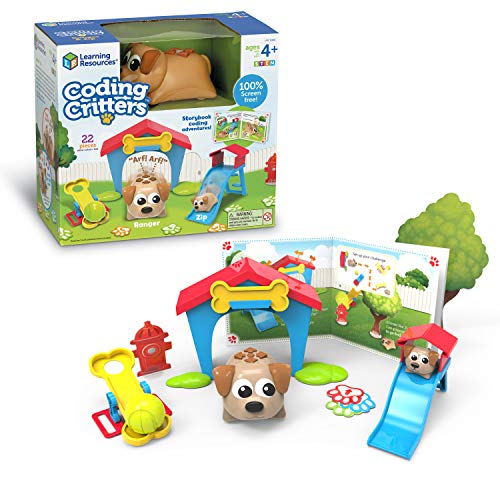
One of the first factors to consider is the age and skill level of the user. Some coding pet robots, like the Learning Resources Coding Critters line, are designed for preschoolers as young as age four. They rely on simple button presses or black-line following, with no screen needed. Others, such as the Educational Insights PYXEL, target advanced coders aged eight and up, offering both Blockly and Python programming languages. Matching the robot to the child’s developmental stage ensures a fun and frustration-free experience.
If you are unsure where to start, consider the child’s existing interest in technology. For a first introduction to robotics, a screen-free option like the Thames & Kosmos My Robotic Pet provides a gentle learning curve. For older kids who enjoy building and coding, a more complex unit may be a better fit. For more guidance, read our interactive feather cat toy reviews for ideas on other interactive toys.
Screen-Free vs. App-Based Interaction
Another critical distinction is whether the robot requires a smartphone, tablet, or computer to operate. Screen-free robots, such as the Learning Resources Coding Critters Go Pets, use physical tiles, color cards, or storybooks to teach coding concepts. These are excellent for limiting screen time while still delivering educational value. On the other hand, app-based robots like the Loona Robot Pet Dog leverage Wi-Fi and ChatGPT integration for rich voice interactions and real-time responses. Both approaches have merit, and your choice may depend on your household’s screen time policies.
For families who prefer zero screen time, robotic pets with built-in sensors and physical programming cards offer a tactile learning experience. For those open to guided app use, the interactive features can be more engaging and customizable. Check out our furbo dog camera reviews for another tech-savvy pet accessory option.
Durability and Build Quality
Coding pet robots are often handled by young children, so build quality matters. Look for units made of sturdy, non-toxic materials that can withstand drops and play. The Thames & Kosmos My Robotic Pet, for example, is a build-your-own kit that encourages careful assembly and offers a durable final product. Similarly, the Learning Resources models are known for their tough plastic construction and safe design. Premium robots like the Loona incorporate high-quality camera and sensor components, but they also require gentle handling due to their electronic complexity.
Always check the recommended age range and read user feedback about long-term use. Robots with replaceable batteries or USB rechargeability, like the Educational Insights PYXEL, offer better longevity than those with sealed power units. For more durable pet tech ideas, explore our best Furbo Dog Camera reviews for home monitoring solutions.
Educational Value and Curriculum Alignment
Not all coding pet robots offer the same depth of learning. Some focus on basic sequencing and cause-and-effect, while others teach syntax-based programming. The Educational Insights PYXEL stands out for its dual-language support and built-in tutorials that guide users from Blockly to Python. The Learning Resources Coding Critters series integrates story-based challenges that align with early STEM standards. If your goal is to supplement school learning, look for robots that explicitly state educational goals or come with teacher-approved guides.
Consider the robot’s expandability as well. Some models allow you to purchase additional activity sets or code new behaviors via apps, extending the learning over months or years. The Thames & Kosmos kit includes a 48-page manual that explains the engineering behind the robot, adding a layer of scientific understanding. For other educational pet tech, read our pet camera without subscription reviews for cost-effective monitoring.
Final Thoughts
Selecting the right coding pet robot comes down to your child’s age, interest in technology, and your family’s screen time philosophy. For a premium, AI-powered experience that grows with your child, we recommend the Loona Robot Pet Dog ChatGPT-4o Smart AI-Powered, which combines voice control, home monitoring, and endless play modes in a single sophisticated package. If you prefer a screen-free introduction to coding that is both affordable and educationally rich, the Learning Resources Coding Critters Ranger & Zip,22 offers a playful way to build early logic skills. Whichever you choose, you are investing in a toy that entertains while teaching valuable skills for the future.
Frequently Asked Questions
What is the best coding pet robot for a 4-year-old in 2026?
The Learning Resources Coding Critters Ranger & Zip is a top choice for preschoolers. It requires no screen, uses a storybook, and teaches basic coding through simple button commands.
Can older kids learn Python from a coding pet robot?
Yes, the Educational Insights PYXEL is designed for beginners and advanced coders aged eight and up. It teaches both Blockly and Python, with built-in tutorials and no internet required.
Do coding pet robots need Wi-Fi to work?
Most screen-free models, like the Thames & Kosmos My Robotic Pet, do not require Wi-Fi. However, advanced robots such as Loona use Wi-Fi for voice commands and app connectivity. Always check the product specs for connectivity needs.
Are coding pet robots safe for children?
Yes, all reputable brand models are made from non-toxic materials and meet safety standards. The Learning Resources and Educational Insights lines are particularly known for their child-safe designs. Always follow the age recommendations provided by the manufacturer.


