
When you need to keep tabs on your vehicle or personal belongings, the choice between a cellular GPS tracker and a Bluetooth tracker can be confusing. Cellular GPS trackers offer wide-area coverage and real-time updates, but often require a monthly subscription. Bluetooth trackers, on the other hand, rely on nearby devices and have no recurring fees, but their range is limited. This guide breaks down the key differences and reviews four top-rated trackers to help you pick the right one for your needs. For more comparisons across pet tech and beyond, check out our Comparisons category.



Buying Guide
Coverage and Subscription
Cellular GPS trackers use mobile networks, so they work virtually anywhere with cellular signal. That makes them ideal for long-distance travel, fleet management, and anti-theft. The downside is the ongoing subscription cost. Bluetooth trackers, like those using Apple Find My or Google Find My Device, rely on crowdsourced networks of nearby phones. They have no monthly fee, but their coverage is limited to the range of nearby devices. If you need to track a vehicle across the country, a cellular tracker is essential. For everyday items like keys or bags, Bluetooth is sufficient.
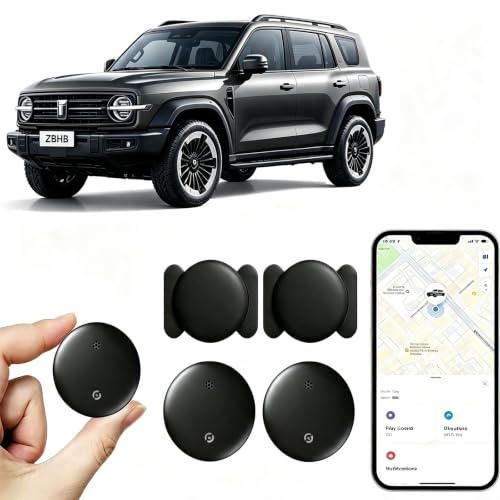
Among the products we evaluated, the Benbengo Magnetic GPS Tracker offers a 5-day free trial then a subscription. The Replglee and ZBHB models use Bluetooth and have no monthly fees. The Lwyinp tracker also uses Bluetooth with no subscription. For a deeper dive into tracking technology, visit our Pet Tech Guides.
Battery Life
Battery life varies dramatically between cellular and Bluetooth trackers. Cellular GPS devices consume more power because they transmit data over mobile networks. The Benbengo tracker lasts up to 7 months on standby or 4 months with typical daily driving. Bluetooth trackers are far more efficient. The Replglee model boasts up to 2 years of battery life, and the ZBHB tracker lasts up to 365 days with replaceable batteries. If you dislike frequent charging, a Bluetooth tracker is the clear winner.
Durability and Mounting
For vehicle use, a tracker needs to withstand weather and stay hidden. The Benbengo GPS tracker is IP67 waterproof and has a strong internal magnet for discreet attachment to any metal surface. The Replglee and ZBHB are IP68 rated, offering even better water protection, and come with magnetic cases. The Lwyinp tracker is mini and magnetic, measuring just 1.3 inches. All are designed for covert placement on cars, trailers, or equipment. Choose based on your environment: IP68 is better for extreme exposure.
Compatibility and App Support
Bluetooth trackers depend on your phone’s ecosystem. The Replglee works with both Google Find Hub and Apple Find My (not for Huawei or GPS apps). The ZBHB supports Google Find My Device only, so Android users are the target. The Lwyinp is compatible with both Android and iOS via Google and Apple networks. Cellular GPS trackers like the Benbengo have their own app and web dashboard, offering independent tracking. Make sure the tracker you choose works with your smartphone and that you understand the ecosystem limitations.
Final Thoughts
Choosing between a cellular GPS and a Bluetooth tracker comes down to your need for wide-area coverage versus a no-fee solution. For long-distance vehicle tracking and anti-theft, the Magnetic GPS Tracker for Vehicles from Benbengo offers reliable real-time updates and a long battery life, though it requires a subscription after the trial. If you prefer zero recurring costs and only need local tracking for your car or everyday items, the GPS Tracker for Vehicles,2 Year Battery Life,GPS from Replglee is a fantastic choice with exceptional battery life and both Android and iOS support. Whichever you pick, you will gain peace of mind knowing your valuables are within reach.
Frequently Asked Questions
What is the difference between a cellular GPS and a Bluetooth tracker?
A cellular GPS tracker uses mobile networks (like 4G LTE) to send location data to a server, so it works anywhere with cell coverage. A Bluetooth tracker uses short-range Bluetooth and relies on nearby smartphones to report its location via crowdsourced networks (e.g., Apple Find My or Google Find My Device). The cellular tracker has wider range but requires a subscription, while the Bluetooth tracker has no monthly fee but limited range.
Do Bluetooth trackers work without internet?
Bluetooth trackers themselves do not need an internet connection, but they rely on the network of nearby smartphones to report location. When your tracker is out of range of your own phone, it depends on other users’ devices (with their Bluetooth and internet enabled) to anonymously update its location. So, while the tracker does not directly connect to the internet, the system requires internet-connected phones to function.
How long do GPS tracker batteries last?
Battery life varies by type. Cellular GPS trackers, like the Benbengo model, last up to 7 months on standby or about 4 months with daily use. Bluetooth trackers are more efficient: the Replglee can last up to 2 years, and the ZBHB lasts up to 365 days with a replaceable battery. Always check the manufacturer’s estimates for your specific usage pattern. For more tips on choosing the right tracker, see our Comparisons.
Can I use a Bluetooth tracker for my car?
Yes, you can use a Bluetooth tracker for your car if you park within Bluetooth range of your home or frequently pass by other smartphones. However, for real-time tracking over long distances or anti-theft recovery, a cellular GPS tracker is more reliable. Bluetooth trackers are best for finding your car in a crowded parking lot or ensuring it hasn’t moved from a known location. Many Bluetooth models, like the ZBHB and Lwyinp, come with magnetic cases for discreet placement on a vehicle.