

You know the struggle: your cat stares at the bowl, then bats the water with her paw, splashing half of it onto the floor. Your dog, on the other hand, drinks like a thirsty giant, leaving a puddle trail across the kitchen. A pet water fountain solves both problems, but choosing between a cat water fountain vs dog water fountain can feel confusing. The good news? Most modern fountains work for both, but the right one depends on your pet’s size, drinking style, and your home’s layout. Let’s break down the key differences and reveal the top picks that keep every whiskered or tail-wagging friend hydrated.
Cat Water Fountain vs Dog Water Fountain: What’s the Real Difference?
At the core, the difference isn’t about the species as much as it is about your pet’s needs. Cats often prefer a gentle, shallow stream that doesn’t splash their whiskers, while dogs may need a taller, more robust flow to accommodate their lapping. However, many fountains are designed to serve both, with adjustable flow settings and multiple drinking heights. The real question is: which features matter most for your furry friend?
Let’s examine the top contenders in the market, all of which are excellent choices for both cats and dogs. Each one brings something unique to the table, from premium stainless steel construction to innovative pump-free designs. We’ll compare them across key criteria to help you make an informed decision.



Key Buying Criteria for Pet Water Fountains
Material and Safety
Your pet’s health starts with what touches the water. Stainless steel is a top choice because it’s durable, non-porous, and doesn’t harbor bacteria like some plastics. The Veken Innovation Award Winner Stainless Steel Cat is a prime example, crafted from premium 304 stainless steel that’s completely BPA-free and dishwasher safe. This material also resists scratches, ensuring a clean surface every time.
If you prefer a lighter option, food-grade plastic fountains like the Veken Innovation Award Winner 95oz/2.8L Cat Water are BPA-free and still safe, but they may require more frequent cleaning to prevent biofilm buildup. Always check that all water-contact parts are free from harmful chemicals, regardless of the material.
Noise Level and Pump Performance
A quiet fountain is essential for skittish pets and light sleepers. The Veken Innovation Award Winner Stainless Steel Cat features an ultra-quiet suspended pump that operates at just 25 dB, which is quieter than a whisper. This ensures your pet can drink without being startled, and you won’t have to listen to a constant hum in the background.
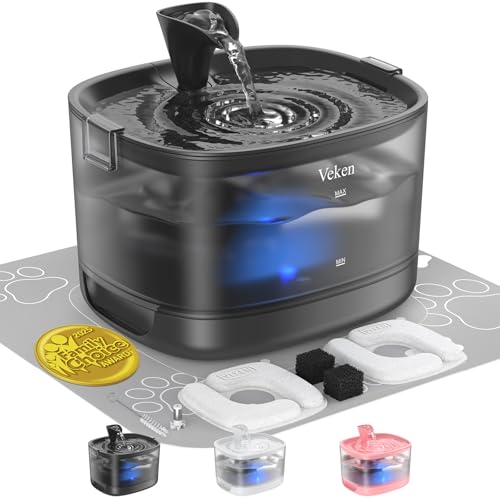
For a pump-free experience, the Veken 85oz/2.5L Cat Water Fountain with Detachable uses magnetic induction to power the water flow. This eliminates the need for a traditional pump, reducing maintenance and potential breakdowns. It also runs at a quiet 25-30 dB, making it a peaceful addition to any room.
Filtration System
A good filtration system is the heart of any fountain, capturing hair, food debris, and impurities while improving taste. The Cat Water Fountain Stainless Steel by HOOISE includes three activated carbon filters that soften water and remove odors. This multi-stage approach keeps water fresh for up to three weeks, depending on usage.
Meanwhile, the Veken Innovation Award Winner 95oz/2.8L Cat Water features a 5-stage filtration system with coconut shell activated carbon and a composite scale inhibitor. This not only purifies but also improves the water’s taste, encouraging your pet to drink more. Regular filter replacement is key to maintaining optimal performance.
Ease of Cleaning and Maintenance
No one wants a fountain that’s a chore to clean. The Veken Innovation Award Winner Stainless Steel Cat offers a snap-together design with a large water window, making assembly and disassembly a breeze. All water-contact parts are top-rack dishwasher safe, so you can simply toss them in the dishwasher for a thorough clean.
The Veken 85oz/2.5L Cat Water Fountain with Detachable takes simplicity a step further with its detachable tank and no-pump design. It also includes a silicone pad to catch splashes and a cleaning brush, making maintenance a quick task. A clean fountain is a healthy fountain, so choose one that fits your routine.
Final Thoughts
Choosing between a cat water fountain and a dog water fountain ultimately comes down to your pet’s specific habits and your lifestyle. For a durable, low-maintenance option that suits both cats and small dogs, the Veken Innovation Award Winner Stainless Steel Cat is a top-tier choice, while the Veken 85oz/2.5L Cat Water Fountain with Detachable offers a pump-free, ultra-quiet experience perfect for skittish pets. Both provide fresh, filtered water that encourages healthy hydration, so you can enjoy more playtime and less puddles.
Frequently Asked Questions
Can I use a cat water fountain for my dog?
Yes, absolutely. Most cat water fountains are designed with pets of all sizes in mind, and many dogs, especially small to medium breeds, adapt quickly to drinking from a fountain. Just ensure the fountain is stable and has a sufficient water capacity to meet your dog’s daily hydration needs.
How often should I clean my pet water fountain?
It’s recommended to deep clean your pet water fountain every two weeks to prevent biofilm and bacteria buildup. For fountains with filters, you should also replace the filter every two to three weeks, depending on usage and water quality. Regular maintenance ensures your pet always has access to fresh, clean water.
Are stainless steel water fountains better than plastic?
Stainless steel is generally considered better because it’s non-porous, making it more resistant to bacteria and odors. It’s also more durable and doesn’t contain BPA or other harmful chemicals found in some plastics. However, plastic fountains can be a budget-friendly alternative if you prefer a lighter option, as long as they’re BPA-free.
Why is my pet water fountain making noise?
Most pet water fountains operate quietly, but noise can occur if the water level is too low or if there’s air in the pump. Ensure the water tank is filled above the minimum line and that the pump is fully submerged. If noise persists, clean the pump and check for any blockages in the water flow.


