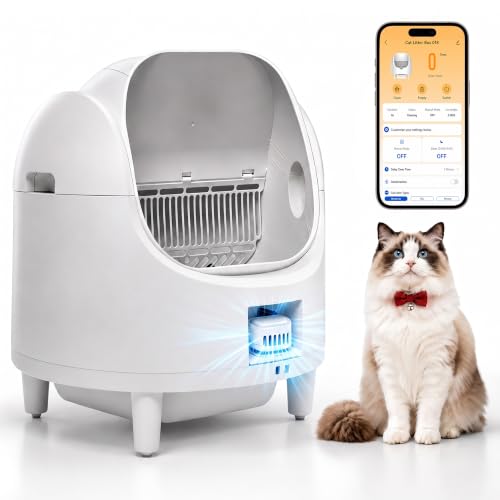

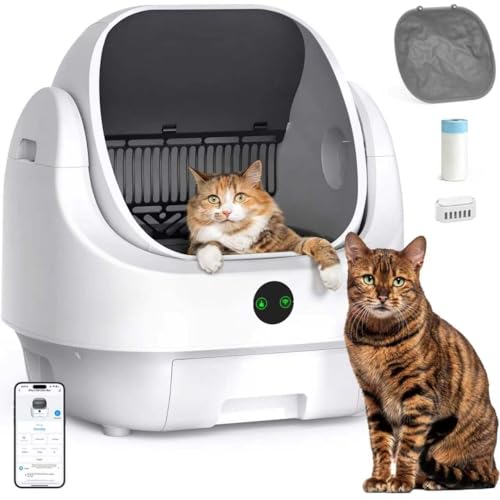
If your cat has a chronic condition like kidney disease, diabetes, or arthritis, every bathroom visit offers clues about their health. Smart litter boxes now go beyond scooping convenience, providing weight tracking, usage frequency data, and even early alerts for potential issues. Whether you need an open design for a cat with mobility challenges or a health monitor for a senior feline, the right self-cleaning litter box can transform your care routine. We evaluated five models to help you find the perfect match for your cat’s specific needs. For deeper insights on tracking bathroom habits, explore our guide on smart litter boxes for cat bathroom monitoring.



Buying Guide: What to Look for in a Smart Litter Box for Cats with Health Needs
Health Monitoring Features
For cats with conditions like hyperthyroidism or urinary tract issues, tracking weight and bathroom frequency is essential. Look for models that log each visit and provide app-based health trends. Some boxes even detect irregular patterns and send alerts. The best smart litter boxes with Multi-Cat profiles can distinguish between cats, which is invaluable if you have multiple felines with different health needs.
Safety Sensors and Anti-Pinch Design
Cats with reduced mobility or vision may not react quickly to a moving rake or rotating drum. Choose a box with multiple sensors that stop the cleaning cycle immediately if your cat enters or touches the unit. Infrared and weight sensors are standard on the better models, ensuring your cat stays safe during every cycle.
Open-Top vs. Enclosed Design
Senior cats or those with arthritis often struggle with low entrances or confined spaces. Open-top designs offer easy access and a clear view of surroundings, reducing anxiety. They also make it simpler for you to observe your cat’s posture and waste consistency. For multi-cat households, the best smart litter boxes for Multi-Cat usage tracking often feature open layouts to accommodate different temperaments.
Ease of Maintenance for Caregivers
If you’re managing your own health or a busy schedule, a litter box that’s simple to clean and maintain is a game-changer. Look for removable drums, leak-proof waste bins, and app-controlled disposal. Models with large waste capacity reduce the frequency of emptying, giving you more time to focus on your cat’s wellbeing.
Final Thoughts
Choosing the right smart litter box depends on your cat’s specific health challenges. The Lohhuby Automatic Cat Litter Box Self Cleaning stands out for its open design and health monitoring app, making it ideal for cats with mobility or urinary issues. Meanwhile, the Garvee Automatic Cat Litter Box Self Cleaning offers a generous 78L capacity and detailed health tracking, perfect for larger cats or multi-cat homes where weight and frequency data matter. Both models prioritize safety and ease of use, giving you peace of mind and your cat a cleaner, more comfortable space.
Related Guides
Frequently Asked Questions
Can smart litter boxes help monitor my cat’s health?
Yes, many smart litter boxes track weight, visit frequency, and duration. Over time, these metrics can reveal changes that may indicate health issues like diabetes, kidney disease, or arthritis. Some models even send alerts to your phone when patterns deviate from normal. For a deeper look, check our guide on smart litter boxes for cat bathroom monitoring.
Are open-top litter boxes better for cats with arthritis?
Absolutely. Open-top designs eliminate the need to step over a high lip or squeeze through a small entry, which can be painful for arthritic cats. They also provide better visibility, helping your cat feel more secure. Most of the models we reviewed offer open or easily accessible layouts.
Do smart litter boxes require WiFi to work?
Not all of them. Some models like the Self Cleaning Litter Box from otoging and the RPZ Self Cleaning Litter Box operate without WiFi or app setup, using simple buttons for control. Others, such as the Lohhuby and Garvee, require a 2.4GHz WiFi connection for app features like health tracking and remote scheduling.
How often do I need to empty the waste bin?
It depends on the model and how many cats you have. Most bins hold between 9 and 15 liters, lasting 7 to 15 days for a single cat. Models with larger waste drawers, like the RPZ with its 15L capacity, are ideal for multi-cat households or if you travel frequently.