

When the weather turns sour or your schedule gets packed, your dog still needs to burn off that boundless energy. A dog treadmill offers a safe, controlled way to provide exercise indoors, whether you have a hyperactive terrier or a working breed that craves a job. This guide covers the best dog treadmills of 2026, breaking down key features to help you choose the right one for your furry friend.
We’ve evaluated a range of options, from motorized models with remote controls to dog-powered slat mills that mimic natural running. You’ll learn about track types, weight limits, and safety features, so you can make an informed decision. For more ways to keep your pet healthy, check out our best dog activity monitor picks.

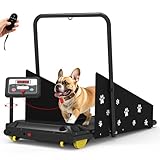


Buying Guide: How to Choose the Best Dog Treadmill
Selecting the right treadmill for your dog involves more than just picking a popular model. You need to consider your dog’s size, energy level, and the available space in your home. Here are the key factors to weigh before making a purchase.
Track Type and Size
The track is where your dog runs, so it needs to be durable and appropriately sized. Motorized treadmills typically have a belt surface, while slat mills use a series of slats that move with your dog’s stride. For large breeds, a wider and longer track is essential to prevent strain. The Non-Motorized Dog Treadmill for Large Dogs offers an 18-inch usable width, perfect for bigger canines.
Consider the material as well. Some tracks are made of plastic, while others feature silicone or rubber slats for better grip and shock absorption. Waterproof and dirt-resistant surfaces are a plus for easy cleaning after muddy paws.
Motor vs. Dog-Powered
Motorized treadmills provide a consistent speed and often come with features like remote controls, speed monitors, and safety keys. They are ideal for owners who want to control the workout intensity. On the other hand, dog-powered slat mills rely on your dog’s own movement, which can be more natural and allows the dog to set the pace. This type is great for high-energy dogs that need an outlet, but it requires your dog to be motivated to run.
For a balance of convenience and control, models like the Lifepro PawRunner Dog Treadmill for Small & Medium offer a quiet motor and remote operation. If you prefer a more natural approach, the Dog Treadmill, HotFeed Dog Slat Mill for Medium is a sturdy option.
Safety Features
Safety should be a top priority. Look for treadmills with a safety key that stops the machine in an emergency, as well as side rails or guides to keep your dog centered. A secure braking system is also crucial, especially for slat mills, to prevent the track from moving too fast. The MlemGirove Dog Treadmill with Pin-Hinged Track features a secure disc brake lock for added control.
Additionally, consider the noise level. A quiet motor is less likely to scare a nervous dog. Some models also have shock absorption to reduce impact on joints, which is beneficial for older or arthritic pets.
Weight Capacity and Size
Always check the maximum weight capacity of the treadmill to ensure it can safely support your dog. For small breeds, a capacity of 130 to 220 pounds is usually sufficient. Large breeds may require a more robust machine with a higher limit. Also, measure the space where you plan to set up the treadmill. Some models are foldable or have wheels for easy storage. For a compact option, the CIIHI Dog Treadmill for Medium Small Dogs is a good choice.
If you have a multi-dog household, consider a model that can accommodate different sizes. The PawArmorX98 Curved Dog Treadmill with Silicone is designed for large breeds but also works for medium ones, making it a versatile investment.
Final Thoughts
Choosing the best dog treadmill depends on your dog’s specific needs and your lifestyle. For a feature-rich motorized option, the Lifepro PawRunner Dog Treadmill for Small & Medium offers excellent control and convenience. If you prefer a natural, dog-powered workout for a larger breed, the Non-Motorized Dog Treadmill for Large Dogs is a top-tier choice. Whichever you pick, you’ll be investing in your dog’s health and happiness.
Frequently Asked Questions
Are dog treadmills safe for all breeds?
Yes, dog treadmills are generally safe for most breeds, but you should consider your dog’s size and health. Always start with slow speeds and short sessions to allow your dog to acclimate. Consult your vet if your dog has any underlying health conditions. For more tips on keeping your pet healthy, see our pet humidity sensor reviews.
How long should a dog use a treadmill?
Start with 5 to 10 minute sessions and gradually increase as your dog builds stamina. Most dogs can handle 20 to 30 minutes of moderate treadmill exercise, but it depends on the breed and fitness level. Always monitor your dog for signs of fatigue.
Can a treadmill replace outdoor walks?
A treadmill is a great supplement to outdoor walks, but it shouldn’t completely replace them. Outdoor walks provide mental stimulation and social interaction that a treadmill can’t offer. Use the treadmill on days when the weather is bad or when you’re short on time.
What is the difference between a motorized and a slat mill dog treadmill?
A motorized treadmill has a belt that moves at a set speed, which you can control via remote or buttons. A slat mill is dog-powered: the slats move only when your dog runs, giving the dog full control over the pace. Slat mills are often quieter and more natural, but they require a motivated dog.
For more smart pet devices, explore our gifts for dog owners roundup.


