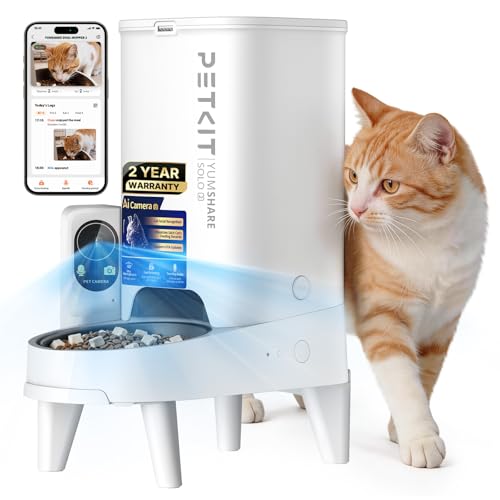

You come home late from work, and your cat or dog is waiting with hungry eyes. You wonder if they ate on time while you were away. This is a common worry for pet owners, and it’s why automatic feeders have become so popular. But now you face a new choice: should you get a feeder with a camera or one without? In this guide, we break down the differences, pros, and cons to help you pick the best option for your lifestyle. Whether you travel often or just want peace of mind, we’ve got you covered. For more detailed comparisons, check out our pet tech comparisons section.



Buying Guide: How to Choose Between a Camera Feeder and a Basic Feeder
Monitoring and Interaction: Why Camera Feeds Matter
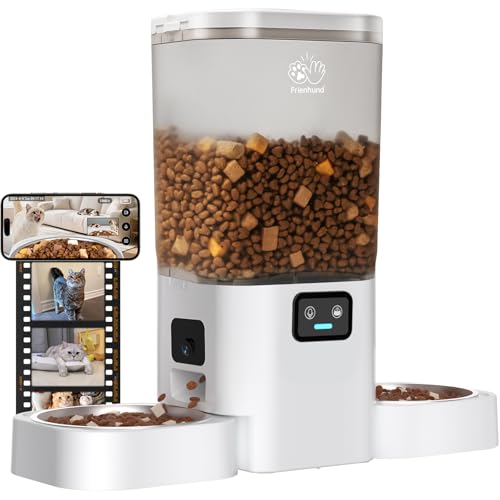
A feeder with a camera lets you see your pet in real time, check if they have eaten, and even talk to them through two-way audio. This is invaluable if you worry about separation anxiety or need to confirm your pet is healthy. Models like the Frienhund Automatic Cat Feeder with Two 1080P offer dual cameras for a wider view. Without a camera, you lose that visual connection, but you still get reliable feeding. For many, the peace of mind a camera provides is worth the extra cost.
Feeding Precision and Scheduling
Both camera and non-camera feeders allow you to schedule meals, but camera models often offer more detailed control. You can adjust portions remotely, view feeding logs, and even dispense extra food from your phone. For example, the Automatic Cat Feeder with 2K Camera logs every meal and tracks how much your pet actually ate. If you have a pet on a strict diet, a camera feeder’s extra oversight can help prevent overeating or underfeeding.
Capacity, Build Quality, and Ease of Cleaning
Large capacity is a must for multi-pet households or extended trips. Most feeders in our lineup hold 6 to 7 liters of dry food, enough for weeks. But build quality matters too: look for stainless steel bowls (easier to clean and safer than plastic) and removable parts. The MUBBI Automatic Cat Feeder with Camera has an elevated bowl design to reduce spinal strain. Easy cleaning prevents bacterial buildup, which is especially important if you choose a camera model where electronics are more sensitive to moisture.
Connectivity, WiFi, and App Features
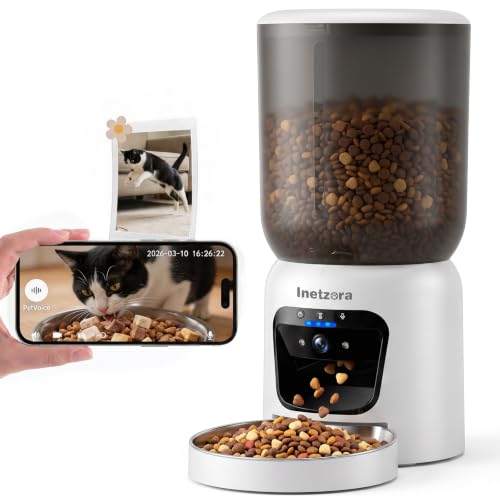
Camera feeders rely on stable WiFi to stream video and send alerts. Dual-band (2.4GHz and 5GHz) support like on the Inetzora Automatic Cat Feeder with 2K Camera ensures a smooth connection. Basic feeders without cameras may use simpler timers or limited app control. If you plan to travel often or have a large home, prioritize a feeder with reliable WiFi and a user-friendly app. For more general advice on pet tech, browse our pet tech guides.
Final Thoughts
Choosing between a camera and a non-camera feeder comes down to your need for visibility and remote interaction. If you want to keep an eye on your pet and talk to them while away, the Frienhund Automatic Cat Feeder with Two 1080P offers dual cameras and a large capacity. For a budget-friendly option with advanced AI monitoring, the Automatic Cat Feeder with 2K Camera is a strong choice that balances features and value. No matter which you choose, your pet will get consistent, timely meals.
Related Guides
Frequently Asked Questions
Is a camera feeder worth the extra money?
Yes, if you travel frequently or want to monitor your pet’s eating habits. Camera feeders allow you to see live video, receive instant alerts, and even speak to your pet. In 2026, models with 2K resolution and night vision make it easy to check in anytime.
Can a feeder without a camera still handle multiple pets?
Absolutely. Many non-camera feeders have large capacities and multiple bowls or dispensers. The key is to choose a model with multiple feeding compartments or a large enough bowl for all pets to eat together. However, without a camera, you won’t know if one pet is stealing food from another.
How do I clean a feeder with a camera safely?
Look for models with detachable food tanks and stainless steel bowls. Most camera feeders allow you to remove the bowl and tank for washing, while the camera unit stays dry. Always follow the manufacturer’s instructions to avoid damaging electronics. You can also use a soft, damp cloth for the camera lens.
What happens if the WiFi goes down with a camera feeder?
Most camera feeders continue to dispense food on schedule even without WiFi, as the timer is stored locally. However, live video and remote manual feeding will be unavailable until the connection is restored. Battery backup is also common: models like the Frienhund Automatic Cat Feeder with 2K Camera use D-cell batteries to keep feeding during power outages.