
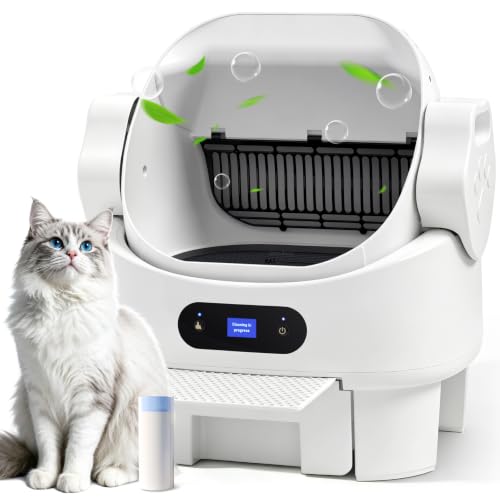
Living with multiple cats means dealing with twice the mess and potential odor. You scoop daily, yet the litter box still seems to need attention. Enter motion detection technology: a game-changer for multi-cat households. These smart boxes use infrared sensors to detect when your cat approaches, pausing cleaning cycles to ensure safety, then automatically scooping waste when your cat leaves. No more manual labor, no more surprises. This guide reviews five top-rated models with advanced motion sensors, helping you find the perfect fit for your feline family. If you are exploring similar upgrades, check out our best Multi-Cat litter boxes with camera for added monitoring.



Buying Guide
Sensor Accuracy and Safety
The core feature of these boxes is how well they detect your cat. Look for models with multiple infrared sensors, hall sensors, or weight sensors. These ensure the cleaning cycle stops instantly if your cat re-enters, preventing accidents. Some boxes, like the Mimfam, use four pairs of infrared sensors for comprehensive coverage. Always prioritize safety certifications and reviews that confirm reliable detection.
Waste Capacity for Multiple Cats
A generous waste bin is essential for multi-cat homes. A 10-liter capacity can hold waste for up to 10 days for one cat, but you will need to empty it more often with multiple cats. Models like the Garvee offer a 13-liter bin for extended use. Consider your cat count and how often you can empty the bin; larger capacity means less frequent maintenance. For insights on tracking each cat individually, see our guide on multi-cat litter boxes with per-cat weight tracking.
App Integration and Smart Features
Many modern litter boxes offer smart controls via Wi-Fi and an app. This allows you to start cleaning cycles, set schedules, and monitor your cat’s weight and bathroom habits remotely. The Meowant model tracks data for up to 30 cats, while the Garvee uses the Tuya app. If you prefer a simpler setup, the OneBug has a no-app, one-button design that still delivers reliable cleaning.
Noise Level and Design
Automatic cleaning can be noisy, but top models operate at whisper-quiet levels around 32-36 decibels. This is crucial for keeping your cats calm and not disturbing your household, especially at night. An open-top design can be more inviting for shy cats, while a spacious drum accommodates larger breeds. Also consider ease of cleaning—removable drums and disposable liners make maintenance simple.
For more on how these boxes integrate into your home, explore our selection of smart litter boxes.
Final Thoughts
Selecting the right motion detection litter box transforms your daily routine and keeps your home fresh. For budget-conscious owners seeking reliable sensor safety, the Mimfam Automatic Self Cleaning Litter Box offers excellent value with its four-pair infrared system and quiet operation. If you have a larger multi-cat household and want advanced health tracking, the Meowant Large Space Automatic Litter Box provides a spacious 106-liter drum and per-cat monitoring via its app. Whichever you choose, your cats will thank you for a cleaner, safer space.
Related Guides
- Top Multi-Cat Litter Boxes for Heavy Use
- Multi-Cat Litter Boxes with Per-Cat Health Tracking in 2026
- Multi-Cat Litter Boxes with Multiple Cat Profiles
Frequently Asked Questions
How do motion detection litter boxes work?
These boxes use infrared sensors, radar, or weight sensors to detect your cat’s presence. When the cat exits, the sensors trigger a cleaning cycle that sifts and deposits waste into a sealed bin. If the cat returns, the cycle pauses immediately to prevent interruption.
Are motion detection litter boxes safe for kittens?
Yes, with proper sensor safety features. Look for models with multiple sensors and pinch-proof designs. The Meowant includes a weight sensor and always-open entry, making it safe for kittens as light as 3.3 pounds. Always supervise initial use to confirm your kitten adapts comfortably.
How often do I need to empty the waste bin?
For a single cat, many models last up to 10-15 days. With multiple cats, expect to empty every 3-7 days depending on the bin size. The Garvee has a 13-liter bin suitable for longer intervals. Check the product specifications for your cat count.
Can I use any type of cat litter with these boxes?
Most boxes work best with clumping clay or mineral litter. Avoid crystal, silica, or wood-based litters as they may not clump properly or could damage the mechanism. Always refer to the manufacturer’s recommendations for optimal performance.