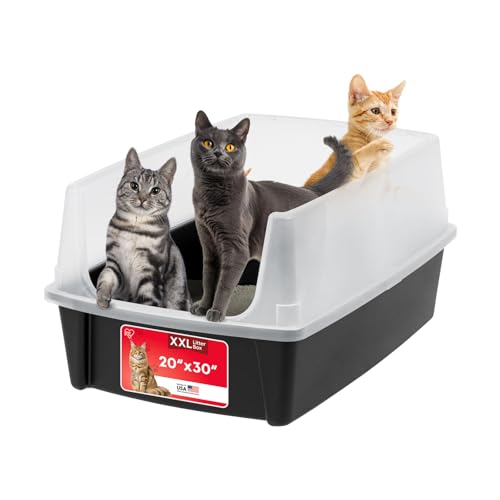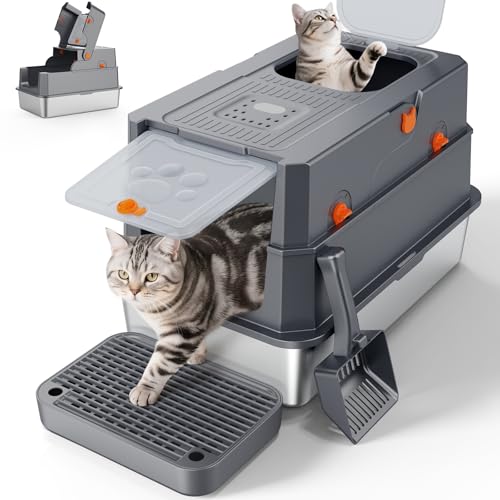

If you have multiple cats, you know the struggle: tiny litter boxes that overflow, odors that linger, and constant scooping. Your feline friends deserve a spacious, comfortable place to do their business, and you deserve a solution that doesn’t demand daily attention. That’s where large interior litter boxes come in. In this guide, we’ve evaluated the top contenders for 2026, focusing on interior space, safety, odor control, and ease of cleaning.
Whether you have a Maine Coon, a senior cat, or just a household with several felines, we’ve got you covered. We’ll compare automatic self-cleaning models with traditional high-sided pans, helping you find the perfect fit for your home. For more insights on accommodating big breeds, check out our guide on best extra-large multi-cat litter boxes for Maine Coon cats.


Buying Guide: What to Look For in a Large Interior Litter Box
Choosing the right large interior litter box for multiple cats isn’t just about size. You need to consider your cats’ habits, your living space, and how much maintenance you’re willing to do. Here are the key factors we weighed in our review.
Interior Space and Accessibility
The whole point of a “large interior” box is to give your cats room to move. Look for dimensions that allow even the biggest cat to turn around, dig, and cover waste comfortably. For multi-cat homes, an extra-large capacity also means less frequent litter changes.
Consider the entry height. Low-entry boxes are ideal for kittens, seniors, and cats with mobility issues. If you have a mix of ages, a low threshold is a must. For more on accommodating heavier felines, see our best multi-cat litter boxes for cats over 20 pounds.
Safety Features
When it comes to automatic litter boxes, safety is paramount. Look for models with pinch-proof designs, infrared sensors that pause the cleaning cycle when a cat approaches, and no gaps where paws or tails could get caught. For manual boxes, ensure the edges are smooth and there are no sharp corners.
We always prioritize products that have been safety-certified and have multiple layers of protection. This is especially important if you have curious kittens or elderly cats that might be less aware of moving parts.
Odor Control and Maintenance
Multiple cats mean multiple odors. Look for boxes with sealed waste bins, carbon filters, or deodorizing systems. Stainless steel trays are a game-changer because they don’t absorb odors like plastic. Also, consider how easy the box is to clean: removable drums, non-stick surfaces, and dishwasher-safe parts can save you hours.
Automatic models with large waste bins (10L or more) can go weeks without emptying, which is a lifesaver for busy households. For more on large-breed-specific needs, check our best multi-cat litter boxes for large breeds.
Final Thoughts
After reviewing the top large interior litter boxes for multiple cats, we found that the Meowant Large Space Automatic Litter Box is the ultimate choice for tech-savvy owners who want maximum convenience and safety, thanks to its 106L interior and app controls. For a budget-friendly, non-automatic option, the Tevila XL Enclosed Stainless Steel Litter Box offers exceptional durability and odor control with its stainless steel tray and modular design. Whichever you choose, your cats will appreciate the extra space.
Related Guides
Frequently Asked Questions
What is the ideal interior size for a multi-cat litter box?
For multiple cats, you want a box that’s at least 1.5 times the length of your largest cat, from nose to tail. A large interior box like the Meowant’s 106L space gives even big breeds plenty of room to maneuver.
Are automatic litter boxes safe for multiple cats?
Yes, modern automatic boxes are designed with safety sensors that pause the cycle if a cat approaches. Look for models with pinch-proof designs and weight sensors. The Cumrige and Happypaw models we reviewed both have these features.
How often should I clean a large litter box for multiple cats?
With automatic boxes, you may only need to empty the waste bin every 2-3 weeks, depending on the number of cats. For manual boxes, daily scooping is recommended, with a full litter change every 2-4 weeks. The large capacity of these boxes helps reduce frequency.
What’s the best material for a large litter box?
Stainless steel is the top choice because it’s non-porous, doesn’t absorb odors, and is scratch-resistant. It’s easier to clean and more hygienic than plastic. The Tevila models we reviewed are excellent examples.
For more tips on choosing the right box for your feline family, visit our multi-cat litter boxes category page.