

You walk into the living room and notice your cat has been using the litter box more frequently than usual. Is it just a phase or a sign of something more serious? Without a detailed usage history, you are left guessing. That is why automatic litter boxes with built-in usage tracking have become a game-changer for pet parents. These smart devices record each visit, monitor waste patterns, and even recognize individual cats, giving you actionable insights into your feline’s health. In this guide, we evaluate the top 2026 models that combine self-cleaning convenience with detailed analytics, helping you choose the right one for your home. If you are also interested in models that provide full bathroom reports, check our roundup of best automatic litter boxes with cat usage reports.



Buying Guide: What to Look for in an Automatic Litter Box with Usage History
Comprehensive Usage and Health Tracking
The core feature is a system that logs each cat’s bathroom activities. Look for models with AI-driven waste analysis that distinguishes between urine and stool, monitors frequency, and alerts you to irregularities. This is especially valuable for multi-cat homes where individual health issues can go unnoticed. The automatic litter boxes with weight sensors also track weight trends, giving you a fuller picture of your cat’s wellbeing.
Smart Sensors and Safety Mechanisms
Safety should never be compromised. Infrared sensors, weight detection, and anti-pinch mechanisms are essential to prevent accidents during cleaning cycles. The best models pause immediately if a cat re-enters and only resume once the area is clear. This peace of mind lets you run the self-cleaning cycle even when you are not home.
Waste Capacity and Odor Control
A generous waste container reduces how often you need to empty it. Look for a minimum of 8 to 10 liters for a single cat, with sealed drawers that lock in smells. Activated carbon filters and built-in fans further neutralize odors, keeping your space fresh. Automatic odor control is a must, especially if the litter box is in a common area.
Quiet Operation and Cat-Friendly Design
Noise levels matter for both you and your cat. Units that operate around 32 dB are barely audible, making them ideal for nighttime use. An open-top design with a low step gives cats, especially seniors or large breeds, easy access. A spacious interior encourages confident use and smooth adaptation.
For more on how these smart features integrate with overall wellness, explore our guide on best smart automatic litter boxes with health tracking.
Final Thoughts
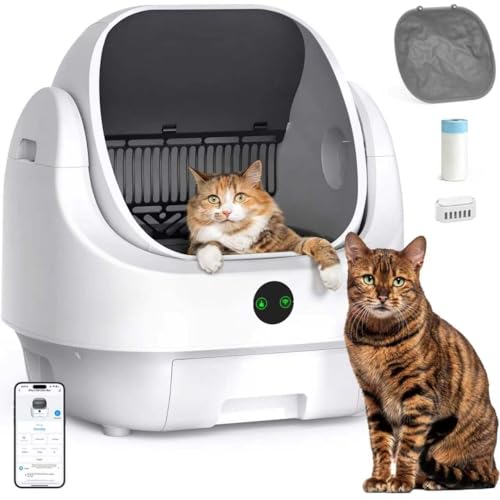
Whether you prioritize advanced AI waste analysis or a straightforward, no-fuss self-cleaning cycle, the current market offers solid options for every household. For cat owners who want the most detailed health insights, the PETLIBRO Automatic Litter Box with Accessories Kit stands out with its AI camera, multi-cat recognition, and 24/7 odor control. If you prefer a quieter, sensor-rich design with a large waste capacity and an open top for easy adaptation, the Mimfam Automatic Self Cleaning Litter Box delivers excellent value. Both models help you stay informed about your cat’s bathroom habits, so you can respond quickly to changes in their health.
Related Guides
Frequently Asked Questions
How do automatic litter boxes track usage history?
Most modern smart litter boxes use built-in sensors and cameras to log each visit. They record timestamps, duration, and waste type. Advanced models send this data to a smartphone app, where you can view trends for each cat. In 2026, AI-powered systems can even distinguish between individual cats and alert you to abnormalities.
Can these litter boxes recognize multiple cats?
Yes, many high-end automatic litter boxes now feature multi-cat recognition. Using weight sensors and AI cameras, they identify up to 10 cats and maintain separate usage logs for each one. This is a huge help for multi-cat households where monitoring individual health is critical.
Do I need a Wi-Fi connection to get usage data?
Most smart litter boxes require a 2.4 GHz Wi-Fi connection to sync data with their app. Without Wi-Fi, some models still store basic information locally and display it on a small screen, but full analytics, alerts, and remote control require an active connection. However, there are also basic self-cleaning models that offer no usage tracking at all.
How often should I replace the waste drawer or liners?
For a single cat, most units need emptying every 7 to 14 days, depending on the waste drawer capacity. Larger households may need to do it every 3 to 5 days. Using disposable liners makes disposal quick and hygienic, and replacing them with fresh ones helps control odors effectively.