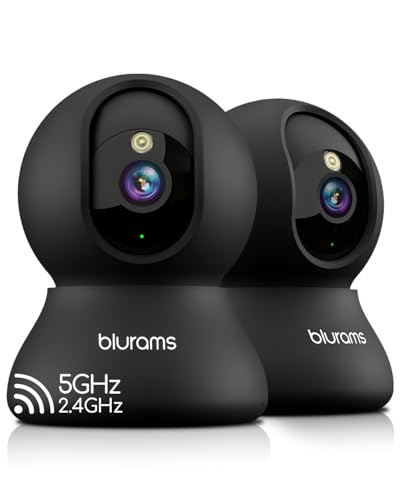

You want to keep an eye on your dog while you are at work, but you also need to monitor your front door for unexpected visitors. Should you buy a pet camera or a home security camera? The lines between these categories have blurred. Many indoor cameras now do double duty: they can watch your pet, detect motion, and even scare off intruders. However, each device has strengths that cater to specific priorities. In this guide, we compare five popular indoor cameras, from the budget-friendly Cinnado 2K Security Camera Indoor for Pet/Dog/Baby to the feature-rich AOQEE 5G Cameras for Home Security Indoor. We evaluate video resolution, audio clarity, motion detection accuracy, and storage flexibility to help you choose the right tool for your home. For more insights on pet tech gear, check out our Pet Tech Guides.
Product Comparison at a Glance
Below is a quick snapshot of the five cameras we evaluated. The table includes key specs so you can compare them side by side.



Now let us dive deeper into what matters most when choosing between a pet camera and a home security camera.
Buying Guide: How to Choose
Selecting the right indoor camera depends on your primary goal: watching a pet, securing your home, or both. We break down four essential criteria.
Video Quality and Field of View
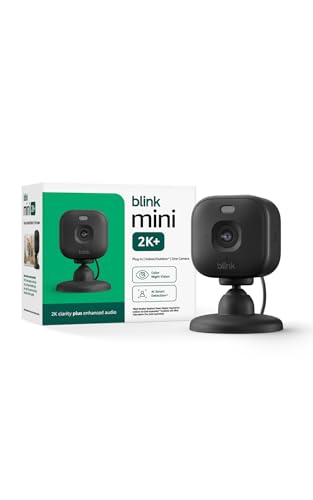
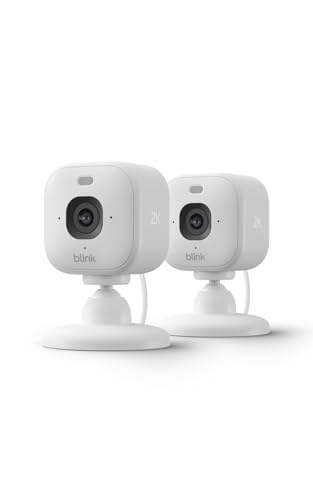
Clear video helps you see your pet’s behavior or identify a visitor. Most modern indoor cameras offer at least 1080p Full HD, but some go up to 2K resolution for sharper detail. For instance, the Kasa 1080p Indoor Pan/Tilt Wired Security Camera delivers crisp 1080p video, while the Blink Mini 2K+ (newest model) provides 2K resolution for finer clarity. Pan and tilt capabilities matter too: a camera that can rotate 360 degrees covers a larger area without extra units. The AOQEE 5G Cameras for Home Security Indoor includes auto tracking that follows motion, perfect for active pets.
Audio and Two-Way Talk
Two‑way audio lets you talk to your dog, soothe a crying baby, or tell a delivery driver where to leave a package. Cameras with noise cancellation, like the Blink Mini 2K+, make conversations clearer. The Cinnado 2K Security Camera Indoor for Pet/Dog/Baby includes a built‑in microphone and speaker so you can chat with your pet in real time. If your main use is pet monitoring, good audio is essential for comfort and training.
Motion Detection and Alerts
Both pet cameras and security cameras rely on motion detection to send notifications. The difference lies in the intelligence of the detection. High‑end models can distinguish between people, pets, and vehicles to reduce false alerts. The AOQEE 5G Cameras for Home Security Indoor uses human detection to filter out pet‑triggered alerts, so you only get notified when a person enters the room. The Kasa 1080p Indoor Pan/Tilt Wired Security Camera offers motion and sound detection with patrol mode, ideal for covering multiple zones. For a deeper look at how different sensors perform, browse our Comparisons section.
Storage Options: Local vs. Cloud
Where do your recorded clips go? Most cameras offer local storage via a microSD card (sold separately) for a one‑time cost, or cloud storage with a subscription. The Kasa 1080p Indoor Pan/Tilt Wired Security Camera supports up to 256 GB local storage with no monthly fees, plus an optional Kasa Care plan. The Blink Mini 2K+ includes a free 30‑day trial of its subscription plan, then requires a paid plan for cloud storage. The Cinnado 2K Security Camera Indoor for Pet/Dog/Baby and AOQEE 5G Cameras for Home Security Indoor both accept TF cards (up to 128 GB) and also offer cloud storage. Think about your budget for ongoing costs when deciding.
Final Thoughts
Choosing between a pet camera and a home security camera ultimately depends on how you plan to use the device. If you need a reliable camera for continuous monitoring and two‑way communication with your pet, the Kasa 1080p Indoor Pan/Tilt Wired Security Camera offers excellent value with no subscription required for local storage and smart actions like turning on lights. For a more advanced security setup that also works great as a pet cam, the Blink Mini 2K+ (newest model) provides superior video quality and smart detection features, though it benefits from a subscription plan for full cloud storage. Whichever route you take, both options bring peace of mind and a closer connection to your home and pets.
Related Guides
Frequently Asked Questions
Still have questions?
Here are answers to common queries about pet cameras and home security cameras.
Can I use a pet camera as a home security camera?
Yes, most modern pet cameras are essentially indoor security cameras with added features like motion tracking and two‑way audio. They can detect movement, send alerts, and record footage, making them suitable for basic home security. However, dedicated security cameras often offer more advanced detection (person/vehicle) and integration with broader smart home systems.
What is the difference between a pet camera and a security camera?
Pet cameras are designed to help you interact with and monitor your pets. They typically include pan/tilt, treat dispensers (in some models), and high‑quality two‑way audio. Security cameras prioritize features like high‑resolution video, night vision, motion alerts, and local or cloud storage for security footage. Many cameras blend both categories, so the difference is often a matter of emphasis.
Do pet cameras need WiFi to work?
Most pet cameras rely on WiFi to stream video to your smartphone and to send notifications. Without WiFi, many cannot function remotely. However, some models, like the Tapo Kasa EC70, can still record to a local microSD card even during a brief internet outage. For remote viewing, a stable 2.4 GHz WiFi connection is essential.
Which camera is best for monitoring a puppy while I am at work in 2026?
For puppy monitoring, look for a camera with strong two‑way audio, motion tracking, and a wide field of view. The Kasa 1080p Pan/Tilt Camera offers continuous local recording and pan/tilt control, so you can follow your puppy as it moves. The AOQEE 5G Camera includes auto tracking and human‑only alerts, which can reduce false notifications from your pet’s movements. Both are excellent choices in 2026.