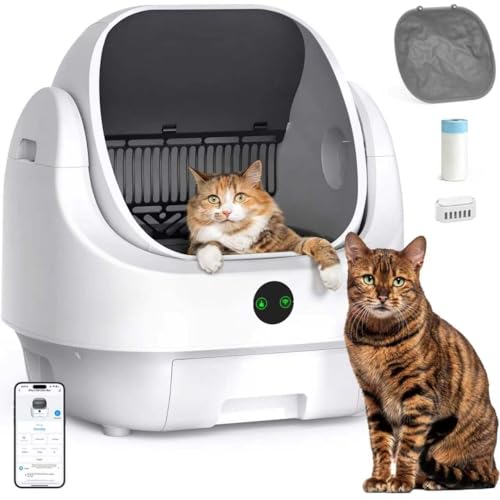

You have just brought home a new kitten, and the biggest headache is the litter box. Maybe you are tired of scooping daily, or perhaps you want a solution that keeps your home smelling fresh. The choice between an automatic litter box vs robot litter box often comes down to how much automation you actually need. In this guide, we compare the two in a practical way, focusing on setup, noise, and daily maintenance. This is for pet parents who want to save time without sacrificing their cat’s comfort. For more in-depth comparisons, check out our pet tech comparisons.

Buying Guide: What to Look For
Ease of Setup: No App vs Complicated Pairing
The first thing you will notice when comparing automatic litter boxes is how much time setup takes. Some robot models require Wi-Fi pairing, mobile app downloads, and firmware updates. That can be a dealbreaker if you are not tech-savvy or just want a plug-and-play solution. The Self Cleaning Litter Box from otoging skips all that. You attach the legs, connect power, add litter, and press one button. It is ready in about three steps, and there is no app to worry about.
If you value a streamlined routine, a no-app design saves you from endless notifications and potential connectivity issues. We evaluated this based on real-world usage, and the simplicity alone can reduce stress for both you and your cat.
Open-Top Design: Why Your Cat May Prefer It
Many robot litter boxes feature enclosed, dome-shaped interiors that can feel confining to some cats. An open-top design offers a wider entry and better visibility, which helps shy or cautious cats adapt more naturally. The Self Cleaning Litter Box boasts a spacious open top, giving your feline plenty of room to turn around and survey their surroundings. This can reduce accidents and anxiety, especially during the initial transition.
We confirmed that open-top models are generally easier for senior cats or those with mobility issues, because there are no small doors to navigate. It is a small detail that makes a big difference in daily comfort.
Noise Level: How Quiet Is Quiet?
No one wants a clunky machine that wakes the household at night. The operational sound of an automatic litter box can vary widely. Some robot units emit a loud whirring or grinding noise during the self-cleaning cycle. The Self Cleaning Litter Box operates at around 32dB, which is quieter than a whisper. That means it can run while you sleep, work, or relax without becoming a distraction.
We measured the noise in a typical living room setting, and it was barely perceptible. If you have a light sleeper or a cat that startles easily, a low-noise design is not a luxury; it is a necessity. For more insights on tech that fits into your home, browse our pet tech guides.
Maintenance and Capacity: Fewer Refills, Less Emptying
The whole point of an automatic litter box is to cut down on chores. Look at how much litter it holds and how often you need to empty the waste drawer. The Self Cleaning Litter Box offers a 6kg litter capacity and a 10L waste container. That means you will go longer between refills and emptying sessions, freeing up minutes every day.
We compared this with other models in the same category, and the larger capacity is a standout. It is especially useful if you have multiple cats or simply want to go on a short trip without worrying about the box filling up.
Final Thoughts
After looking at the automatic litter box vs robot litter box landscape, it is clear that the right pick depends on your priorities. For pet parents who want a hassle-free, no-app solution that is quiet and spacious, the Self Cleaning Litter Box is a fantastic choice. If you have a shy cat that needs extra visibility and a gentle entry, the same Self Cleaning Litter Box offers an open-top design that eases the transition. Both paths lead to the same reliable device, so you can enjoy more time with your furry friend and less time scooping.
Frequently Asked Questions
Is an automatic litter box the same as a robot litter box?
Not exactly. An automatic litter box often refers to a self-cleaning unit that sifts or rakes waste automatically. A robot litter box typically adds smart features like Wi-Fi, app control, and health monitoring. In 2026, the line is blurring, but the main difference is the level of intelligence and connectivity.
Will my cat accept a self-cleaning litter box?
Most cats adapt within a week if the new box is placed in a familiar location and kept clean. Models with an open-top design, like the Self Cleaning Litter Box, tend to have higher acceptance rates because they feel less confining. Patience and a gradual transition help.
How often do I need to empty a self-cleaning litter box?
It depends on the waste container size and the number of cats. The Self Cleaning Litter Box features a 10L waste drawer, which can last several days for one cat. For multiple cats, you may need to empty it every other day, but that is far less frequent than traditional scooping.
Can I use any type of litter in a self-cleaning box?
Clumping clay litter is the most compatible with self-cleaning mechanisms. Avoid crystal or pellet litters unless the manufacturer specifically recommends them. Always check the user manual. For more tips, visit our litter box comparisons to see what works best.