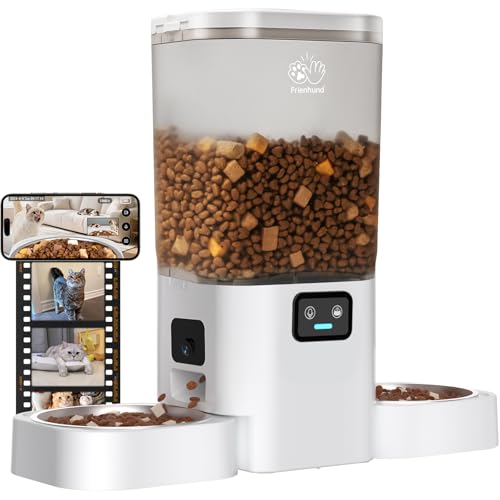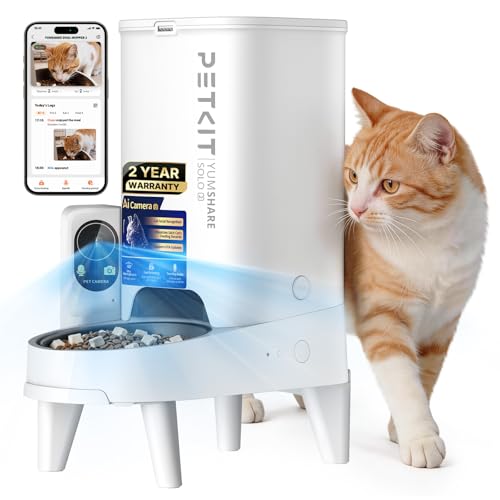

You want to keep your pet or backyard birds fed on schedule, but you also want to see what’s happening. A standard smart feeder can dispense food and log meals, but it leaves you blind to the moments that matter. A camera feeder adds live video, motion alerts, and even AI identification. In 2026, the choice between a camera feeder vs smart feeder comes down to how much visibility you need. If you are a cat owner who worries about eating habits, or a bird lover who wants to identify every visitor, this guide will help you decide. We have evaluated four top models: one indoor cat feeder with a 2K camera and three solar-powered bird feeders with HD video and AI recognition. Let’s see how they stack up.


Buying Guide: What to Look for in a Camera Feeder
Camera Quality and Night Vision
The whole point of a camera feeder is clear visuals. Look for at least 2K resolution to see details like feather patterns or your cat’s whiskers. Night vision is essential for late-night feedings or early bird visits. The Pet Tech Guides category explains how infrared LEDs ensure you never miss a moment after dark.
AI Recognition and Notifications
Advanced feeders use AI to identify species or detect unusual activity. For bird feeders, this means knowing exactly which bird just landed. For cat feeders, AI can alert you if your pet is vomiting or running. Some services require a subscription after a free trial. Consider whether you want ongoing costs for cloud storage and AI features.
Power Source and Connectivity
Indoor cat feeders typically plug into a wall outlet with battery backup. Outdoor bird feeders often rely on solar panels to reduce charging. Dual-band WiFi (2.4GHz and 5GHz) is important for stable streaming. Check if the feeder supports only 2.4GHz, which can be a limitation in crowded networks. For more on connectivity, see our Comparisons page.
Capacity and Durability
For cat feeders, a 6.5L tank holds weeks of dry food. For bird feeders, a 1L to 2L hopper means less frequent refills. Weatherproofing (IP65) is critical for outdoor use. Look for detachable parts that are dishwasher-safe for easy cleaning. A sturdy mount or anti-tip design prevents spills.
Final Thoughts
Choosing between a camera feeder and a smart feeder ultimately depends on whether you value live visibility and AI insights over simple scheduling. For indoor pet owners, the Automatic Cat Feeder with 2K Camera offers 2K video, AI monitoring, and dual-band WiFi, making it a top pick for keeping tabs on your cat’s eating habits. For backyard bird enthusiasts, the Smart Bird Feeder with Camera Solar Powered 2K HD combines solar power, 2K live stream, and AI recognition of over 10,000 species, perfect for effortless birdwatching. Both models bring the convenience of a smart feeder with the added benefit of seeing exactly what happens at mealtime.
Related Guides
Frequently Asked Questions
Do camera feeders require a subscription?
Some camera feeders offer free basic features like live viewing and motion alerts, but advanced AI identification and cloud storage often require a subscription. For example, the Kiwibit and HARYMOR models include a free trial of their premium AI services. After the trial, you can choose monthly or yearly plans.
Can I use a camera feeder for both cats and birds?
Most camera feeders are designed for a specific purpose. Cat feeders are built for indoor use with stainless steel bowls and anti-tip locks. Bird feeders are weatherproof and solar-powered. While you could technically place a bird feeder indoors, its camera and perch are optimized for avian visitors.
What WiFi speed do I need for a camera feeder?
A stable 2.4GHz WiFi connection is typically sufficient for live streaming in 2K resolution. Some feeders also support 5GHz for faster data transfer. If your router is far from the feeder, a strong signal is more important than raw speed. External antennas, like on the HARYMOR model, can improve range.
How long does the battery last on a solar bird feeder?
Solar-powered bird feeders can run indefinitely with adequate sunlight. In cloudy weather, the internal battery typically lasts several days to a week. The HEAPETS and Kiwibit models use solar panels to keep the camera active, reducing the need for manual charging. For more tips, check our Pet Tech Guides.