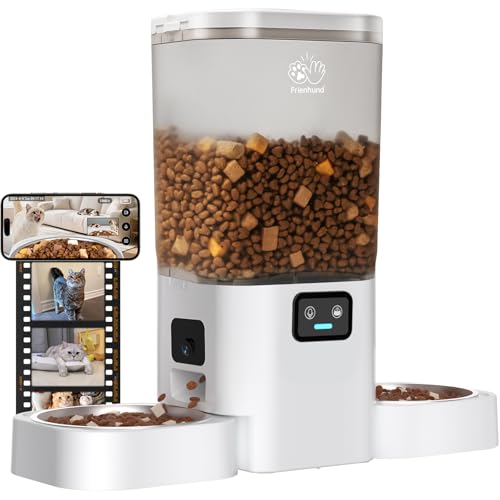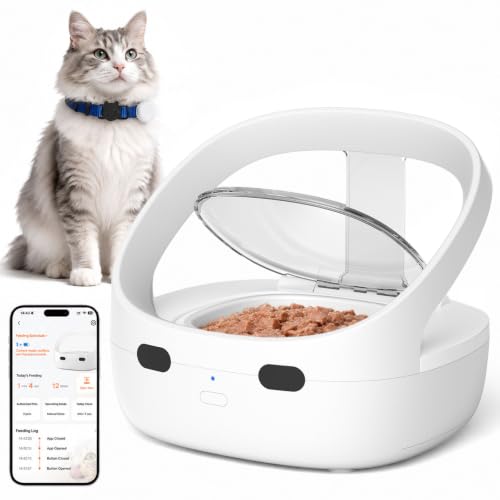

You leave for work and your cat gives you that look, the one that says, “Who will feed me?” You’ve heard about automatic feeders and automatic food dispensers, but are they the same thing? Not exactly. While both automate your pet’s meals, they serve different needs. In this guide, we compare five popular models, from simple gravity dispensers to WiFi-enabled smart feeders, so you can decide which fits your lifestyle. Whether you have a busy schedule, travel often, or just want portion control, we’ve got you covered.
If you’re new to pet tech, start by browsing our Pet Tech Guides to understand the basics. For this head-to-head, we focus on five products that represent the spectrum of automated feeding: the Wefeedy gravity set, the PETLIBRO WiFi feeder, ANDOLL HOME timed dispenser, Nityers large-capacity model, and the VOLUAS classic feeder. Let’s dive in.


Buying Guide: What to Look For in an Automatic Feeder or Dispenser
Capacity and Size
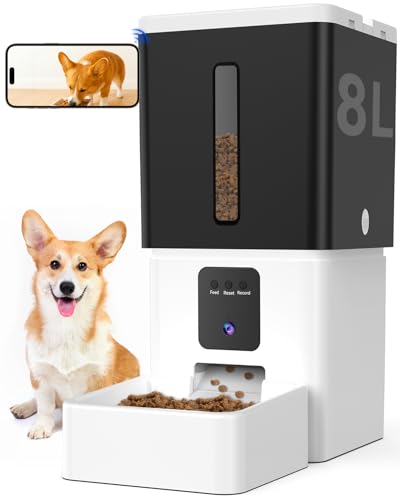
How long do you need the feeder to last between refills? Gravity dispensers like the Wefeedy offer 3.3L per side, enough for small pets for up to six days. For larger dogs or longer trips, the Nityers 8L model can hold up to 34 cups of kibble. Consider your pet’s daily intake and how often you want to refill. A bigger capacity means less frequent attention, but also a larger footprint on your floor.
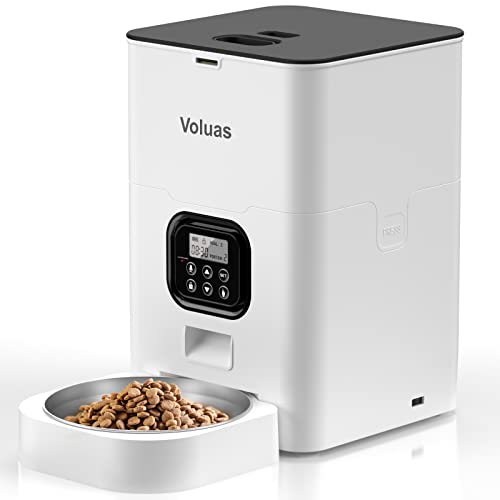
If you have multiple pets, a dual gravity set might be ideal. For a single cat, a 4L timed feeder like the VOLUAS or ANDOLL HOME usually works well. Check the bowl size too, a 6.7-inch stainless steel bowl reduces whisker fatigue for cats and gives dogs room to eat comfortably.
Power Options: Battery vs. Wired vs. Smart
Reliability is key. Some feeders run solely on batteries or USB power, while others offer dual power. The PETLIBRO WiFi feeder uses a 5V adapter and also accepts batteries as backup. The VOLUAS and ANDOLL HOME models provide both wired and battery options, so a power outage won’t leave your pet hungry. If you travel often, consider a smart feeder with app control, the PETLIBRO lets you adjust meals from anywhere via WiFi.
Gravity dispensers like the Wefeedy require no electricity at all, they work purely by gravity. That simplicity can be a pro or a con: no setup, but no scheduling either. For more control, a timed or smart feeder is better. See our Comparisons page for more side-by-side insights.
Programmability and Feeding Flexibility
How many meals per day do you need? Basic models offer 1-4 meals, while advanced feeders like the PETLIBRO let you schedule up to 10 meals with 1-48 portions each. The Nityers feeder provides up to 6 meals with 1-50 portions. If your pet needs precise portion control for weight management, look for adjustable portion sizes. Voice recording is a nice bonus, the PETLIBRO, ANDOLL HOME, and VOLUAS all let you record a 10-second message to call your pet to eat.
Manual feeding buttons are also handy for treats or unscheduled meals. The Nityers and VOLUAS include that feature. Consider whether you want a simple timer or a fully programmable system with app notifications and feeding history.
Food Freshness and Safety
Stale food can turn your pet away. Look for airtight seals and desiccant compartments. The PETLIBRO has a twist-lock lid and a patent rotor to prevent sneaky paws from stealing food. The ANDOLL HOME includes a desiccant box to keep kibble crisp. All models except the Wefeedy gravity dispenser have some form of freshness protection. Stainless steel bowls are preferable, they are hygienic and reduce chin acne. The Nityers and PETLIBRO come with stainless steel bowls.
Also check for anti-jamming mechanisms. The ANDOLL HOME has a food swinging device to prevent blockages, and the PETLIBRO uses an infrared sensor to stop dispensing if the outlet is blocked. These features ensure smooth feeding even with oddly shaped kibble.
Final Thoughts
Choosing between an automatic feeder and an automatic food dispenser comes down to your pet’s needs and your schedule. For pet owners who want a no-fuss, budget-friendly solution that keeps water and food topped up without electricity, the Wefeedy Automatic Cat Feeder and Water Dispenser is a solid pick. If you prefer smart scheduling, portion control, and remote access, the PETLIBRO Automatic Cat Feeder offers WiFi connectivity, voice calls, and freshness features that justify the investment. Whichever you choose, your pet will thank you for consistent, reliable meals.
Related Guides
Frequently Asked Questions
What is the difference between an automatic feeder and an automatic food dispenser?
In practice, the terms are often used interchangeably, but an automatic feeder typically refers to a timed or smart device that dispenses food at preset intervals. An automatic food dispenser can include gravity-based units that refill a bowl continuously. Both automate feeding, but feeders offer more control over portion and schedule.
Can I use an automatic feeder for wet food?
Most automatic feeders are designed for dry kibble only. Wet food can clog the dispenser and spoil quickly. Some models with ice packs or cooling compartments exist, but none of the products in this review support wet food. Always check the manufacturer’s recommendations.
How long will an automatic feeder last on batteries?
Battery life varies by model and usage. The VOLUAS feeder uses 3 D-cell batteries (not included) and can last several weeks with typical use. The PETLIBRO relies mainly on AC power with battery backup for emergencies. For long trips, a gravity dispenser like the Wefeedy never needs batteries.
Are automatic feeders safe for puppies and kittens?
Yes, as long as you choose a model with appropriate portion sizes. Most feeders dispense kibble in small increments (1/16 to 1/12 cup per portion). For young pets, consult your veterinarian for feeding amounts. The Nityers feeder allows up to 50 portions per meal, which can be adjusted for growing pets. For more tips, visit our Pet Tech Guides.