

Imagine your child’s face lighting up as a tiny robotic puppy wags its tail, dances to a beat, and responds to voice commands, all without the mess, allergies, or constant supervision a real pet demands. Robot dogs have evolved far beyond simple remote-control toys. Today’s models offer programming logic, expressive LED faces, touch sensors, and even obstacle avoidance, blending entertainment with early STEM learning. Whether you are shopping for a birthday gift, a holiday surprise, or a screen-time alternative that gets kids moving, this guide covers four of the most popular robot dogs on the market. We have evaluated each based on interactivity, build quality, educational value, and overall fun factor to help you choose the perfect electronic companion for your family. For more hands-on picks, browse our Product Reviews section.
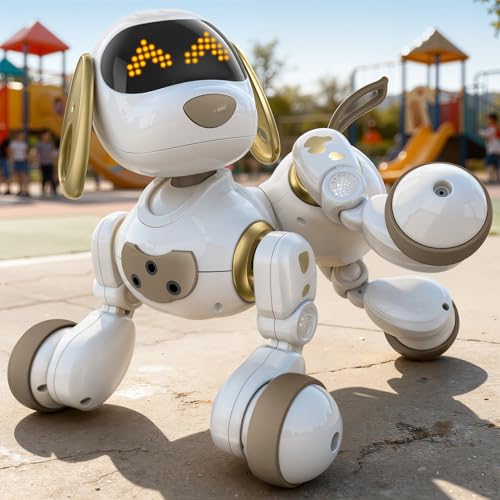


Buying Guide for Robot Dogs
Before you bring home a robotic pup, consider what matters most for your child’s age, interests, and your home environment. Here are three key criteria to weigh.
Interactive Features and Emotional Engagement
Kids connect with robot dogs that show personality. Look for models with animated LED faces that display happiness, surprise, or sleepiness, like the Ruko 18011 Smart Robot Dog with over 30 expressions and 70 glowing lights. Touch sensors on the head or back that trigger sounds and movements add a layer of realism. Voice control is another plus: the Ozega models recognize 13 commands such as sit, dance, and forward, boosting listening comprehension and verbal expression.
Programming and STEM Learning
The best robot dogs double as educational tools. Programming modes let children design custom sequences of up to 50 moves, turning playtime into a logic puzzle. The Smart Robot Dog, 2.4GHz Remote Control Robot Dog from Ozega allows kids to choreograph routines and see their creations come to life. This kind of hands‑on experimentation builds sequencing skills, problem‑solving, and early coding concepts without a screen. If your child loves building and logic, you might also enjoy our automatic pet ball reviews for similar interactive engagement.
Control Options and Range
Consider how your child likes to play. Remote control via 2.4GHz offers responsive steering up to 100 feet, ideal for racing across the room or yard. The yiman model uses infrared, which works well indoors but has a shorter range. App control adds another dimension: the Ozega robots support dual remote + app modes, letting kids switch between physical controller and smartphone. Gesture control, as seen on the Ruko 18011, allows direct interaction without a remote, perfect for younger children who prefer touch.
Safety, Durability, and Battery Life
Robot dogs should survive drops, tumbles, and enthusiastic play. All four models reviewed here use child‑safe ABS plastic with smooth edges. The Ruko and Ozega offerings include obstacle‑avoidance sensors to prevent collisions. Battery life varies: the yiman provides up to two hours of play after a two‑hour charge, while the Ruko gives 45 minutes from a three‑hour charge. Type‑C charging is standard on newer models, reducing frustration. For families who want to monitor their pet from anywhere, check out the best 360 pet camera reviews for remote viewing options.
Final Thoughts
After reviewing these four robot dogs, one model stands out for its rich emotional expression, programming flexibility, and child‑friendly design: the Ruko 18011 Smart Robot Dog, which combines 30+ LED faces, gesture control, and obstacle avoidance in a durable package that appeals to kids from preschool through early elementary. For families on a tighter budget or looking for a simpler introduction to robotic pets, the yiman Remote Control Robot Dog Toy offers solid dancing, voice activation, and easy programming at a more accessible price point, making it a wonderful first robot dog for toddlers and young grade‑schoolers. Whichever you choose, you are giving a child the joy of a playful, trainable companion that sparks imagination and learning without the responsibilities of a live animal.
Frequently Asked Questions
What age are robot dogs suitable for?
Most robot dogs reviewed here are designed for children ages 3 to 12, though some models offer more advanced programming better suited for kids 5 and up. Always check the manufacturer’s age recommendation, and supervise play for younger children. The yiman model is explicitly recommended for ages 3 to 10, while Ozega robots target 5 to 12.
Can robot dogs replace real pets for kids with allergies?
Robot dogs are excellent alternatives for children with pet allergies. They provide companionship, interaction, and fun without shedding, dander, or the need for feeding and walks. In 2026, many families choose robotic pets to teach responsibility and emotional connection while avoiding common allergens.
How long do robot dog batteries last?
Battery life varies by model. The yiman robot dog offers up to two hours of continuous play from a two‑hour charge, while the Ruko 18011 provides about 45 minutes from a three‑hour charge. Ozega models promise hours of use with their Type‑C rechargeable batteries. For extended play, consider having a backup unit or scheduling breaks.
Do these robot dogs require a smartphone app?
Only the Ozega models offer optional app control. The Ruko 18011 uses a remote and gesture control, while the yiman relies on an infrared remote and clap‑activated voice commands. No model requires a smartphone, making them accessible for children who do not have their own devices. For more tech‑driven pet products, browse our product reviews for ideas.


