

Living on a wooded property brings peace and privacy, but it can turn into a containment nightmare when your dog decides to chase a squirrel into the treeline. Traditional buried wire fences are impractical among roots and rocks, and physical fences ruin the natural aesthetic. A GPS wireless dog fence offers a flexible solution, but not all perform well under dense canopy. In this guide, we focus on the best wireless dog fence for wooded area, evaluating models that use advanced satellite technology and correction systems to keep your pup safe even where trees block the sky.
We’ve reviewed seven leading GPS collars from brands like Halo, SpotOn, and Safehalo, considering factors such as signal stability, boundary accuracy, battery life, and ease of setup. Whether you have a small clearing or a vast forested acreage, our goal is to help you find a collar that provides reliable containment without constant false alerts. If you’re also exploring options for larger open spaces, check out our best wireless dog fence for large area guide for additional insights.




Buying Guide: What to Look For in a Wooded-Area GPS Fence
GPS Accuracy and Multi-Satellite Support
In wooded areas, tree cover can interfere with GPS signals, causing boundary drift or delayed corrections. Look for collars that support multiple satellite systems like GPS, GLONASS, and Galileo, as they provide more reliable positioning. Dual-frequency GPS, such as the L1 and L5 bands used in some Halo models, offers even greater accuracy by reducing multipath errors from tree reflections.
For the best performance in dense woods, consider models that combine GPS with cellular or ground-station corrections. These systems can maintain accuracy within a few feet, ensuring your dog doesn’t get confused by inconsistent boundaries. Our guide on best electric dog fence also covers similar technology for broader applications.
Correction Modes and Training Flexibility
A good fence collar should offer multiple warning stages, from audible beeps to vibration and optional static stimulation. This allows you to train your dog gradually, reducing anxiety and preventing over-correction. Adjustable intensity levels are crucial, especially for sensitive dogs or those new to boundary training.
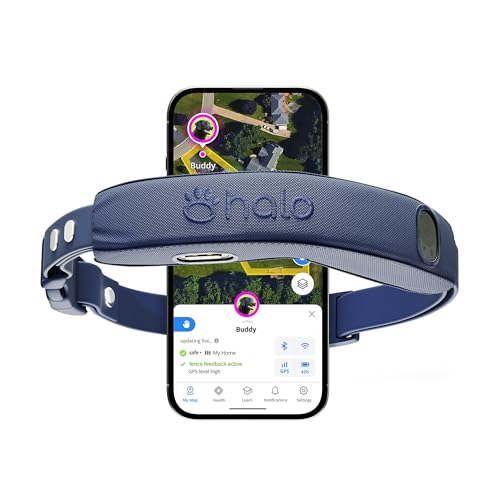
Some collars, like the Meowant, include an early warning band that vibrates before the boundary, giving your dog a heads-up. Others, like the Halo Collar, come with built-in training programs by Cesar Millan, which can be invaluable for proper fence introduction. If you have a small dog, you might also want to explore best wireless dog fence for small dogs for tailored advice.
Battery Life and Durability
Wooded areas often mean rough terrain, mud, and rain. A collar must be waterproof (IPX6 or higher) and have a battery that lasts at least a full day of outdoor activity. Some models offer up to 48 hours or more, which is essential if you don’t want to recharge daily.
Consider the collar’s build quality and whether it can withstand bumps against trees. A lightweight design is also important for your dog’s comfort, especially if they’re active. For smaller yards with less challenging terrain, our best GPS dog fence for small yards guide might offer simpler options.
Subscription Requirements and App Features
Some GPS fences require a monthly subscription for full functionality, including real-time tracking and unlimited fence creation. Others, like the Safehalo and DOGOITM models, offer no-subscription operation, which can save you money in the long run. Evaluate your budget and whether you need advanced features like family sharing or location history.
App control is another factor: a user-friendly app that lets you adjust boundaries and corrections quickly is a plus. For those on a tight budget, our best affordable pet GPS collars list highlights cost-effective options without compromising essential features.
Final Thoughts
Choosing the right GPS fence for a wooded area depends on your property’s tree density and your dog’s temperament. For the most reliable performance under heavy canopy, the SpotOn Nova GPS Dog Fence Collar stands out with its patented True Location Precision GPS and consistent cue timing, making it ideal for challenging terrain. If you prefer a no-subscription option with solid multi-satellite support, the GPS Dog Collars for 2 Dogs from Safehalo offers independent boundaries for each dog and a 48-hour battery, all without recurring fees. Both are excellent choices, so consider your specific needs and your dog’s training level to make the final call.
Related Guides
Frequently Asked Questions
Will a GPS dog fence work in a heavily wooded area?
Yes, but performance depends on the collar’s GPS technology. Models with dual-frequency GPS and ground-station corrections, like the Halo Collar 5, maintain accuracy even under dense tree cover. Others may experience signal delays or drift, so choose a collar specifically designed for challenging environments.
Do I need a subscription for a wireless dog fence?
Not always. Some collars, such as the Safehalo and DOGOITM models, operate without any subscription, allowing you to set boundaries and use corrections for free. Others, like Halo, require a subscription to activate GPS and fence features, but they often include real-time tracking and unlimited fence creation.
How do I train my dog to use a GPS fence?
Start with visual flags along the boundary and use the collar’s audible beep as a warning. Gradually introduce vibration and static stimulation only if needed, and always reward your dog for staying inside. Many collars come with training guides or programs, like Halo’s Cesar Millan method, to simplify the process.
What is the maximum area a GPS fence can cover?
It varies by model. Some collars offer a radius of up to 9,840 feet (about 1.8 miles), while others can cover up to 1,200 square miles with custom boundaries. For large wooded properties, consider a collar with a wide range and the ability to create multiple fences.


